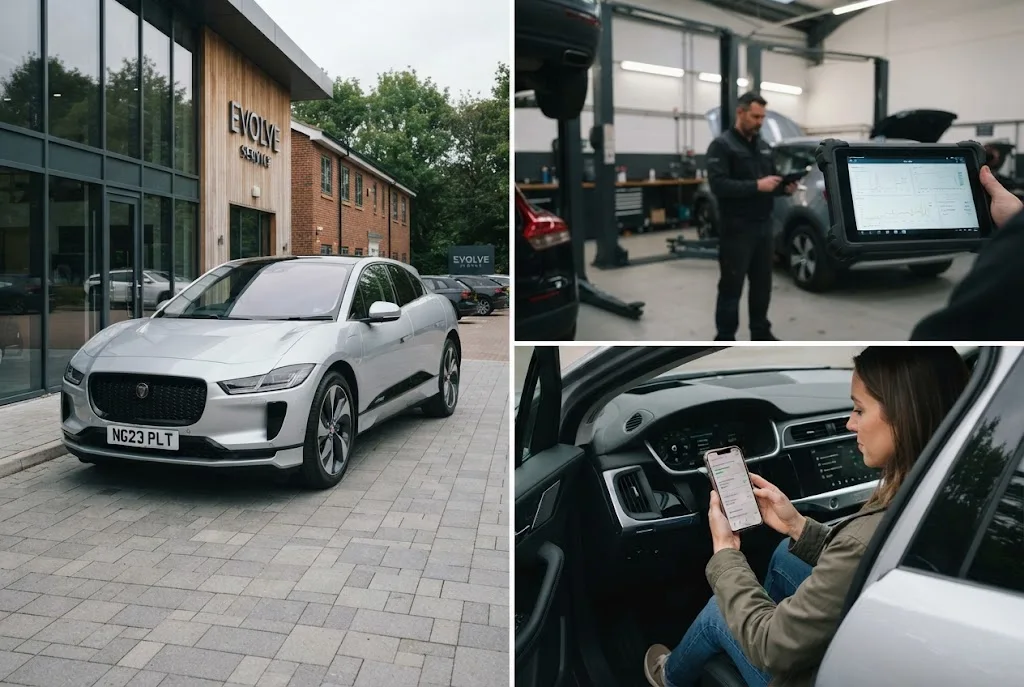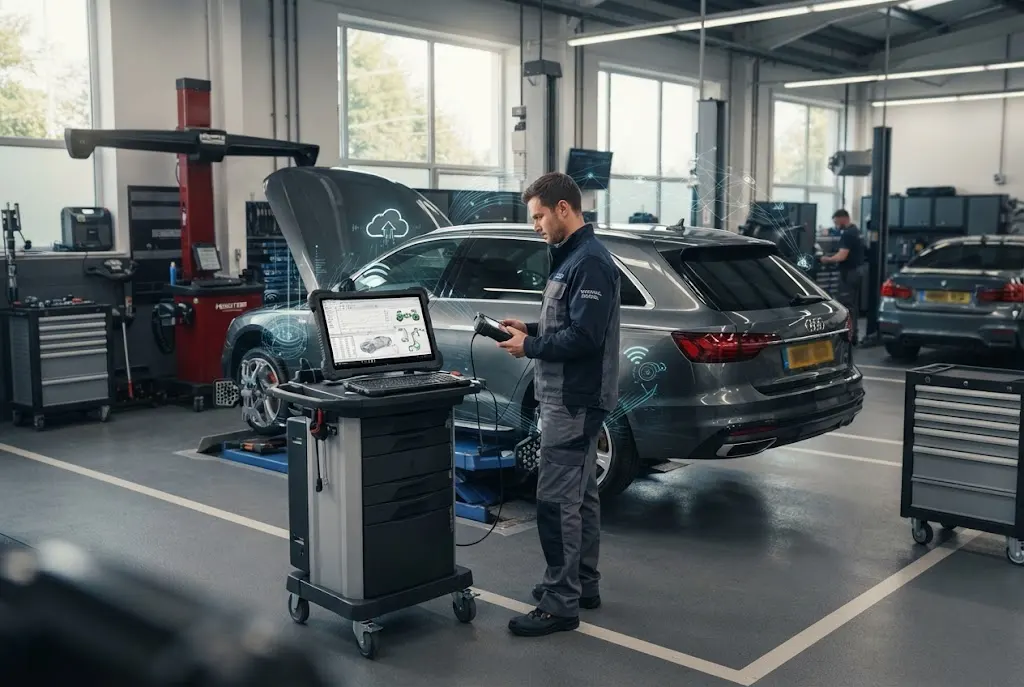
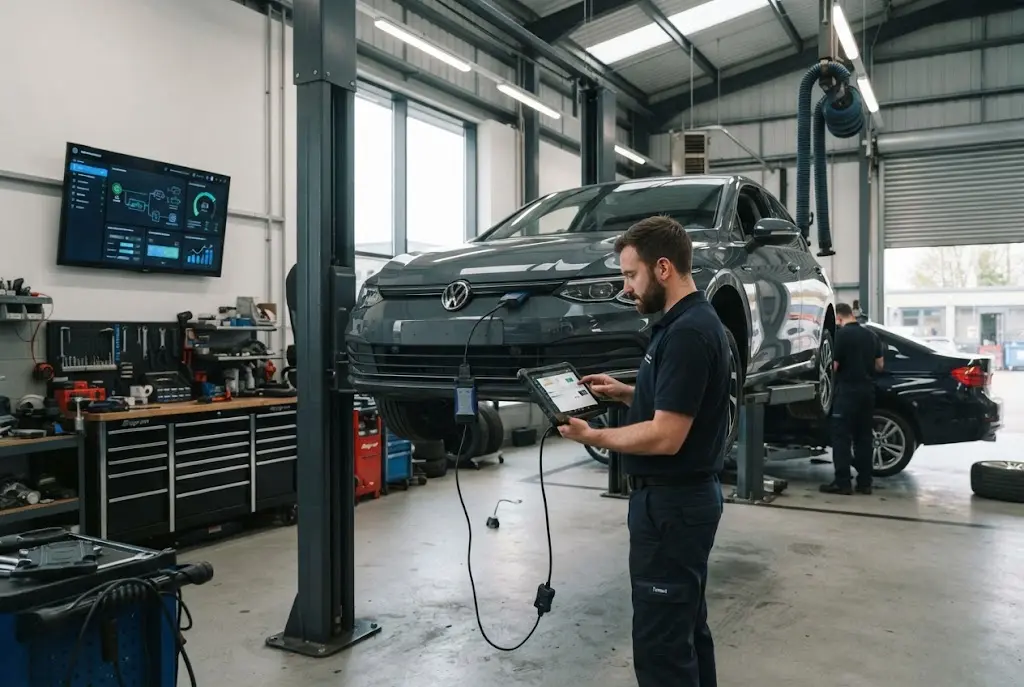
An auto service garage is no longer simply a place where vehicles are inspected, repaired and serviced. Modern workshops are increasingly becoming connected operating environments where technicians, diagnostic equipment, cloud software and vehicle data work together. As automotive technology becomes more sophisticated, garages are adopting digital tools to organise jobs, manage customers, monitor workshop performance and support technicians.
This transformation is being driven by several technologies at once. AI garage software can help organise information, workshop automation can reduce repetitive administrative tasks, and digital workflows can connect inspection, diagnosis, repair and service records. The result is a more integrated approach to running a modern automotive business.
However, technology does not remove the need for skilled technicians. Instead, the most practical approach is to use automation and artificial intelligence to support people while keeping professional judgement and physical vehicle work at the centre of the operation.
How an Auto Service Garage Is Becoming More Intelligent
Traditional garages often manage many separate activities throughout the day. A customer books an appointment, a vehicle arrives, an inspection is performed, faults are diagnosed, parts may need to be ordered, repairs are completed and the customer is informed when the vehicle is ready.
When these processes depend heavily on manual records and disconnected systems, information can become difficult to track. A modern digital garage can connect more of these stages into one workflow.
An auto service garage using integrated technology may have a digital customer record, vehicle history, inspection report, diagnostic information, technician notes and repair status accessible through a central system.
This does not necessarily require a completely automated workshop. Even relatively straightforward digital improvements can reduce repetitive administration and give staff a clearer view of what is happening across the garage.
What Is AI Garage Software?
AI garage software refers to workshop management technology that incorporates artificial intelligence or machine-learning capabilities to help process information and support operational decisions.
Depending on the platform, AI could potentially assist with scheduling, customer communication, job prioritisation, data analysis, diagnostic information or maintenance recommendations. The exact capabilities vary considerably between systems, so garages should assess software based on the tasks it can reliably perform rather than the label attached to it.
The most useful applications are likely to be those that remove repetitive work while keeping employees in control of important decisions. For example, software might help organise incoming jobs and highlight relevant vehicle information, while a service adviser or technician decides what action should actually be taken.
This approach makes artificial intelligence a productivity tool rather than an independent replacement for automotive expertise.
Workshop Automation Beyond Administration
Workshop automation can cover much more than appointment scheduling. A modern garage can automate selected processes across customer management, vehicle inspections, parts coordination, job tracking and reporting.
Digital inspection systems are a good example. Rather than technicians recording every observation on paper, an electronic inspection can organise findings, photographs and recommendations in a structured vehicle record.
This connects naturally with modern auto inspection services using AI diagnostics. Inspection data can become the starting point for a wider digital workflow, giving technicians and service advisers access to relevant information before repair decisions are made.
Automation can also help with reminders and routine communication. Customers can potentially receive appointment confirmations, status updates or maintenance reminders without staff having to manually send every message.
Why Digital Workflows Matter in Modern Garages
Digital workflows help connect individual workshop activities so information does not have to be repeatedly entered or transferred between systems.
Consider a typical repair. A vehicle enters the garage and receives a digital inspection. The technician records findings and attaches relevant images. Diagnostic information is added to the job record. The service adviser can review the information, communicate recommendations to the customer and update the job status.
Once the customer approves the work, the repair can move into the technician’s workflow. Parts requirements can be recorded, work can be documented and the completed job can be retained as part of the vehicle’s service history.
This creates a continuous information trail from inspection to completion. It can also make it easier to understand what has already happened when a vehicle returns for future servicing.
How Technician AI Can Support Skilled Professionals
Technician AI can be particularly useful when modern vehicles produce large quantities of diagnostic information. Cars contain numerous electronic control units and sensors, meaning a fault can sometimes involve several interacting systems.
AI-assisted systems can potentially help organise diagnostic information, identify patterns and direct attention towards areas that require further investigation.
This is especially relevant as vehicle diagnostics become increasingly software-driven. A technician may have access to diagnostic trouble codes, sensor information, historical repairs and other vehicle data. Software can help structure this information so that the technician does not have to manually review every piece of data in isolation.
However, an AI-generated recommendation should not automatically be considered a confirmed diagnosis. The technician still needs to verify the condition using appropriate testing and professional procedures.
That human validation is particularly important where a diagnostic result could lead to an expensive repair or affect vehicle safety.
Cloud Garage Management
Cloud garage management allows workshop information to be stored and accessed through connected software rather than relying entirely on local files or paper records.
A cloud-based platform can potentially bring together customer details, vehicle information, bookings, inspection results, repair records, invoices and other workshop data.
For a business with multiple locations, centralised information can also make operational reporting easier. Managers may be able to review workload, job progress and other business information without relying on separate systems at each site.
Cloud systems can also support remote access for authorised staff. A garage owner or manager may need to review workshop information while away from the premises, making centralised digital systems useful for businesses that want greater operational visibility.
Service Automation and Customer Communication
Service automation can improve the customer journey by reducing delays in routine communication.
For example, appointment reminders can be generated automatically. Customers can receive updates when a vehicle moves through different stages of a repair. Digital inspection reports can provide clearer information about findings and recommended work.
This can reduce the administrative burden on service advisers while keeping customers better informed.
Automation should still be designed carefully. Customers may have questions that automated messages cannot answer, particularly when a repair involves unexpected findings or significant costs. Staff should therefore remain available to explain recommendations and discuss options.
Smart Workshops and Connected Vehicles
The development of smart workshops is closely connected to the rise of connected vehicles. Modern cars can generate information that may help identify potential faults or maintenance requirements.
When authorised vehicle information is available to a workshop, it can potentially provide useful context before the vehicle arrives. This can support preparation and help the business understand why a customer may have booked a particular service.
The wider concept is closely related to connected vehicle maintenance and predictive maintenance. Vehicle data, digital service history and remote monitoring can contribute to a more continuous maintenance process rather than treating every workshop visit as an isolated event.
As connectivity develops, the relationship between the vehicle and workshop may therefore become more continuous, with relevant information moving between them at appropriate points.
Autonomous Operations: What Does It Really Mean?
The phrase autonomous operations can sound as though an entire garage could operate without people. In reality, automotive workshops are complex environments where complete autonomy presents significant practical challenges.
Autonomous operations are more realistically viewed as the gradual automation of individual processes. A garage might automate appointment management, digital inspection reporting, parts notifications, customer reminders and selected equipment operations without attempting to automate every aspect of vehicle repair.
This incremental approach allows a business to introduce technology where it provides clear operational value.
For example, a workshop may first introduce digital job cards, then integrate vehicle inspections, followed by automated customer communication and connected diagnostic information. More advanced automation can be added as the business develops the necessary infrastructure and expertise.
Benefits of a Digitally Managed Garage
A technology-enabled garage can potentially improve several areas of workshop operations.
- Better organisation: Digital job management can provide a clearer overview of active and upcoming work.
- Reduced administration: Automation can handle selected repetitive tasks such as reminders and routine notifications.
- Improved documentation: Digital inspections and job records can create a more complete service history.
- Faster access to information: Technicians and service advisers can access relevant vehicle information through connected systems.
- Greater customer transparency: Digital reports and updates can make repair recommendations easier to understand.
- Operational visibility: Managers can use workshop data to identify workloads, bottlenecks and recurring operational issues.
The actual benefits depend on how well the systems are integrated and how effectively staff use them. Buying software alone does not automatically create an intelligent workshop.
Challenges of AI and Workshop Automation
Technology adoption also creates challenges for an auto service garage. Software costs, implementation time, employee training and compatibility with existing equipment all need to be considered.
Data quality is another important issue. An AI system can only produce useful analysis when the underlying information is accurate, relevant and sufficiently complete.
Cybersecurity also becomes more important as garages connect customer records, vehicle information, diagnostic equipment and cloud platforms. Access controls, software updates and sensible data-management practices are therefore essential parts of a connected workshop strategy.
There is also a risk of over-automation. A process that appears simple on paper may involve exceptions in real-world workshop conditions. Businesses should test automation carefully and retain appropriate human oversight where decisions involve safety, diagnosis or significant expenditure.
The Future of the Auto Service Garage
The future auto service garage is likely to be increasingly integrated rather than completely autonomous. Artificial intelligence, cloud systems, connected vehicles, digital inspections and workshop automation can work together to create a more efficient information flow.
A future repair journey could begin before the vehicle reaches the workshop. Connected vehicle information may identify a potential issue, the customer may receive a maintenance notification and an appointment can be scheduled digitally. When the vehicle arrives, the technician can access relevant history and diagnostic information.
The inspection can then be recorded digitally, while intelligent software helps organise the findings. Once a repair is approved, technicians can use digital job instructions and connected equipment to complete and document the work.
After the repair, the vehicle’s service record can be updated, and future maintenance requirements can be easier to track.
This vision does not require every garage to adopt every technology at once. Instead, it shows how individual digital capabilities can gradually connect into a larger workshop ecosystem.
Conclusion
An auto service garage is evolving from a traditional repair location into a connected operational environment. AI garage software, workshop automation, digital workflows and technician AI can help businesses manage information and repetitive processes while skilled professionals remain responsible for inspection, diagnosis and repair.
The strongest model is likely to combine human expertise with carefully selected technology. Automation can handle structured tasks, AI can help interpret information, and cloud systems can connect workshop activities. At the same time, technicians can continue applying practical judgement where real-world vehicle conditions require it.
As connected vehicles and intelligent diagnostics become more common, garages that build reliable digital foundations will have more opportunities to create efficient, transparent and connected service experiences. The future of automotive servicing is therefore not simply about more technology; it is about using technology intelligently to support better workshop operations.