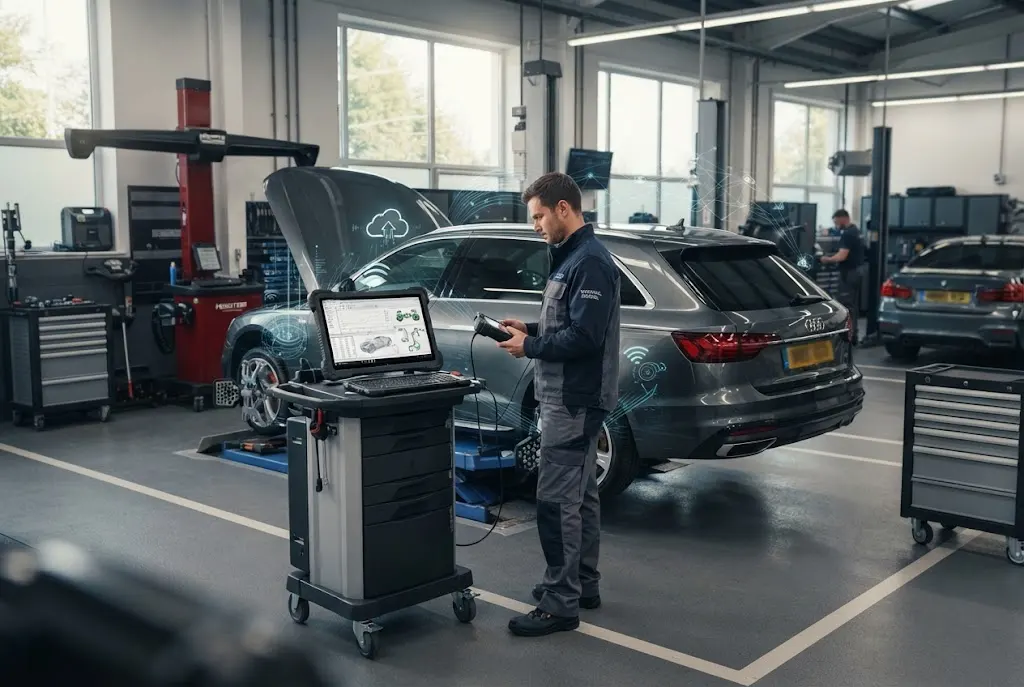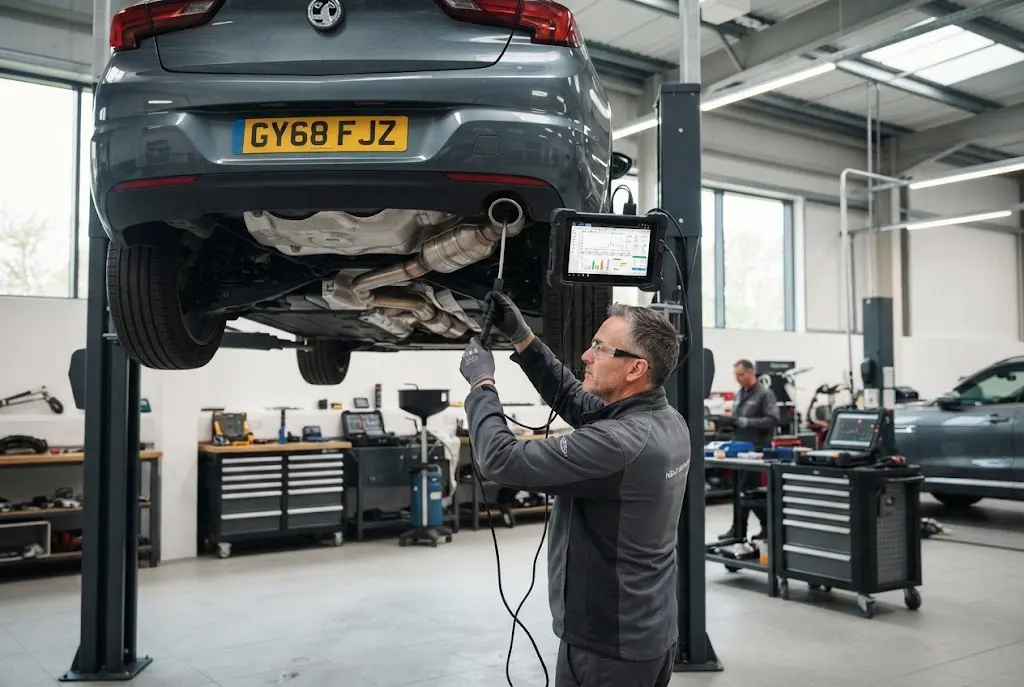
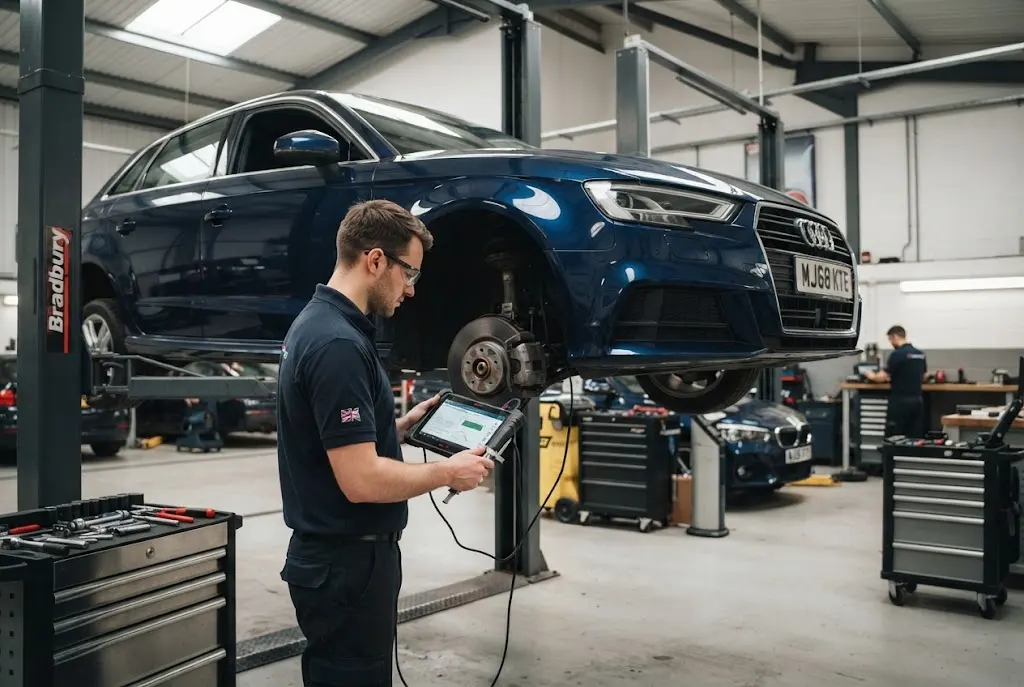
Modern brake services are becoming increasingly data-driven as vehicles adopt advanced sensors, electronic braking systems and connected diagnostic technologies. Instead of relying only on traditional inspections after a problem appears, modern workshops can use digital information to identify changes in braking performance and investigate potential issues earlier. AI-assisted monitoring can support this process by analysing vehicle data, recognising unusual patterns and helping technicians decide where further inspection may be required.
This shift does not replace qualified technicians or established safety inspections. Instead, it adds another layer of information to conventional maintenance. For drivers, that can mean more detailed brake diagnostics, better maintenance planning and a clearer understanding of how a vehicle’s braking system is performing.
What Are AI Brake Monitoring Systems?
AI brake monitoring refers to the use of sensors, software and data analysis to observe braking-related information. Depending on the vehicle and technology available, systems may collect information related to wheel speed, braking behaviour, brake-system warnings, temperature, pressure or other vehicle parameters.
The software can then examine this information for patterns that may deserve attention. Rather than simply producing a warning whenever one measurement changes, an intelligent system can compare information over time and identify trends that could be useful during servicing.
This approach is particularly relevant as modern vehicles become more electronically controlled. Anti-lock braking systems, electronic stability systems and other digital safety technologies already depend on sensors and electronic control units. AI-based monitoring builds on the wider movement towards connected vehicle diagnostics.
How Brake Sensors Support Smarter Brake Services
Brake sensors are an important part of modern vehicle monitoring. Wheel-speed sensors, brake-wear indicators and other electronic components can provide information that helps a vehicle’s control systems and diagnostic equipment understand what is happening during braking.
For example, inconsistent information from a wheel-speed sensor may help identify a potential issue that requires further investigation. Similarly, a brake-wear signal can alert the driver or technician that components need attention.
However, sensor information should not be treated as a complete diagnosis by itself. A warning can have several possible causes, and physical inspection remains important. UK MOT guidance specifically covers brake condition, braking performance, ABS, electronic braking systems and related components, demonstrating the importance of checking the complete braking system rather than relying on one digital signal.
Brake Diagnostics Become More Data-Driven
Traditional brake diagnostics often involve a combination of visual inspection, physical testing and electronic diagnostic equipment. AI can add another dimension by helping technicians analyse larger quantities of vehicle data.
A diagnostic platform may identify repeated changes in braking behaviour and highlight them for professional investigation. This could be useful when a problem is intermittent or when a vehicle does not yet show an obvious physical symptom.
For workshops, data-driven diagnostics can also create a more structured service process. Instead of recording only that a component was checked, technicians may be able to combine inspection results with electronic information from the vehicle.
That does not mean every brake problem can be predicted accurately. Brake components still experience physical wear, and conditions such as driving style, traffic, road surfaces, vehicle load and weather can influence braking performance. AI should therefore be viewed as a supporting technology rather than a substitute for professional inspection.
Predictive Brake Maintenance and Early Warning
One of the most interesting applications of AI is predictive brake maintenance. The basic idea is to use historical and current vehicle data to identify changes that may indicate increasing wear or a developing issue.
Traditional maintenance is often based on fixed service intervals or a visible problem. Predictive systems can potentially make maintenance more condition-based by considering how a vehicle is actually being used.
For example, repeated braking events, operating conditions and sensor readings could contribute to a longer-term picture of brake-system behaviour. If the system detects an unusual trend, it may prompt a technician to perform a more detailed inspection.
This can be particularly useful for vehicles that accumulate high mileage or operate in demanding conditions. Fleet operators may also benefit because maintenance information can be organised across multiple vehicles rather than being handled entirely on an individual basis.
Smart Braking and Intelligent Braking Systems
Smart braking describes a broader shift towards braking systems that use electronic controls, sensors and software to manage or monitor braking behaviour. Many modern vehicles already incorporate sophisticated electronic braking and stability technologies.
Intelligent braking can involve communication between different vehicle systems. Data from wheel-speed sensors, stability systems and other components can contribute to how the vehicle responds to changing driving conditions.
For drivers, much of this technology works in the background. The objective is not necessarily to make braking feel different during every journey. Instead, electronic systems can continuously monitor vehicle behaviour and intervene when appropriate.
As vehicle technology develops, intelligent braking is also becoming increasingly connected with broader vehicle diagnostics. This creates opportunities for workshops to use more detailed information when carrying out suspension repair, brake work and other safety-related services.
Braking Analytics Can Reveal Long-Term Trends
Braking analytics focuses on turning collected vehicle information into useful insights. A single measurement may not say much about a vehicle, but a pattern observed over weeks or months can provide a more useful maintenance picture.
For example, a workshop system could potentially compare diagnostic information from different service visits and identify recurring issues. This can help technicians investigate whether a component is experiencing gradual deterioration rather than a sudden failure.
Analytics can also help vehicle owners understand maintenance requirements in a more structured way. Instead of receiving a general recommendation to check the brakes, a service report can explain what was inspected, what information was recorded and what action may be appropriate.
The Role of Automated Inspections
Automated inspections are another area where digital automotive technology can support workshops. Automated equipment can collect measurements consistently and reduce the amount of manual data entry required during certain diagnostic procedures.
Automation is particularly useful when it supports repeatable testing. A technician can then spend more time interpreting results, checking physical components and deciding what repair work is actually required.
However, automation should not be confused with fully autonomous vehicle servicing. A braking system remains a safety-critical mechanical and electronic system. Qualified professionals need to interpret diagnostic information and confirm whether components require repair or replacement.
Digital Safety Systems and Brake Monitoring
Brake monitoring is increasingly connected with the wider network of digital safety systems found in modern vehicles. ABS, electronic stability control and other systems rely on information from sensors and electronic control units.
The UK’s MOT inspection guidance includes checks for ABS warning devices, wheel-speed sensors, wiring and electronic braking system warning indicators. This highlights how electronic components have become an established part of modern braking-system inspection.
For workshops, this means effective brake services increasingly require both mechanical knowledge and familiarity with electronic diagnostics. A technician may need to inspect pads and discs while also understanding warning codes, sensor data and electronic system behaviour.
What AI Brake Monitoring Means for Drivers
For drivers, the biggest practical change is the potential for more informed maintenance. Instead of treating a brake warning as the only reason to investigate the system, connected monitoring can provide additional information that helps identify changes earlier.
Drivers should still pay attention to familiar warning signs such as unusual noises, vibration, pulling to one side, changes in pedal feel or warning lights. Digital monitoring should complement these observations rather than replace them.
When a warning appears, professional assessment remains important. A technician can combine the vehicle’s diagnostic information with a physical inspection and appropriate brake testing to determine what action is required.
How AI Could Change Brake Services
AI is likely to become increasingly useful across automotive servicing as vehicles generate more data. For brake services, this could mean better maintenance records, more detailed diagnostics, improved fault investigation and greater use of condition-based servicing.
The same digital approach is already influencing other areas of vehicle maintenance. Technologies such as wheel alignment, digital calibration and tyre-wear analytics can also benefit from sensor-based measurement and software-assisted analysis.
Connected vehicle platforms may eventually bring many of these systems together. This could allow information from braking, suspension, steering, tyres and other components to be analysed as part of a broader vehicle-health picture.
Choosing Modern Brake Services
When choosing a workshop, drivers should look for technicians who understand both traditional braking components and modern electronic systems. A comprehensive service should not rely solely on a dashboard warning or a computer scan.
Ask what diagnostic equipment is used, whether electronic brake systems can be assessed and whether the workshop provides a clear explanation of its findings. For vehicles with advanced safety systems, accurate diagnostics can be particularly important because braking components may interact with ABS, stability control and other electronic systems.
As automotive technology continues to develop, workshops that combine skilled technicians with appropriate digital tools will be better positioned to deal with increasingly sophisticated braking systems.
The Future of Intelligent Brake Monitoring
AI brake monitoring represents a gradual change rather than a complete replacement of conventional servicing. Mechanical inspections, component testing and qualified technical judgement remain essential, while sensors and analytics provide additional information.
Over time, predictive systems may become more closely integrated with connected vehicle platforms and digital service records. This could make maintenance more condition-based and help technicians identify patterns that are difficult to spot from a single inspection.
For the wider automotive industry, braking is only one part of this transformation. Related developments in automotive software, connected mobility and vehicle data are creating new ways to monitor vehicle condition. As these technologies mature, intelligent braking is likely to become an increasingly important part of the modern automotive service ecosystem.
For now, the most useful approach is to combine digital information with established professional servicing. AI can help identify patterns, but safe braking still depends on properly maintained components, accurate diagnostics and qualified technical inspection.