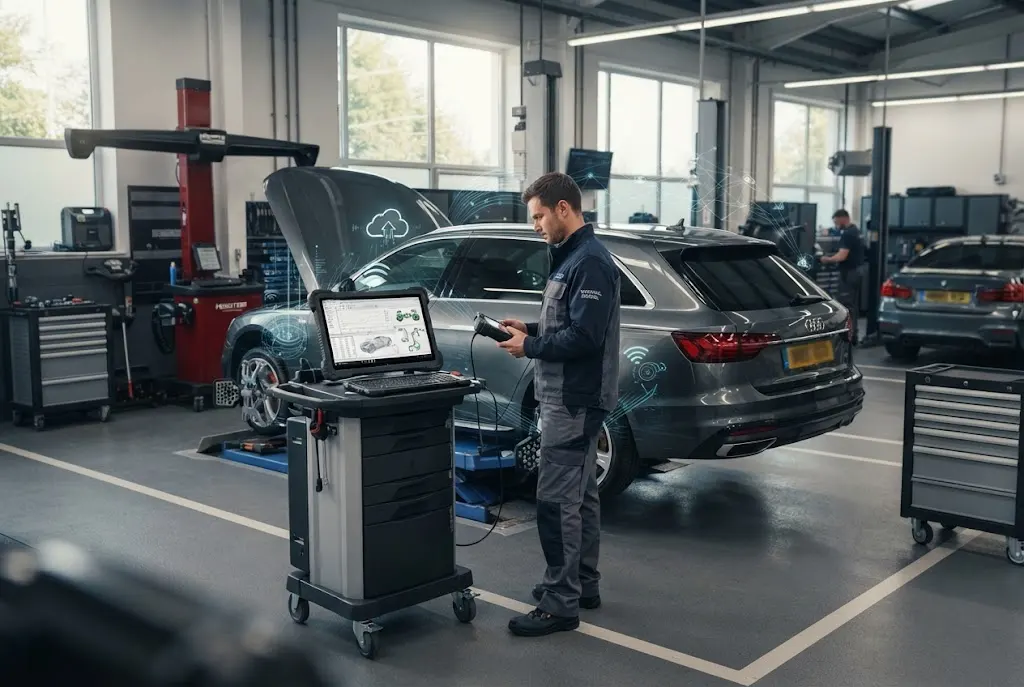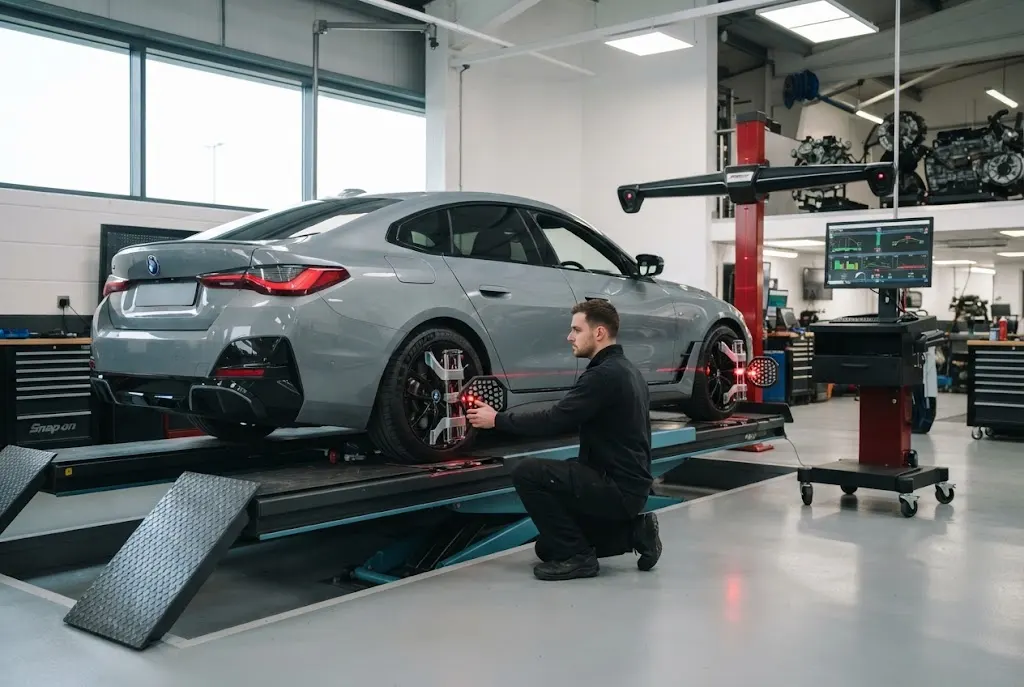
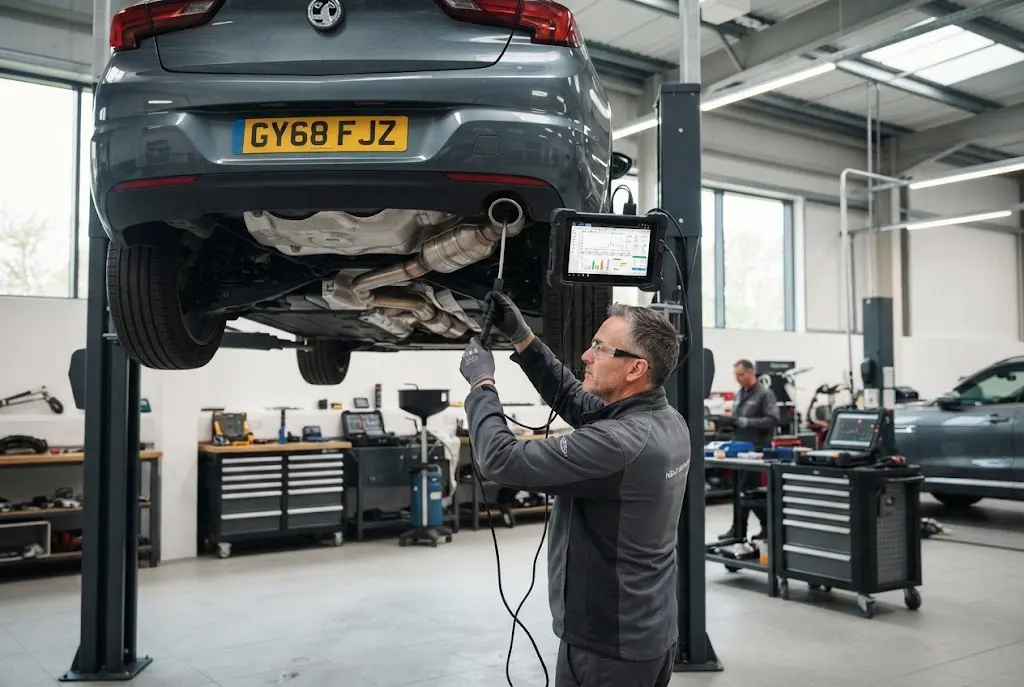
Modern auto exhaust repair is changing as vehicle manufacturers and workshops increasingly use sensors, electronic diagnostics and emissions data to understand exhaust-system performance. Traditional inspection remains important, but connected diagnostic technology can provide technicians with more information about emissions control systems, exhaust components and potential faults.
For UK drivers, exhaust maintenance also has a direct connection with MOT requirements. The current MOT inspection manual requires checks of exhaust systems and visible emissions-control components, including catalytic converters, oxygen sensors and exhaust gas recirculation valves. Vehicles with missing, obviously modified or obviously defective original emissions-control equipment can be rejected in specified circumstances.
What Is Smart Emissions Monitoring?
Smart emissions monitoring uses vehicle sensors, electronic control systems and diagnostic software to collect and interpret information about exhaust and emissions performance.
Modern vehicles already contain multiple systems designed to control and monitor emissions. Depending on the vehicle, these can include oxygen sensors, catalytic converters, exhaust gas recirculation systems, diesel particulate filters and other emissions-control components.
Rather than relying only on a physical inspection, modern diagnostic equipment can access electronic information generated by these systems. This can help technicians identify warning codes, sensor abnormalities and other indications that require further investigation.
The technology does not eliminate the need for physical inspection. Exhaust leaks, damaged components and other mechanical problems still require appropriate examination.
How AI Emissions Analysis Can Support Diagnostics
AI emissions analysis represents a developing application of data analysis within automotive servicing. The concept is to use software to analyse larger quantities of vehicle information and identify patterns that could warrant attention.
For example, a diagnostic platform could examine sensor readings alongside historical information to identify changes in a vehicle’s emissions-related behaviour. If a pattern differs significantly from expected operation, the system could highlight it for technician review.
This can be useful when a fault is intermittent or when several pieces of diagnostic information need to be considered together. Instead of examining each data point independently, software can help organise information into a more understandable picture.
However, an analytical system should not be treated as proof that a particular component has failed. Professional diagnosis is still needed to establish the actual cause and determine whether repair or replacement is appropriate.
Why Exhaust Diagnostics Matter
Exhaust diagnostics can involve both electronic testing and physical inspection. A technician may need to examine the exhaust system for leaks, damage, insecure components or other problems while also checking available electronic data.
In the UK, the MOT inspection manual states that the exhaust system must be checked on vehicles with internal combustion engines, including hybrids. The inspection includes the security of the exhaust system, while exhaust leaks and fumes entering the cabin can result in specified MOT defects.
Emissions testing is also part of the MOT process, with procedures varying according to factors such as vehicle age and fuel type. Government guidance provides specific procedures and limits for in-service exhaust emissions testing.
For this reason, a diagnostic approach that considers both the physical exhaust and emissions-control electronics can provide a more complete assessment.
Catalytic Converter Monitoring
Catalytic converter monitoring is an important part of modern emissions diagnostics. The Catalytic converters are designed to reduce certain pollutants in exhaust gases by facilitating chemical reactions that convert them into less harmful substances.
The UK government provides specific guidance covering catalytic converters and diesel particulate filters, including requirements concerning replacement catalytic converters fitted to vehicles registered after March 2001. Replacement catalytic converters for those vehicles must meet applicable type-approval requirements.
Modern vehicles can also use sensors around the emissions system to monitor operating conditions. If the vehicle detects abnormal behaviour, it may store diagnostic information or illuminate a dashboard warning.
A warning does not necessarily mean that the catalytic converter itself has failed. Problems elsewhere in the engine or emissions system can affect readings, which is why proper diagnosis matters before replacing an expensive component.
How Sensors Support Auto Exhaust Repair
Sensors play a major role in modern emissions-control systems. Oxygen sensors, for example, provide information that helps the vehicle’s control system manage engine operation and monitor exhaust conditions.
Other sensors may monitor temperatures, pressures or particulate-related conditions depending on the vehicle’s emissions system.
When a fault occurs, diagnostic equipment can sometimes retrieve information from these systems. A technician can then compare the readings with the vehicle manufacturer’s expected operating parameters and investigate further.
This makes modern auto exhaust repair increasingly dependent on both mechanical expertise and electronic diagnostic knowledge.
Connected Exhaust Systems and Digital Data
Connected exhaust systems form part of the broader move towards software-connected vehicles. Vehicle control units can exchange information with sensors and other electronic modules, creating a continuous flow of operational data.
For workshops, this connectivity can make it easier to identify certain faults and understand how different systems interact. An emissions warning might involve the exhaust itself, the engine-management system, a sensor or another related component.
Connected data can also contribute to service records. Over time, historical diagnostic information could help technicians identify recurring problems instead of treating every workshop visit as an isolated event.
The increasing role of connected systems also links exhaust servicing with the wider development of automotive software and digital vehicle platforms.
Digital Compliance and UK Emissions Requirements
Digital compliance is becoming increasingly relevant as governments and regulators focus on ensuring that vehicles continue to meet applicable emissions requirements.
The UK Department for Transport stated in a 2026 consultation that its proposals for in-use emissions regulation were intended to ensure road vehicles continue to meet the legal emissions requirements that applied when they were built and first registered. The consultation also connected vehicle maintenance and stronger enforcement with efforts to improve air quality.
The MOT system already provides an established inspection framework for exhaust emissions. The current manual includes checks for visible emissions-control equipment and emissions testing procedures.
For vehicle owners, this means maintaining emissions-control equipment is not simply a matter of avoiding dashboard warnings. Correct maintenance can also help ensure that the vehicle continues to meet applicable inspection and regulatory requirements.
Environmental Analytics and Vehicle Maintenance
Environmental analytics can provide a broader way of looking at vehicle emissions. Instead of focusing only on whether a vehicle has passed or failed a particular test, data can potentially be used to understand changes in emissions performance over time.
Government data shows that road transport accounted for 30% of UK nitrogen oxide emissions in 2024, while road-transport NOx emissions decreased substantially between 2005 and 2024. The government attributes part of the long-term reduction to catalytic converters, stricter emissions regulations and the changing vehicle fleet.
These trends illustrate why emissions-control technology remains an important part of vehicle engineering. For individual vehicles, effective maintenance helps ensure that emissions systems continue operating as intended.
Signs That an Exhaust System Needs Attention
Drivers should not wait for an MOT failure before investigating obvious exhaust problems. Warning signs can include unusual exhaust noise, visible damage, fumes, unusual smells, dashboard warning lights or changes in vehicle performance.
A louder-than-normal exhaust can indicate a leak or damaged silencer. The current MOT guidance requires exhaust noise to be assessed and identifies excessive exhaust noise and insecure components as potential defects.
Exhaust fumes entering the vehicle cabin are particularly important because the MOT manual treats specified cases as major or dangerous defects depending on the circumstances.
Drivers should therefore arrange professional inspection when they notice significant changes rather than assuming that an exhaust noise or warning light will resolve itself.
Auto Exhaust Repair and MOT Preparation
Preparing a vehicle for an MOT should not mean making temporary changes simply to obtain a pass. A properly maintained exhaust system should remain secure, complete and compliant with the requirements applicable to the vehicle.
The government’s MOT information explains that exhaust systems are inspected for security and completeness, while catalytic converters are checked where applicable. Exhaust emissions are also assessed according to the vehicle’s characteristics and relevant testing procedure.
Professional auto exhaust repair can therefore involve much more than replacing a damaged silencer. Depending on the fault, technicians may need to inspect sensors, catalytic converters, exhaust leaks, emissions-control components and electronic diagnostic information.
Why Exhaust Repairs Should Be Properly Diagnosed
Replacing an exhaust component without identifying the underlying problem can lead to unnecessary expense. For example, a recurring emissions warning may be caused by a sensor, an engine-management issue, an exhaust leak or another emissions-control component rather than the most obvious part.
A structured diagnostic process can help narrow down the possible causes before repair work begins.
This is especially relevant when dealing with catalytic converters and other expensive emissions-control components. Accurate diagnosis can help ensure that the repair addresses the actual fault rather than simply replacing a component because a warning has appeared.
The Future of Smart Exhaust Diagnostics
The future of exhaust servicing is likely to involve greater integration between sensors, diagnostic software, connected vehicles and workshop systems. As vehicles generate more operational data, technicians may have access to increasingly detailed information about emissions performance.
AI-based analysis could help identify patterns, while connected service platforms could make diagnostic histories easier to review. These technologies may eventually allow maintenance decisions to become more condition-based rather than relying solely on fixed intervals.
At the same time, conventional technical skills will remain essential. Exhaust systems contain physical components that can corrode, crack, become loose or suffer damage. Software can identify patterns, but physical inspection is still necessary to verify the condition of the vehicle.
Choosing an Exhaust Repair Service
When choosing an exhaust workshop, drivers should look for a service provider that can combine physical inspection with appropriate diagnostic equipment. This is particularly important for newer vehicles with complex emissions-control systems.
Ask whether the workshop can diagnose emissions-related warning lights, inspect catalytic converters and other emissions-control equipment, and investigate exhaust leaks. A good technician should also be able to explain why a particular repair is required rather than simply recommending parts replacement.
For vehicles with advanced electronic systems, diagnostic capability is increasingly becoming an important part of professional exhaust servicing.
Conclusion
Modern auto exhaust repair is evolving alongside the wider development of connected and software-driven vehicles. Sensors, emissions monitoring, diagnostic software and data analysis can give technicians more information about exhaust-system performance and potential faults.
Smart emissions technology can support earlier fault detection and more informed diagnostics, while catalytic converter monitoring and connected exhaust systems are becoming increasingly relevant to modern vehicle maintenance.
For UK drivers, the fundamentals remain straightforward: keep the exhaust system properly maintained, investigate warning signs promptly and use qualified professionals who can assess both mechanical and electronic components. Digital technology can make diagnosis more detailed, but safe and compliant vehicle maintenance still depends on accurate testing, proper repairs and professional judgement.