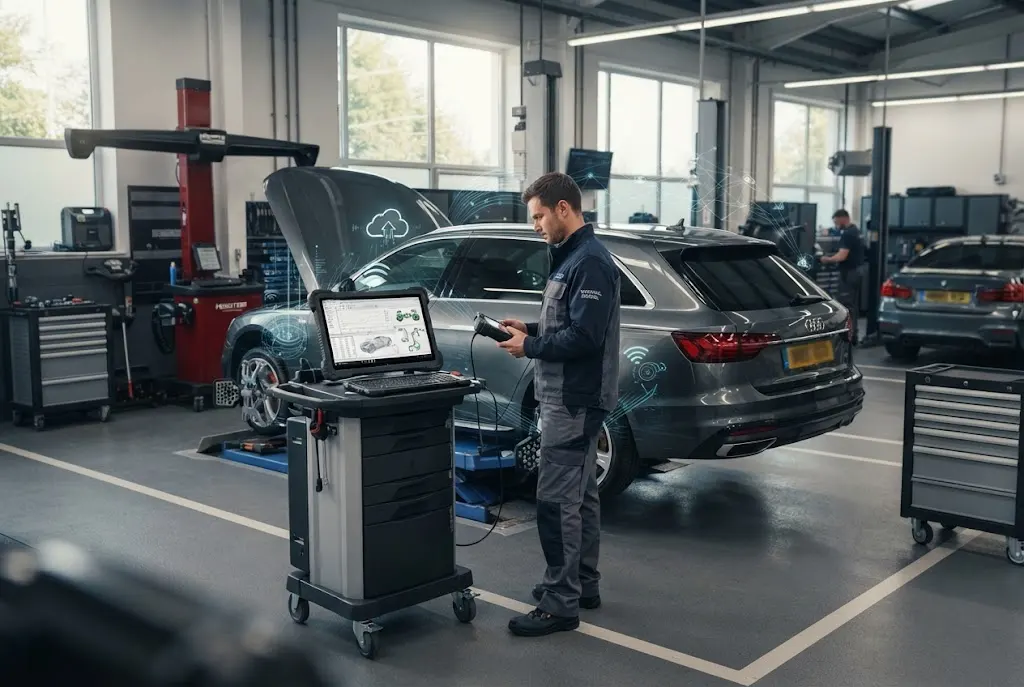
Modern automotive software is changing how vehicles are designed, operated, diagnosed and maintained. Cars increasingly depend on software to manage electronic systems, process sensor information, communicate with connected services and support driver-assistance features. At the same time, workshops are adopting digital diagnostic platforms that can help technicians understand increasingly complex vehicles.
This shift is moving automotive servicing beyond traditional mechanical repairs. Brakes, suspension, wheel alignment and exhaust systems still depend on physical components, but software can provide additional information about their condition. AI platforms, vehicle APIs, cloud servicing and over-the-air updates are creating a connected environment in which vehicle data can play a much larger role in maintenance.
What Is Automotive Software?
Automotive software refers broadly to the programs and digital systems used to control, monitor and connect vehicle functions. It can operate inside electronic control units, infotainment systems, driver-assistance technologies, connected-car platforms and workshop diagnostic equipment.
Modern vehicles can contain numerous electronic control units responsible for different functions. These systems can communicate with sensors and other modules to monitor vehicle operation and control specific functions.
Software therefore sits alongside mechanical engineering as an important part of the modern vehicle. A fault may originate from a physical component, an electronic module, a sensor, wiring or software-controlled behaviour, making comprehensive diagnosis increasingly important.
How AI Platforms Are Changing Vehicle Servicing
AI platforms can help process large quantities of vehicle information and identify patterns that may be difficult to spot manually. In an automotive servicing environment, this can involve analysing diagnostic information, historical maintenance records and sensor data.
For example, a connected vehicle may generate information about braking, suspension, steering or engine operation. Software can organise this information and highlight unusual changes for further investigation.
This approach can support technicians rather than replace them. A diagnostic platform may identify an area requiring attention, but a qualified technician still needs to inspect the vehicle and determine whether a component actually requires repair or replacement.
The same principle applies to predictive maintenance. Software can identify patterns associated with potential deterioration, but the prediction should be treated as an indication for investigation rather than a guaranteed failure forecast.
Automotive SaaS and Cloud Servicing
Automotive SaaS brings software-as-a-service principles into vehicle management and servicing. Instead of relying entirely on software installed locally on workshop computers, cloud-based platforms can provide access to diagnostic information, service records, fleet data and other tools through connected systems.
Cloud servicing can be particularly relevant to fleet operators. A business managing multiple vehicles may need to track maintenance requirements, inspection records, diagnostic information and service schedules across a large number of vehicles.
A centralised platform can make this information easier to organise. Workshop teams and fleet managers can potentially access the same service information while maintaining appropriate controls over data and system access.
Cloud-based automotive systems can also support remote collaboration. A diagnostic issue identified in one location may be reviewed using information stored in a central platform, depending on the capabilities of the service provider and vehicle system.
Vehicle APIs and Connected Data
Vehicle APIs can allow different software systems to communicate with vehicle-related data and services. APIs provide structured ways for applications to exchange information rather than requiring every system to operate independently.
In practical terms, connected vehicle data could potentially support applications for fleet management, maintenance scheduling, vehicle monitoring and other automotive services.
However, access to vehicle data depends on the vehicle manufacturer, platform architecture, permissions and applicable technical and regulatory requirements. Not every vehicle exposes the same information or provides the same level of connectivity.
As connected vehicles become more common, interoperability will remain an important consideration. Workshops and software providers need systems that can work reliably with the vehicles and data sources they are authorised to access.
Software-Defined Vehicles
Software-defined vehicles represent a significant change in automotive engineering. In a software-defined approach, software plays a much larger role in determining vehicle functionality and enabling features to evolve over time.
Traditional vehicles are strongly associated with fixed mechanical configurations. Software-defined architectures allow manufacturers to manage more functions electronically and, in some cases, introduce changes through software updates.
This does not mean that mechanical engineering becomes unimportant. Brakes, suspension, tyres, steering components and other physical systems remain fundamental. Instead, software becomes another layer that can influence how different vehicle systems operate and communicate.
This creates new challenges for servicing because technicians may need to understand both physical components and the software architecture controlling them.
OTA Updates and Modern Vehicles
OTA updates, or over-the-air updates, allow compatible vehicle software to be updated remotely rather than requiring every software change to be installed manually at a workshop.
Depending on the vehicle and manufacturer, updates can address software functionality, introduce improvements or modify certain connected features. The exact capabilities vary considerably between manufacturers and vehicle models.
OTA technology can reduce the need for some software-related workshop visits, but it does not eliminate physical servicing. A software update cannot replace worn brake components, damaged suspension parts or a defective exhaust system.
Instead, OTA updates illustrate how mechanical and digital maintenance are increasingly becoming two interconnected parts of vehicle ownership.
Digital Ecosystems Around the Vehicle
Digital ecosystems connect vehicles with manufacturers, workshops, fleet operators, mobile applications and cloud services. This creates a broader environment in which vehicle information can move between different systems.
A vehicle service platform, for example, could potentially combine maintenance records with diagnostic information. A fleet platform might connect vehicle data with scheduling and operational systems.
The benefit of such integration is that information does not necessarily remain isolated within one system. However, connectivity also makes data management, cybersecurity, permissions and system reliability increasingly important.
As vehicles become more connected, automotive businesses need to consider not only mechanical servicing but also the digital infrastructure that supports connected vehicle functions.
Automotive Software and Brake Diagnostics
Brake servicing demonstrates how software and mechanical maintenance can work together. Modern vehicles can use electronic systems and sensors to monitor braking-related information, while diagnostic equipment can provide technicians with additional data.
Advanced brake services can therefore combine physical inspection with electronic diagnostics and data analysis. Software can help identify warning codes or unusual information, while technicians remain responsible for confirming the condition of brake components.
This combination is particularly relevant as braking systems become increasingly integrated with electronic stability and driver-assistance technologies.
Automotive Software and Suspension Diagnostics
Suspension systems are also becoming more connected to vehicle software. Adaptive suspension can use sensors and electronic controls to change suspension behaviour according to vehicle conditions and selected driving modes.
Modern suspension repair can therefore involve mechanical inspection alongside electronic diagnostics. A technician may need to determine whether an issue relates to a physical component, a sensor, wiring or the electronic control system.
Software can provide useful information, but physical inspection remains essential because suspension components can wear or become damaged independently of electronic systems.
Software and Intelligent Wheel Alignment
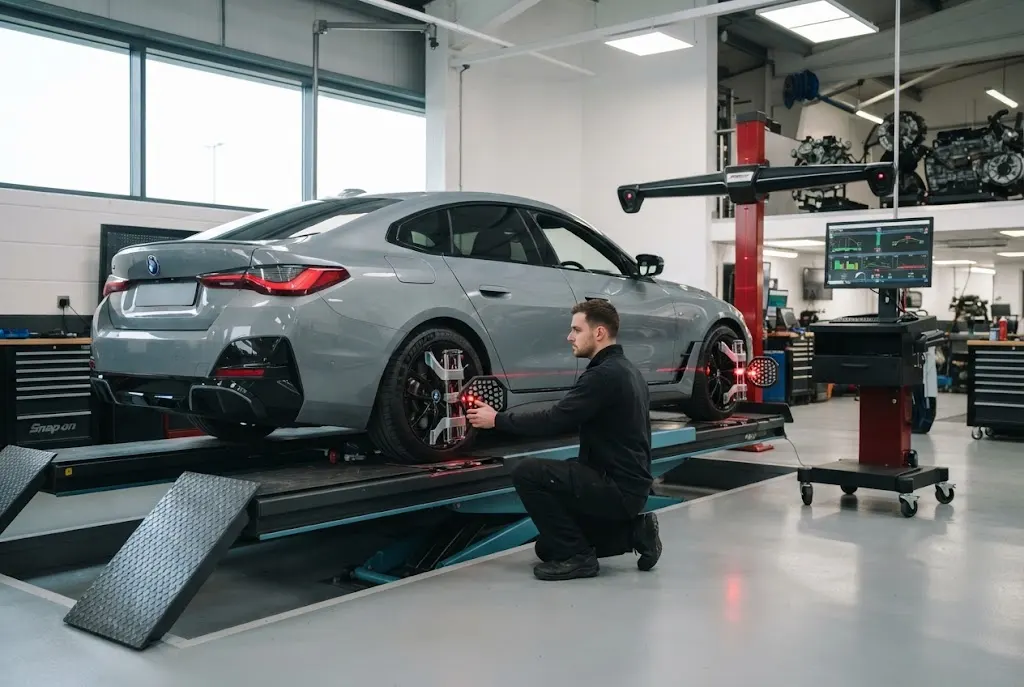
Digital vehicle servicing also extends to alignment. Modern alignment equipment uses electronic sensors, cameras and software to calculate wheel geometry and compare measurements with appropriate specifications.
Computerised wheel alignment can produce detailed measurements and before-and-after results, giving technicians a clearer view of changes made during servicing.
As diagnostic systems become more connected, alignment information could potentially be combined with tyre and suspension data to provide a broader picture of vehicle condition.
Software in Exhaust and Emissions Diagnostics
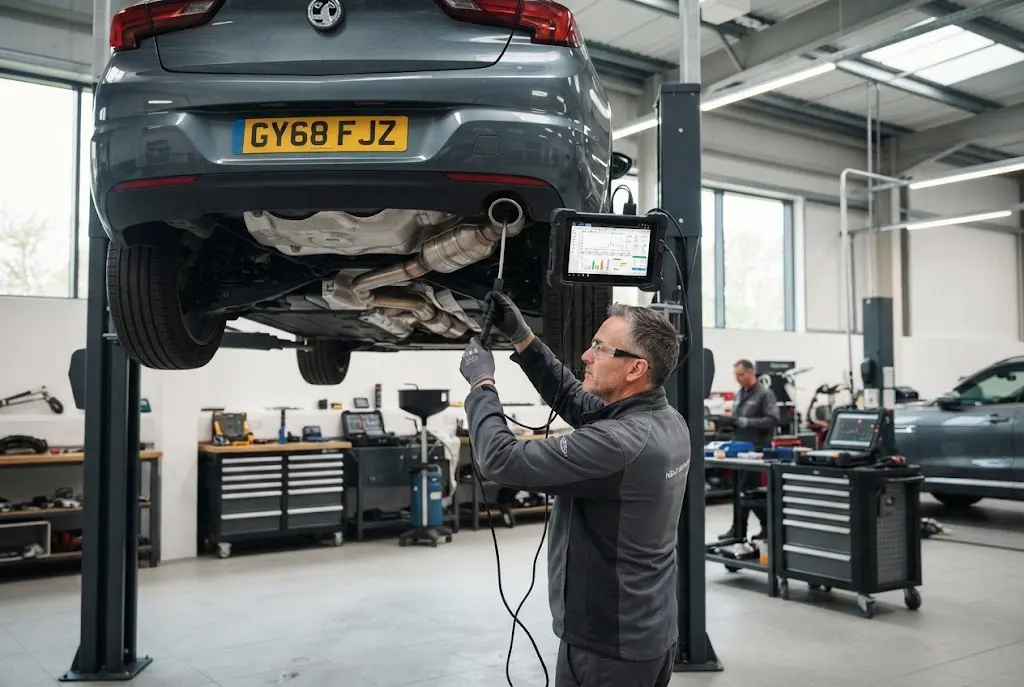
Emissions systems also rely heavily on electronic monitoring. Sensors can provide information about exhaust and engine operation, while diagnostic systems can store fault information when certain conditions are detected.
Modern auto exhaust repair can therefore involve electronic diagnosis as well as physical inspection of exhaust components, catalytic converters and other emissions-control systems.
This illustrates an important point about software-driven servicing: the software provides information, but the repair still requires appropriate technical diagnosis and physical verification.
The Importance of Cybersecurity
As vehicles become increasingly connected, cybersecurity becomes an important part of automotive software development. Connected systems can communicate with external platforms, which means manufacturers and service providers need appropriate safeguards to protect vehicle systems and data.
Software updates, APIs and cloud services all create additional digital interfaces. Managing access, authentication and software integrity is therefore important for connected vehicle ecosystems.
For workshops, this also means that diagnostic equipment and software need to be maintained properly. Technicians may increasingly require authorised access to manufacturer platforms and current software tools when servicing newer vehicles.
How Automotive Software Will Affect Workshops
Workshops are likely to see a continuing shift towards combined mechanical and digital diagnostics. Technicians will still need strong knowledge of brakes, suspension, steering, tyres, engines and exhaust systems, but they may also need greater familiarity with electronic control systems and diagnostic software.
Training will therefore become increasingly important. A technician working on a modern vehicle may need to understand sensor data, diagnostic codes, calibration procedures, software updates and manufacturer-specific systems alongside traditional repair techniques.
This does not mean every workshop needs to become a software company. Instead, successful servicing increasingly depends on having the appropriate tools, training and access to reliable technical information.
The Future of Automotive Software
The development of automotive software is likely to continue as manufacturers add connected features, advanced driver-assistance technologies and software-controlled vehicle functions.
AI may support increasingly sophisticated data analysis, while cloud platforms can connect vehicle information with service systems. Vehicle APIs can facilitate communication between authorised applications, and OTA updates can allow compatible vehicles to receive software changes remotely.
At the same time, workshops will continue to provide the physical expertise required to maintain the vehicle. Digital technology can identify patterns and provide information, but worn components still need inspection, adjustment and replacement when required.
Choosing a Technology-Ready Automotive Service
For vehicle owners, a technology-ready workshop should combine modern diagnostic capability with qualified mechanical expertise. When choosing a service provider, it can be useful to ask whether the workshop can diagnose electronic systems as well as conventional mechanical components.
For newer vehicles, access to appropriate manufacturer information and diagnostic equipment can also be important. A workshop should be able to explain diagnostic findings clearly and distinguish between a software-related issue, an electronic fault and a mechanical problem.
The best service process is not simply about having the newest software. It is about using appropriate technology alongside accurate inspection and professional technical judgement.
Conclusion
Automotive software is becoming a fundamental part of modern vehicle servicing. AI platforms, automotive SaaS, vehicle APIs, cloud servicing, software-defined vehicles, OTA updates and connected digital ecosystems are changing how vehicle information is collected and used.
For workshops, this creates both opportunities and new technical requirements. Mechanical expertise remains essential, but digital diagnostics are increasingly important for understanding modern vehicles.
As connected technology develops, vehicle maintenance will increasingly combine physical inspection with software-supported analysis. The result is a more interconnected approach to servicing in which braking, suspension, alignment, exhaust systems and other vehicle functions can be understood through both their physical condition and the digital information they generate.