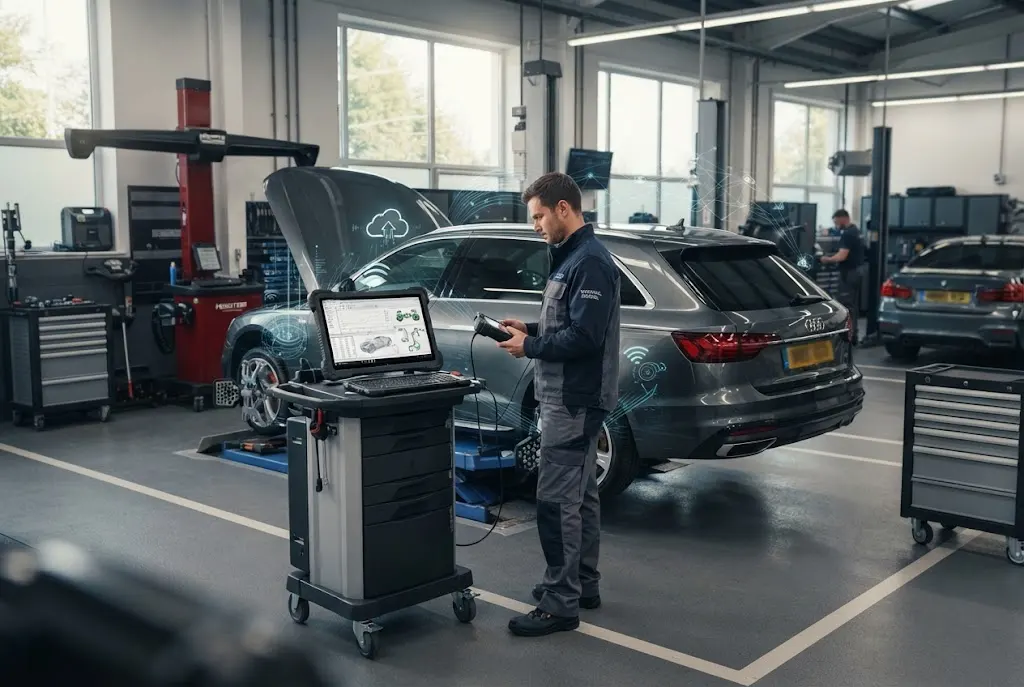
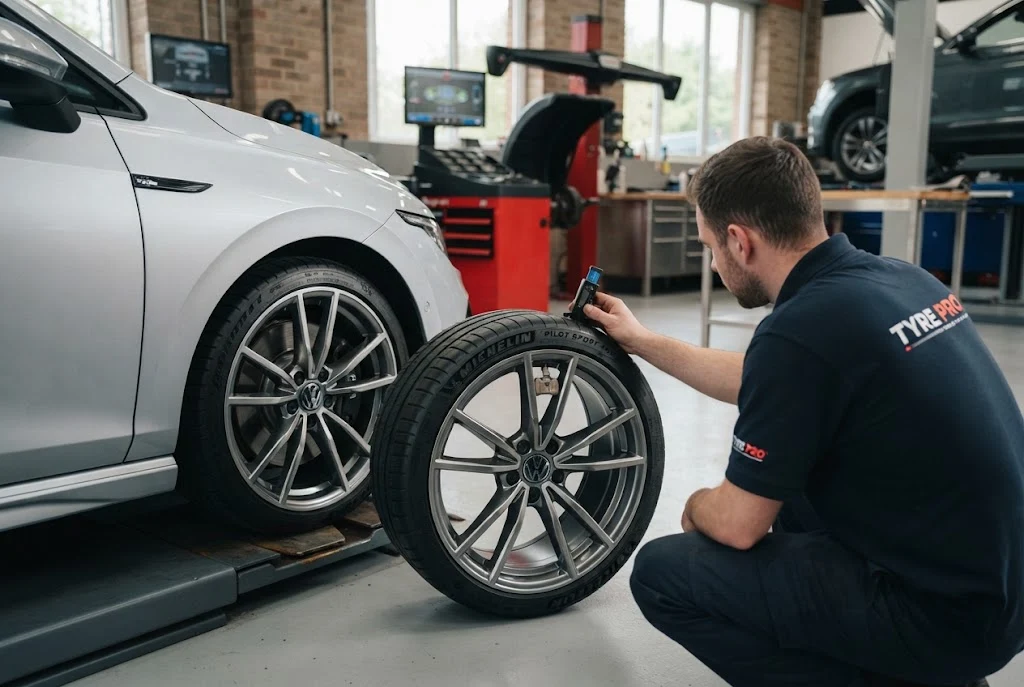
Modern tyre services are moving beyond traditional fitting, balancing and replacement. Connected vehicles are increasingly using intelligent tyres, tyre sensors and digital monitoring systems to understand tyre condition in greater detail. Instead of waiting for visible wear, a warning light or a puncture, drivers and service providers can use technology to identify potential problems earlier and make maintenance more proactive.
This shift is creating a new generation of smart tyre technology. From smart tyre pressure systems to tyre analytics and predictive maintenance, connected technology is changing how drivers understand tyre health and how automotive businesses deliver servicing. For motorists, the result can be better visibility of tyre condition and more informed maintenance decisions.
What Are Smart Tyre Services?
Smart tyre services combine conventional tyre maintenance with digital technologies that collect, process or communicate information about tyre condition. The technology can include pressure sensors, temperature monitoring, vehicle data, connected dashboards and diagnostic systems.
The purpose is not simply to add more technology to a vehicle. Instead, smart systems are designed to make tyre information more useful. A conventional tyre check may identify a problem during a scheduled inspection, whereas a connected system can provide information while the vehicle is being driven.
This creates an important difference between reactive and proactive maintenance. Traditional servicing often responds to a problem after it becomes noticeable. Smart tyre technology aims to provide earlier information so that a driver or technician can decide whether further investigation is required.
How Intelligent Tyres Are Changing Vehicle Maintenance
The term intelligent tyres covers a developing area of automotive technology in which tyre-related information becomes part of a vehicle’s wider digital ecosystem. Depending on the vehicle and system, data may relate to pressure, temperature, wheel behaviour or other operating conditions.
Some technologies are already common. Tyre Pressure Monitoring Systems, for example, can alert drivers when pressure falls below an appropriate threshold. More advanced connected solutions can potentially combine tyre information with other vehicle data to provide a broader picture of vehicle condition.
That matters because tyre performance is influenced by several factors. Incorrect pressure, uneven wear, wheel alignment problems, road impacts and driving conditions can all affect how a tyre performs. Digital information can help technicians investigate these issues more efficiently.
However, intelligent technology should complement rather than replace physical tyre inspections. Drivers still need to check tyres for visible damage, tread condition and other safety concerns.
Tyre Monitoring and the Role of Sensors
Tyre monitoring is one of the most established applications of smart automotive technology. A Tyre Pressure Monitoring System, commonly known as TPMS, can monitor pressure and warn the driver when a significant issue is detected.
According to TyreSafe’s guidance on TPMS, direct systems use sensors inside the wheels to measure tyre inflation pressure, while indirect systems use information from the vehicle’s ABS sensors to identify changes associated with tyre pressure.
Direct systems can provide individual pressure readings, while indirect systems interpret wheel behaviour to identify potential pressure differences. The exact system fitted depends on the vehicle and its design.
Tyre sensors are therefore becoming an important part of modern vehicle maintenance. They provide information that may not be obvious from a visual inspection alone. Nevertheless, a warning system is not a substitute for checking tyre pressures manually. TyreSafe recommends regular manual checks even when a vehicle is equipped with TPMS.
Why Sensor Condition Matters
Like other vehicle components, sensors can develop faults. Direct TPMS sensors can be affected by age, corrosion, accidental damage or depleted internal batteries. A sensor may also need programming when it is replaced.
This means tyre services increasingly need technicians who understand both the physical tyre and the electronic systems connected to it. A tyre change on a modern vehicle may involve more than removing and fitting rubber; technicians may also need to consider sensor compatibility and system calibration.
Smart Tyre Pressure Systems and Driver Safety
Smart tyre pressure systems provide drivers with an additional layer of information about tyre inflation. Correct pressure is important because it affects handling, grip, tyre wear and overall vehicle behaviour.
The UK’s Highway Code advises drivers to keep tyres correctly inflated according to the vehicle manufacturer’s specification. It also highlights the importance of checking tyre pressure when tyres are cold. This makes accurate pressure monitoring a practical part of responsible vehicle ownership.
A dashboard warning can be particularly useful because pressure loss is not always obvious from outside the vehicle. A tyre can look reasonably normal while operating below its recommended pressure.
However, drivers should respond to warnings rather than simply resetting them. If a TPMS warning appears, the underlying pressure issue should be investigated. If the tyre has lost pressure repeatedly, there may be a puncture, valve problem or another fault that requires professional attention.
What Is Predictive Tyre Maintenance?
Predictive tyre maintenance takes the concept of monitoring a step further. Instead of simply identifying a current problem, predictive systems aim to use historical and real-time information to identify conditions that may require attention in the future.
For example, a connected service platform could potentially analyse recurring pressure changes, mileage, service records and other available vehicle information. The objective is to help identify maintenance requirements before they become urgent.
This approach can be particularly valuable for businesses managing multiple vehicles. Fleet operators need to keep vehicles available while also maintaining safety and controlling operating costs. A more data-driven maintenance process can help them plan inspections and servicing around vehicle usage.
For individual motorists, predictive maintenance could eventually make tyre servicing more convenient by connecting vehicle data with reminders, service bookings and maintenance records.
How Tyre Analytics Can Improve Service Decisions
Tyre analytics refers to the use of collected tyre and vehicle information to identify patterns and support maintenance decisions. Rather than treating every tyre check as an isolated event, analytics can provide a longer-term view of how a vehicle’s tyres are performing.
Consider a vehicle that repeatedly experiences pressure loss in the same wheel. A single pressure check may resolve the immediate issue, but repeated data could indicate that further investigation is needed.
Similarly, service businesses could use historical information to understand common maintenance patterns across a fleet or customer base. This does not mean technology can diagnose every tyre problem automatically. Instead, it provides another source of information that trained professionals can use alongside physical inspections and manufacturer guidance.
As automotive platforms become increasingly connected, tyre data may also become part of a wider digital service record. This creates opportunities to connect tyre maintenance with other areas of automotive servicing, including digital vehicle inspection and vehicle service history.
Smart Tyre Technology for Fleets
Fleet operators have a particularly strong reason to adopt connected tyre technology. A vehicle that remains off the road because of a tyre issue can affect schedules, deliveries and operating costs.
With suitable monitoring systems, fleet managers can gain better visibility of tyre-related information across multiple vehicles. Instead of relying entirely on individual drivers to identify problems, a central system can help service teams organise maintenance around available vehicle data.
This can support a more structured maintenance process. Service teams can identify vehicles requiring attention, investigate recurring problems and keep records of completed work.
The benefits depend heavily on the quality of the data and the way a business uses it. Technology alone does not guarantee better maintenance. It needs to be integrated with appropriate inspections, qualified technicians and sensible service procedures.
Will Smart Tyres Replace Traditional Tyre Checks?
Smart technology is unlikely to eliminate the need for physical tyre inspections. Digital systems are excellent at providing information, but they cannot necessarily identify every visible or structural problem.
A technician can inspect tread condition, cuts, bulges, foreign objects, sidewall damage and other physical characteristics that may not be captured by a sensor. Similarly, drivers should remain aware of changes in handling, vibration or other unusual behaviour.
The strongest approach combines both methods. Digital monitoring can provide an early warning, while professional tyre services can investigate the physical condition of the tyre and determine the appropriate action.
How Smart Tyre Technology Connects With Digital Automotive Services
Smart tyre technology is part of a much larger transformation across automotive services. Vehicle maintenance is becoming increasingly connected, with inspection systems, service histories, payment technology and vehicle marketplaces moving into digital environments.
For example, a customer may eventually move from a digital tyre warning to an online inspection appointment, receive a digital estimate and choose a suitable repair finance option without relying on separate disconnected systems.
The same connected ecosystem can extend into vehicle purchasing. Digital vehicle platforms and automotive marketplaces are making it easier for consumers to research vehicles, compare options and access services online. This wider shift is covered in our guide to modern car finance and the changing automotive finance experience.
As these systems become more integrated, tyre information could become another useful data point within the vehicle ownership journey.
What Drivers Should Look For in Modern Tyre Services
When choosing modern tyre services, drivers should not focus on technology alone. The most important consideration remains the quality and safety of the underlying service.
Look for a provider that can explain what monitoring technology is available for your vehicle and what its alerts mean. If your car has TPMS, ask whether the provider can diagnose, service and programme the relevant sensors when necessary.
It is also useful to understand what information a digital system actually provides. A pressure warning, for example, is different from a comprehensive tyre health assessment. Clear explanations help drivers avoid assuming that a dashboard system can detect every possible tyre defect.
For businesses operating fleets, additional questions may include how data is stored, how alerts are managed and whether tyre information can be connected with existing maintenance workflows.
The Future of Tyre Services
The future of tyre services is likely to become increasingly connected. Sensors are already helping vehicles monitor tyre pressure, while broader automotive data platforms are creating opportunities for more sophisticated analytics and maintenance planning.
As vehicles become more software-driven, tyre information can potentially become part of a wider digital vehicle profile. This could support better maintenance reminders, service scheduling and communication between drivers, workshops and fleet operators.
Predictive systems may also become more useful as more historical data becomes available. However, the value of these systems will depend on accurate data, appropriate interpretation and professional follow-up.
For drivers, the key takeaway is simple: smart tyre technology should make maintenance more informed, not less attentive. Sensors and analytics can highlight potential issues, but regular checks and professional inspections remain essential.
Final Thoughts on Smart Tyre Technology
Smart tyre technology is changing the way modern tyre services can monitor, maintain and manage vehicle tyres. Intelligent tyres, tyre sensors, monitoring systems and analytics are helping move automotive maintenance towards a more proactive model.
The biggest opportunity is not simply the ability to collect more data. It is the ability to turn useful information into timely maintenance decisions. When digital monitoring is combined with regular physical checks and qualified professional servicing, drivers and businesses can make better-informed decisions about tyre safety and vehicle maintenance.
As connected automotive services continue to develop, tyres are becoming an increasingly important part of the digital vehicle ecosystem. The future will likely involve closer integration between tyre monitoring, inspections, finance, service platforms and other automotive technologies.