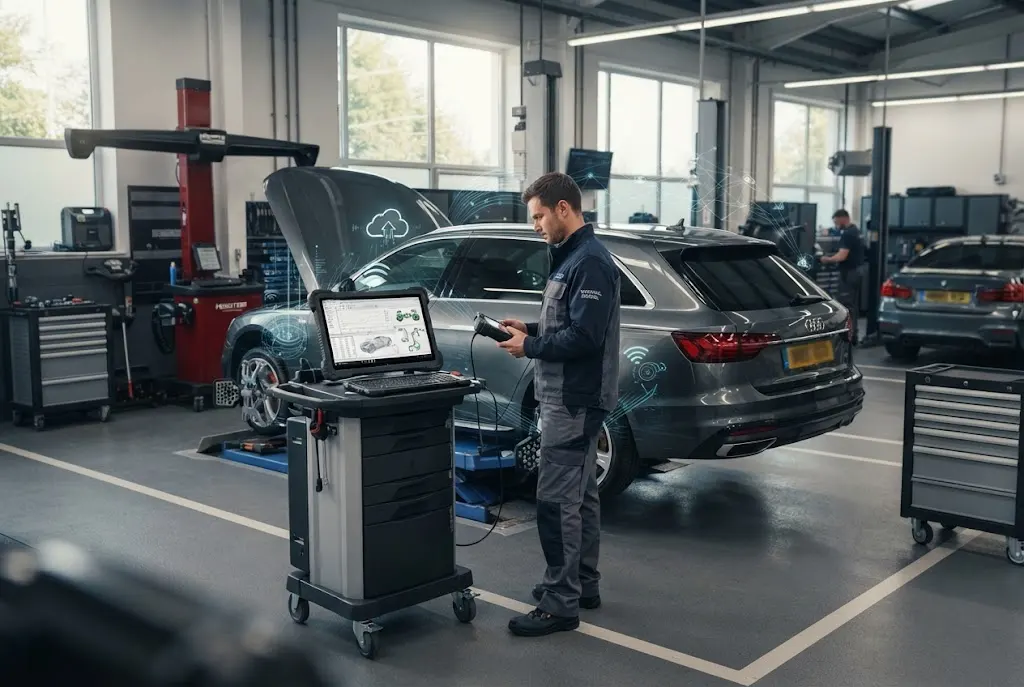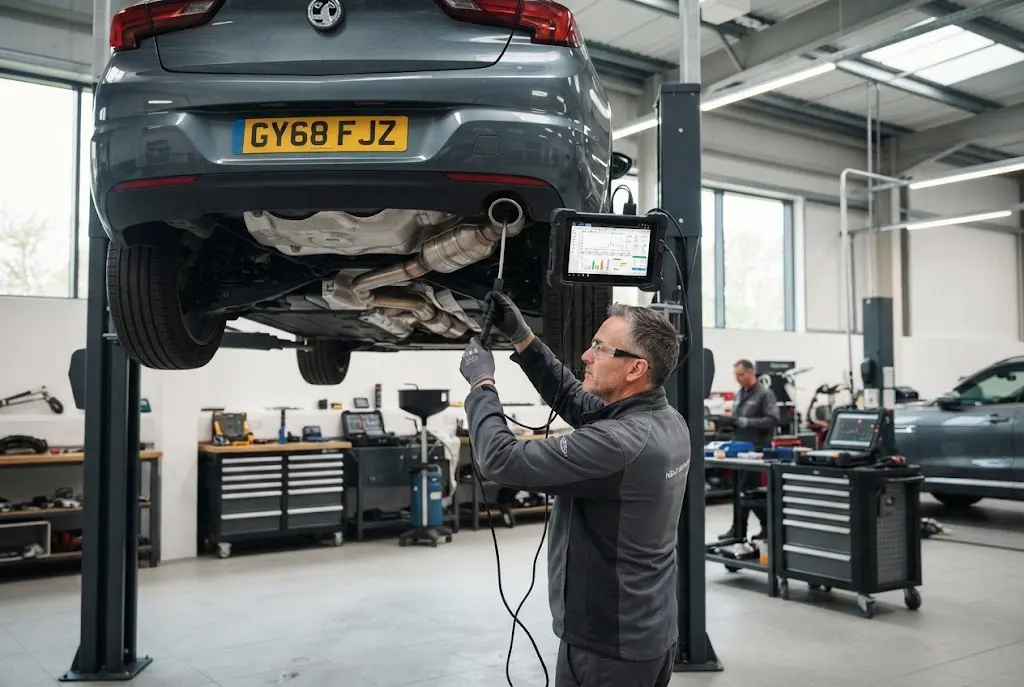
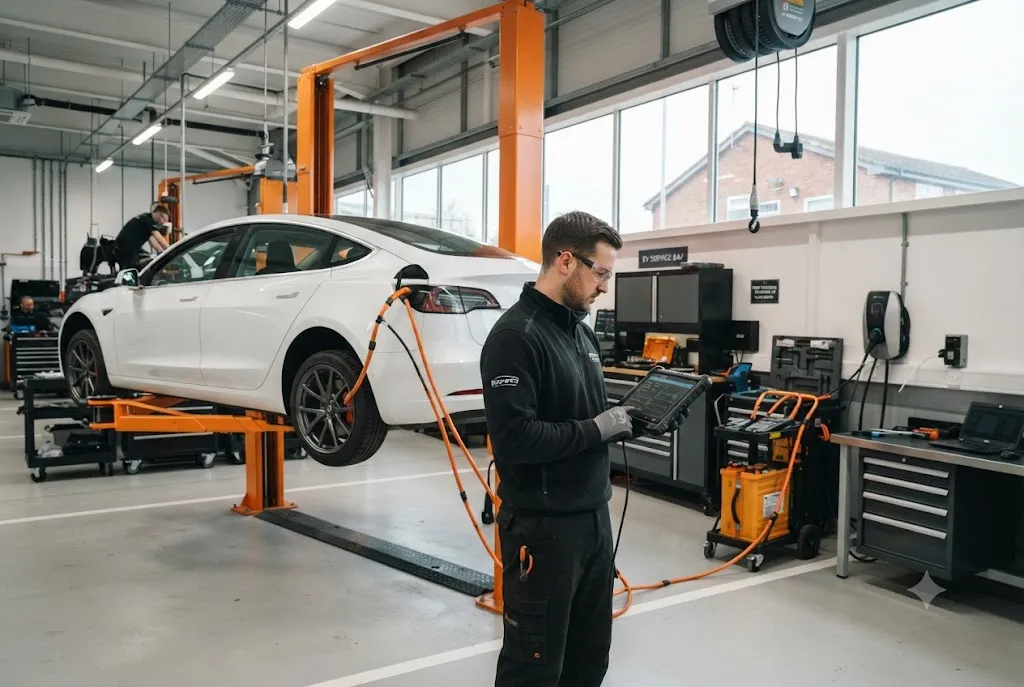
EV servicing is becoming an increasingly important part of the UK automotive aftermarket as more drivers move from conventional petrol and diesel cars to electric vehicles. While electric vehicles have fewer traditional mechanical components, their servicing requirements involve sophisticated batteries, electric motors, power electronics, software and connected systems.
That shift is changing what modern workshops need from their technicians and technology. AI diagnostics, battery management systems, connected vehicle platforms and predictive maintenance tools can help workshops understand electric vehicles more effectively and prepare for a service environment where software and electrical systems are just as important as mechanical components.
For independent garages and larger workshop networks, the transition is not simply about buying new diagnostic equipment. It involves training, safety procedures, data management and digital infrastructure that can support increasingly software-driven vehicles.
Why EV servicing is different
Electric vehicles have a fundamentally different powertrain from conventional internal combustion vehicles. There is no conventional engine oil system, exhaust system or traditional multi-speed gearbox in many EVs. Instead, the vehicle relies on a high-voltage battery, electric motor, inverter and other electrical and electronic components.
This does not mean electric vehicles require no maintenance. Tyres, brakes, steering, suspension, cooling systems, electrical components and other vehicle systems still need appropriate inspection and maintenance.
The difference is that workshops increasingly need to understand how these mechanical components interact with electrical and software-controlled systems.
The Health and Safety Executive highlights that electric and hybrid vehicles can contain high-voltage components capable of causing fatal electric shock. It also states that additional skills, knowledge and specialist equipment may be required depending on the work being undertaken. HSE guidance on electric and hybrid vehicles explains the safety considerations workshops need to address.
How AI is changing EV diagnostics
EV diagnostics can produce a large amount of technical information. Battery condition, charging behaviour, thermal performance, fault codes, voltage readings and other system information may all contribute to understanding a vehicle’s condition.
AI can potentially help technicians organise this information and identify patterns that deserve further investigation.
For example, an intelligent diagnostic system might compare current vehicle data with historical readings and highlight unusual changes. Instead of presenting technicians with isolated data points, an AI-assisted platform could help provide context around what those readings may indicate.
This can be particularly useful when a fault involves several interconnected systems. A charging problem, for example, may involve the charging equipment, vehicle electronics, battery management system or other components. Software can help organise the diagnostic process, while a qualified technician remains responsible for confirming the underlying issue.
EV diagnostics are becoming more data-driven
Traditional vehicle diagnostics often begin with a warning light or diagnostic trouble code. EV diagnostics increasingly require a broader view because the vehicle’s operation depends heavily on software and electronic control systems.
Modern electric vehicles continuously monitor many aspects of their operation. The battery management system monitors cells and other battery parameters, while thermal management systems regulate temperatures and electronic controllers coordinate power delivery.
This creates an opportunity for more sophisticated diagnostic platforms. Instead of treating each warning as an isolated event, intelligent software can potentially analyse related information and help technicians understand the wider context.
However, software should support rather than replace physical inspection. A diagnostic result is not automatically a repair instruction. Technicians still need to verify faults using appropriate manufacturer information, testing procedures and safety practices.
Battery AI and electric vehicle health
The high-voltage battery is one of the most important components in an electric vehicle, making battery health a major consideration for EV servicing.
Battery AI refers broadly to the use of intelligent software techniques to analyse battery-related information. Depending on the available data and vehicle architecture, such systems could potentially identify patterns involving charging behaviour, temperature, voltage variation and other battery parameters.
The goal is not necessarily to predict every battery problem. Rather, intelligent analysis can help identify unusual behaviour that may justify additional testing.
This could become increasingly valuable as electric vehicles age. A workshop with access to appropriate historical information may be able to build a better understanding of how a vehicle’s battery system has behaved over time.
Battery management systems are central to EV operation
Battery management systems are fundamental to modern electric vehicles. They help monitor and manage the high-voltage battery and support safe and effective operation.
For technicians, understanding the relationship between the battery management system and the wider vehicle is therefore important.
A fault involving battery performance may not necessarily originate from the battery cells themselves. Sensors, electrical connections, cooling systems, charging components or control software can also influence how the system behaves.
This is one reason why EV servicing requires a systems-based approach. Technicians need to understand how different components interact rather than automatically replacing the most expensive component associated with a warning.
Smart charging is becoming part of the EV ecosystem
Smart charging adds another layer to electric vehicle technology. Instead of simply connecting a vehicle to a charger, smart charging systems can use software to manage when and how charging takes place.
Depending on the system, charging can be coordinated around electricity demand, user preferences, tariffs or other conditions.
For workshops, this creates a potential connection between vehicle servicing and charging behaviour. Charging information may eventually provide useful context when investigating certain vehicle concerns, particularly where a customer reports unusual charging performance.
However, charging infrastructure and vehicle systems are separate components of a wider ecosystem. Workshops should diagnose problems systematically rather than assume that every charging issue originates inside the vehicle.
Predictive EV maintenance can change the servicing model
Predictive EV maintenance is one of the most interesting applications of AI and connected vehicle technology.
Traditional servicing often follows scheduled intervals. Predictive maintenance supplements those schedules with information about the actual condition and usage of components.
For example, connected systems could potentially identify patterns that indicate unusual battery behaviour, thermal performance or component wear. A workshop could then investigate the issue before it develops into a larger problem.
Predictive maintenance should not be viewed as a guarantee that failures can always be forecast. Vehicle systems remain complex, and available data varies between manufacturers. The practical benefit comes from identifying useful signals early enough to support informed maintenance decisions.
Connected EV platforms and modern workshops
Connected EV platforms can create a bridge between vehicles and workshop management systems.
Imagine a customer booking an EV service online. Before the appointment, authorised vehicle information could potentially provide the workshop with relevant context. The workshop could prepare the appropriate equipment, allocate suitable technician time and identify whether additional checks may be appropriate.
When the vehicle arrives, the service record can then connect the customer’s booking with inspection results, diagnostic information and completed work.
This creates a more continuous digital history instead of treating each workshop visit as an isolated event.
It also connects with the wider development of automotive software, where cloud garage platforms and service management systems are increasingly used to connect bookings, technicians, customers and vehicle records.
What EV servicing means for technicians
The growth of electric vehicles does not make traditional mechanical skills irrelevant. Instead, it adds another technical dimension.
Technicians working on EVs need to understand the appropriate high-voltage safety procedures for the vehicles they service. Depending on the work involved, this can include isolation procedures, appropriate personal protective equipment, specialist tools and vehicle-specific technical information.
Training is therefore a central part of EV workshop preparation.
AI can help a trained technician interpret information, but it cannot make an unqualified person competent to work on a high-voltage system. Technology should always operate within the workshop’s established safety framework.
EV servicing and workshop safety
Safety is particularly important when dealing with high-voltage components.
HSE guidance explains that electric and hybrid vehicles can contain high-voltage batteries, cables and components that can present serious electrical hazards. It recommends appropriate training, equipment and procedures for the work being performed. ([hse.gov.uk](https://www.hse.gov.uk/mvr/topics/electric-hybrid.htm?utm_source=chatgpt.com))
Workshop owners should therefore avoid treating EV servicing as simply another diagnostic category. The required competence depends on the type of work, the vehicle and the electrical systems involved.
Proper manufacturer information should also be available. EV architectures differ significantly between manufacturers, so technicians should follow the correct procedures for the specific vehicle.
How EV servicing affects garage chains
The growth of electric vehicles creates a major operational challenge for garage chains. A national network needs consistent training, equipment and procedures across multiple branches.
Some locations may see more EVs than others. Central management therefore needs visibility into technician skills, equipment availability and regional demand.
Digital workshop systems can help coordinate this information. A booking platform could potentially identify an EV appointment and route it towards a location with appropriately trained staff and suitable equipment.
This is one area where the wider transformation of garage chains becomes particularly relevant. Connected workshop networks can make it easier to coordinate specialist services across multiple locations.
Why EV workshops need better data
Data quality will become increasingly important as electric vehicle technology develops.
A workshop may need to maintain accurate information about vehicle specifications, service history, diagnostic findings, battery-related inspections and completed work. If these records are incomplete or inconsistent, intelligent software becomes less useful.
For this reason, digital transformation should begin with strong data practices.
Every service visit should create an accurate record that can help technicians understand what has previously happened to the vehicle. Over time, these records can provide a valuable foundation for analytics and predictive maintenance.
EV servicing and customer expectations
Electric vehicle owners may have different questions from drivers of conventional vehicles. Customers can be concerned about charging, battery health, range, software updates and long-term maintenance costs.
Workshops therefore need to communicate technical information clearly.
Digital inspection reports can help explain findings using photographs, measurements and straightforward descriptions. Automated communication can keep customers informed about approval requests and service progress, while service advisors remain available for questions that require personal explanation.
The best use of technology is therefore not to remove human interaction. It is to make that interaction more informed and efficient.
How EV servicing connects with hybrid maintenance
There is considerable overlap between the digital transformation of EV and hybrid maintenance.
Both can involve high-voltage systems, sophisticated electronic controls, battery monitoring and specialist diagnostic procedures. However, their architectures are not identical.
Workshops should therefore avoid assuming that experience with one type of electrified vehicle automatically provides all the knowledge needed for another.
As discussed in our guide to hybrid servicing, manufacturer-specific procedures, technician training and appropriate safety practices remain essential.
What should workshops invest in first?
Workshops preparing for more EV work should take a structured approach.
Invest in technician training
Competent technicians are the foundation of safe EV maintenance. Training should reflect the type of work the workshop intends to undertake.
Use suitable diagnostic equipment
EV diagnostics require equipment capable of communicating with the relevant vehicle systems. Compatibility and manufacturer coverage should be assessed before purchasing technology.
Strengthen digital records
Accurate service histories and inspection information create the foundation for future intelligent maintenance.
Review workshop safety procedures
EV work can involve hazards that differ from conventional vehicle servicing. Appropriate procedures, tools and equipment should be established before undertaking specialist work.
Choose software that can evolve
Workshop management technology should be capable of integrating with new tools and vehicle information sources as the business develops.
The future of EV servicing in the UK
EV servicing is moving towards a more connected, software-driven model. Batteries, charging systems, diagnostics, workshop management and customer communication are increasingly part of one digital ecosystem.
AI can contribute by analysing information, identifying patterns and automating selected administrative processes. Connected platforms can make vehicle and workshop data more accessible, while predictive maintenance may help workshops identify issues earlier.
Yet the fundamentals remain unchanged: qualified technicians, correct procedures, reliable equipment and careful diagnosis are essential.
The strongest UK workshops will therefore combine technology with technical expertise. Rather than treating AI as a replacement for technicians, they can use it as a tool that helps professionals work with increasingly complex vehicles.
As electric vehicle adoption continues, this approach will become increasingly important. Workshops that invest in training, digital infrastructure, safe working practices and intelligent diagnostic capabilities will be better positioned to serve the next generation of UK drivers.
The future of EV servicing is not simply electric. It is connected, data-driven and increasingly intelligent, with technology helping workshops deliver safer, more informed and more efficient vehicle maintenance.