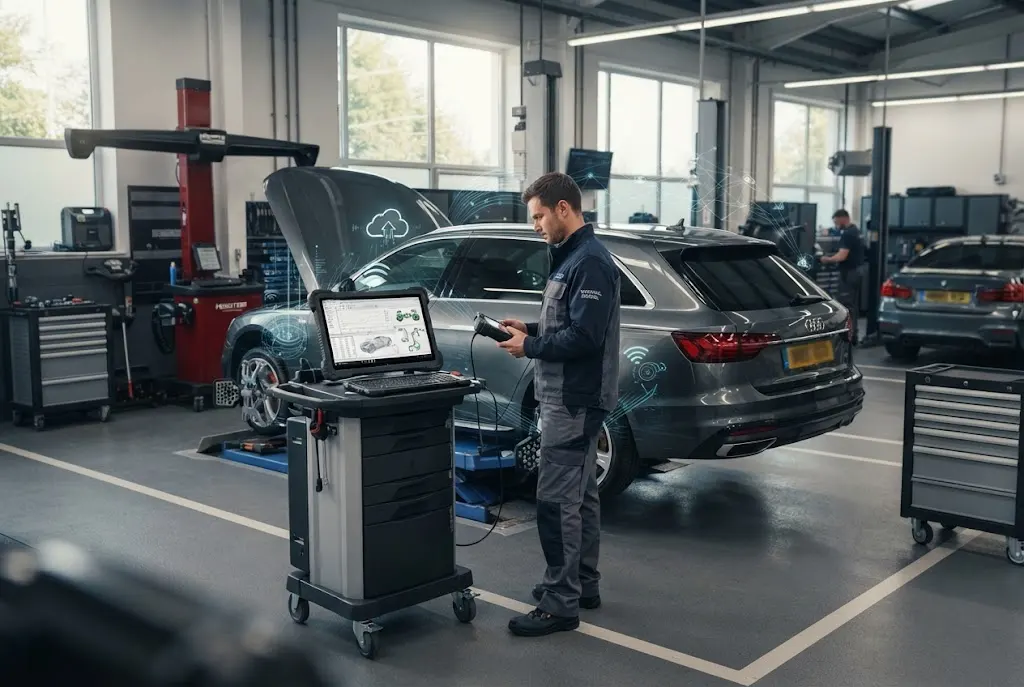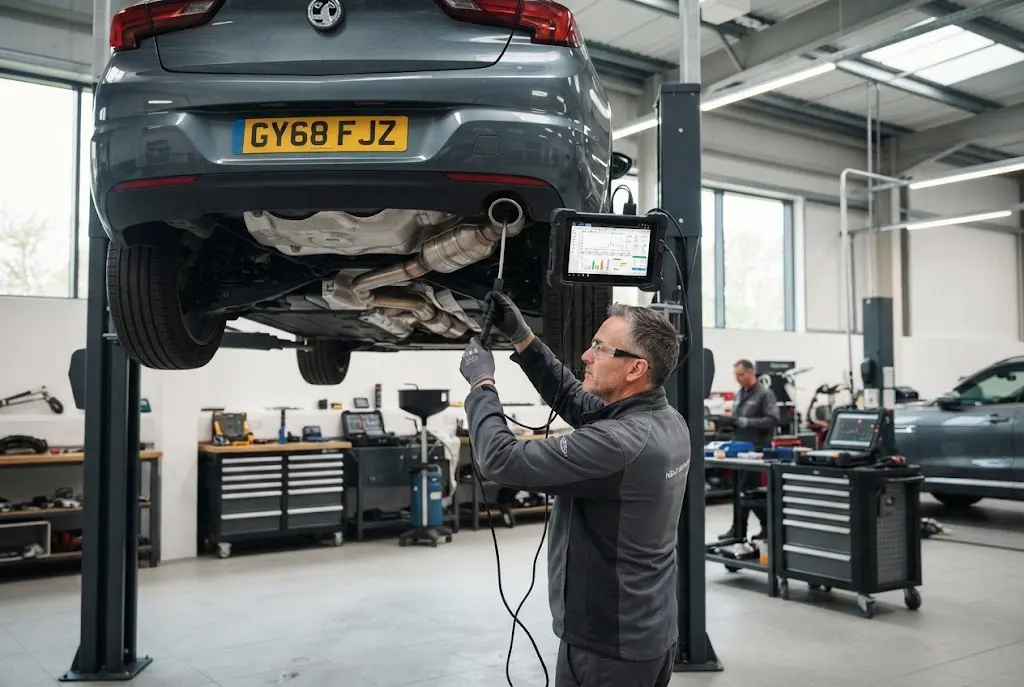
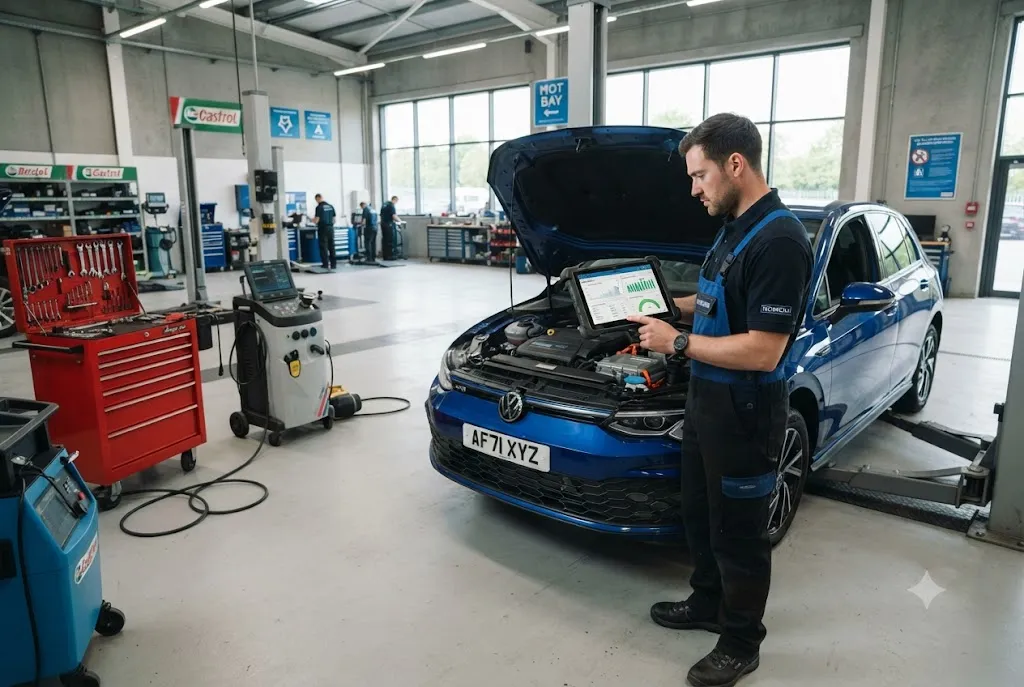
Hybrid servicing is becoming more sophisticated as modern hybrid vehicles combine conventional engines with electric motors, high-voltage batteries and increasingly complex electronic systems. For UK garages, this means maintaining a hybrid vehicle can require more than traditional mechanical knowledge.
Artificial intelligence, connected vehicle data and advanced diagnostic technology are beginning to change how workshops approach hybrid maintenance. Instead of relying solely on periodic inspections and reactive repairs, intelligent systems can help technicians interpret vehicle information, identify potential issues and monitor important components over time.
This development is particularly relevant as hybrid vehicles become a familiar part of the UK vehicle parc. Full hybrids, mild hybrids and plug-in hybrids use different technologies, so workshops need appropriate information, equipment and training for the specific vehicle being serviced.
Why hybrid servicing is becoming more advanced
A conventional petrol or diesel vehicle has a familiar mechanical architecture. A hybrid adds another energy source and additional electronic systems to that environment.
GOV.UK guidance for MOT testers identifies full hybrids, mild hybrids and plug-in hybrids as distinct types of hybrid technology. Full hybrids can use the engine, electric power or both, while mild hybrids use an electrical system to assist the engine and plug-in hybrids can be charged from an external electricity supply. The official hybrid vehicle guidance for MOT testers explains these differences and the safety considerations involved. :contentReference[oaicite:0]{index=0}
For workshops, the result is a wider diagnostic picture. Engine performance remains important, but technicians may also need to consider battery behaviour, electric motor operation, regenerative braking, cooling systems, charging components and electronic control systems.
How AI can support hybrid servicing
AI does not need to replace a technician to be useful. Its strongest role may be helping technicians process large quantities of vehicle information more efficiently.
Modern diagnostic systems can generate considerable amounts of data. An intelligent platform could potentially compare current readings with historical information, identify unusual patterns and highlight areas that deserve further investigation.
This could make the diagnostic process more efficient, particularly when a warning does not immediately point to a single obvious mechanical fault.
However, AI-generated recommendations should be treated as decision-support information rather than a substitute for qualified inspection. Hybrid systems can involve high-voltage components, and safe repair procedures must remain a priority.
Hybrid AI diagnostics and smarter fault detection
The Hybrid AI diagnostics could become particularly valuable when multiple vehicle systems interact.
For example, a hybrid vehicle may experience a change in fuel efficiency, battery behaviour or regenerative braking performance without producing an immediately obvious mechanical symptom. An intelligent diagnostic platform could analyse several related data points and help identify patterns that warrant attention.
This approach is different from simply reading a diagnostic trouble code. A code can indicate that a system has detected an abnormal condition, but understanding why that condition occurred may require additional testing and vehicle-specific information.
AI can potentially help organise this information so that technicians spend less time searching through unrelated data and more time performing the checks required to confirm a diagnosis.
From fault codes to patterns
Traditional diagnostics often begin with a warning light or stored fault code. Intelligent systems can potentially expand the process by considering trends over time.
Repeated temperature changes, unusual battery behaviour or recurring system warnings may provide useful context. When historical vehicle information is available, a workshop may be able to identify patterns that would otherwise be difficult to see during a single appointment.
The quality of the result depends heavily on the quality of the underlying data. AI cannot compensate for inaccurate vehicle information or inappropriate diagnostic procedures.
Hybrid battery monitoring is becoming more important
The hybrid battery is one of the most important differences between a hybrid and a conventional petrol or diesel vehicle. Its condition can influence electric assistance, fuel efficiency and overall vehicle performance.
Hybrid battery monitoring therefore has an important role in preventative maintenance. Depending on the vehicle and diagnostic equipment, workshops may be able to examine battery-related information and identify conditions that require further investigation.
Continuous or connected monitoring could eventually provide a more detailed picture of battery behaviour than a single inspection. Instead of viewing battery information only when the vehicle enters a workshop, connected systems could potentially make selected data available throughout the vehicle’s operating life.
That does not mean every battery requires frequent intervention. The purpose of monitoring is to understand condition and identify appropriate maintenance requirements rather than automatically recommend replacement.
Why battery health should not be judged by one number
Hybrid battery condition is more complicated than simply asking whether a battery is working or not.
Battery performance can be influenced by temperature, usage, vehicle design, charging behaviour and other factors. Different manufacturers also use different battery management strategies and diagnostic methods.
Consequently, workshops should use vehicle-specific information and appropriate diagnostic procedures rather than relying on a generic interpretation of battery data.
This is particularly important for customers. A battery-related warning does not automatically mean that an expensive replacement is required. Proper diagnosis should establish what has actually happened before repair recommendations are made.
Toyota hybrid service and the importance of manufacturer-specific information
Toyota hybrid service is often discussed because Toyota has extensive experience with hybrid vehicles, including models such as the Prius and hybrid versions of other vehicles in its range.
However, the principles involved extend beyond Toyota. Hybrid systems differ between manufacturers and model generations, meaning workshops should not assume that one diagnostic approach applies universally.
GOV.UK guidance specifically notes that vehicle makes and models can have systems that differ from the examples described in its guidance and recommends checking the vehicle handbook or consulting the owner or manufacturer when necessary. :contentReference[oaicite:1]{index=1}
This makes manufacturer-specific technical information an important part of professional hybrid servicing. A capable workshop needs access to appropriate procedures, diagnostic information and safety instructions for the vehicle being worked on.
Intelligent hybrid maintenance and predictive servicing
One of the most interesting possibilities is the development of intelligent hybrid maintenance.
Traditional servicing is generally based on scheduled intervals and the condition identified during an inspection. Predictive approaches aim to supplement that model with information about how a vehicle is actually behaving.
An intelligent system could potentially use service history, diagnostic information and other available data to identify components or systems that may need closer attention. This could help workshops plan work more effectively and reduce unexpected problems.
Predictive maintenance should not be confused with predicting every future failure. Vehicle systems remain complex, and software cannot eliminate uncertainty. Its value is in identifying useful signals that support better maintenance decisions.
Connected hybrid systems and the modern workshop
Connected hybrid systems create another opportunity for digital transformation. When vehicles can securely communicate selected information to approved platforms, workshops may eventually have better visibility into vehicle condition before an appointment begins.
This could improve preparation. A workshop might know the vehicle model, relevant service history and certain diagnostic information before the customer arrives. Technicians could then prepare equipment or allocate appropriate time based on the job requirements.
Connected information can also support customer communication. Instead of waiting until a vehicle develops an obvious symptom, drivers could potentially receive useful maintenance information based on appropriate vehicle data.
However, connected systems need strong controls around privacy, cybersecurity and access. Vehicle data should only be collected, transmitted and used through appropriate systems and permissions.
Hybrid software is becoming part of workshop infrastructure
Hybrid software is not limited to a single diagnostic application. Increasingly, it can become part of a wider workshop technology ecosystem.
Workshop management platforms can connect customer records, bookings and job information with diagnostic processes. This allows the technical side of hybrid servicing to sit alongside the administrative side of the business.
That connection is important because a workshop job rarely consists of diagnostics alone. A customer books a vehicle, the vehicle is inspected, additional work may be recommended, parts may need to be sourced and the completed work must be recorded.
Connecting these stages creates a more complete digital history and can make it easier for staff to understand what has happened to a vehicle over time.
Safety must remain central to hybrid servicing
Hybrid technology introduces safety considerations that workshops cannot treat casually.
The Health and Safety Executive states that electric and hybrid vehicles can contain high-voltage components and cabling capable of causing fatal electric shock. It also notes that additional skills, knowledge and specialist equipment may be required depending on the work being performed. :contentReference[oaicite:2]{index=2}
For high-voltage work, HSE guidance stresses the importance of vehicle-specific manufacturer information, suitable tools and equipment, isolation procedures and proving electrical systems are safe before work is undertaken. :contentReference[oaicite:3]{index=3}
This is why AI and diagnostic technology should support qualified technicians rather than encourage inexperienced users to carry out high-voltage repairs without the required competence.
Hybrid servicing and MOT inspections
Hybrid vehicles can also present specific considerations during MOT testing. GOV.UK guidance explains that technicians need to understand how hybrid systems are made safe and should be aware that an engine may start unexpectedly when electrical equipment is operated or battery voltage changes. :contentReference[oaicite:4]{index=4}
The official MOT inspection manual also states that batteries on electric and hybrid vehicles must be inspected, while propulsion batteries carry high voltage and require additional care. :contentReference[oaicite:5]{index=5}
These requirements reinforce an important principle: digital diagnostics and AI can improve information processing, but they do not remove the need for correct physical inspection and safe working practices.
How workshops can prepare for intelligent hybrid maintenance
Workshops looking to expand their hybrid capabilities should think beyond purchasing a diagnostic device.
First, technicians need appropriate training for the types of hybrid systems they are expected to work on. Second, the workshop needs suitable safety equipment and procedures. Third, diagnostic tools should be compatible with the vehicles and systems being serviced.
Finally, workshop management software should make it easy to retain accurate service information. A digital record of inspections, repairs and diagnostic findings can become increasingly valuable as connected and intelligent maintenance develops.
This is where the wider evolution of automotive software becomes relevant. A modern platform can provide the digital foundation needed to connect vehicle information, workshop operations and customer communication.
Hybrid servicing in the age of connected vehicles
The future of hybrid servicing is likely to combine several technologies rather than rely on one AI feature.
Connected vehicle information can provide context. Diagnostic tools can collect technical data. AI can help identify patterns. Workshop management software can organise the job. Technicians can then apply professional judgement to confirm the issue and determine the appropriate repair.
This combination could make workshops more proactive while giving customers clearer information about their vehicles.
It also creates a natural bridge towards electric vehicle maintenance. Many of the digital principles used for hybrid systems, including battery monitoring, connected diagnostics and predictive maintenance, will become increasingly relevant as workshops handle more fully electric vehicles.
The future of hybrid servicing in the UK
Hybrid servicing is moving towards a more connected and data-driven model. AI diagnostics, battery monitoring and intelligent maintenance tools can help workshops understand complex vehicle systems more efficiently, but technology must remain grounded in qualified human expertise.
The most effective workshops will not simply adopt AI because it is new. They will use it where it solves a genuine problem: identifying useful diagnostic patterns, organising vehicle information, supporting preventative maintenance or reducing repetitive administrative work.
As hybrid vehicles continue to evolve, the combination of skilled technicians, manufacturer-specific information, specialist equipment and intelligent software will become increasingly important.
For UK workshops, preparing for this change means building strong foundations now. Reliable digital records, appropriate training, safe working procedures and connected workshop systems can make it easier to adopt more advanced technologies in the future.
The result is a more intelligent approach to vehicle maintenance—one where data helps technicians make informed decisions, customers receive clearer information and workshops can manage increasingly complex hybrid systems with greater confidence.