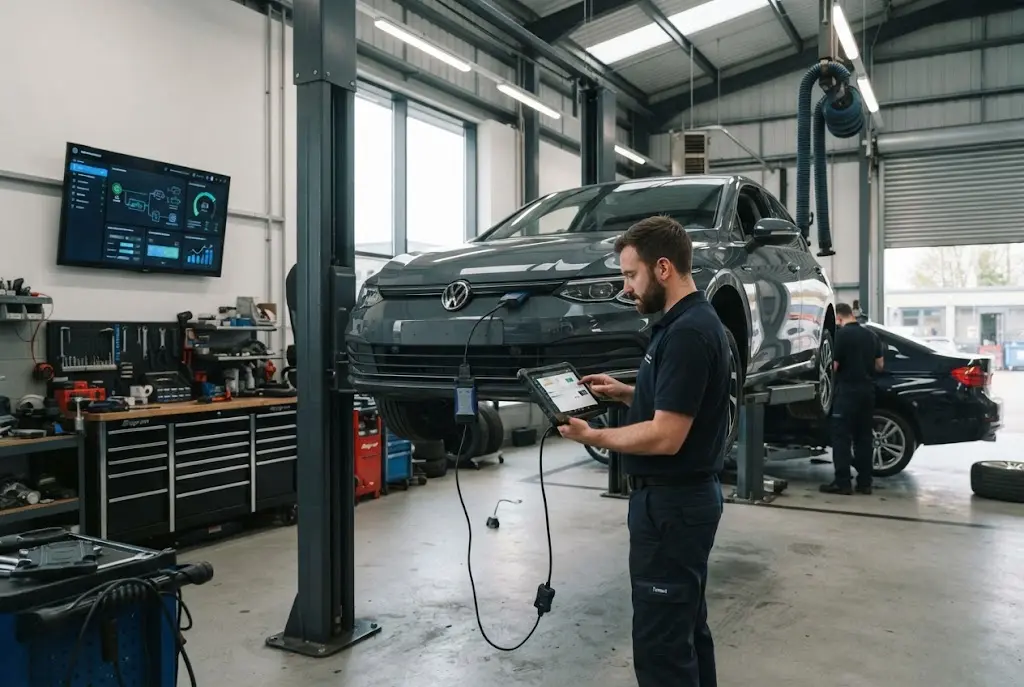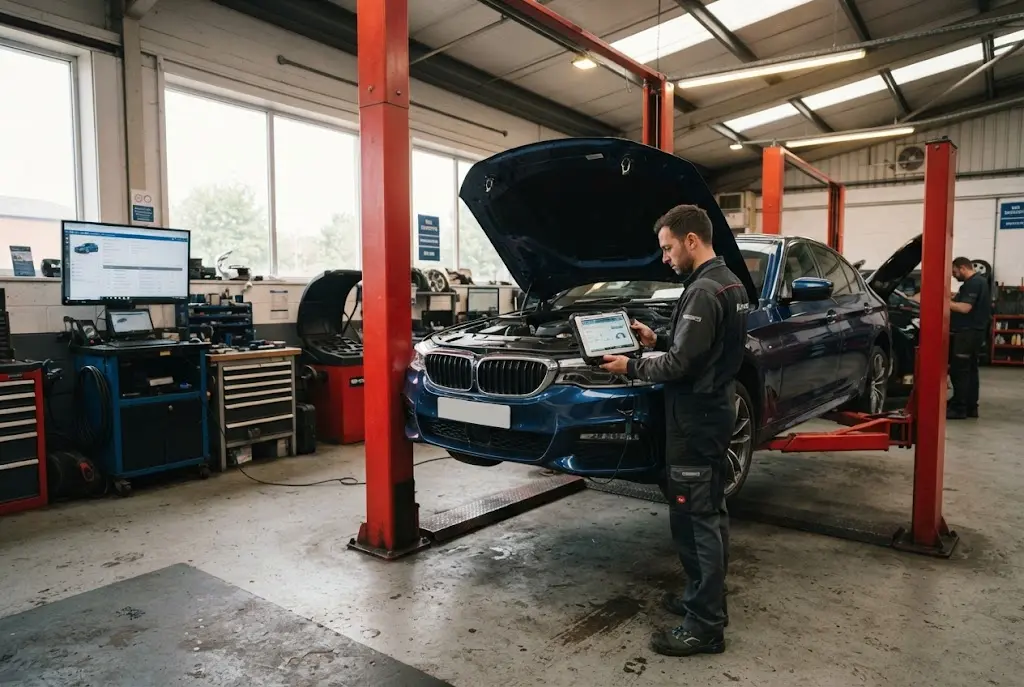
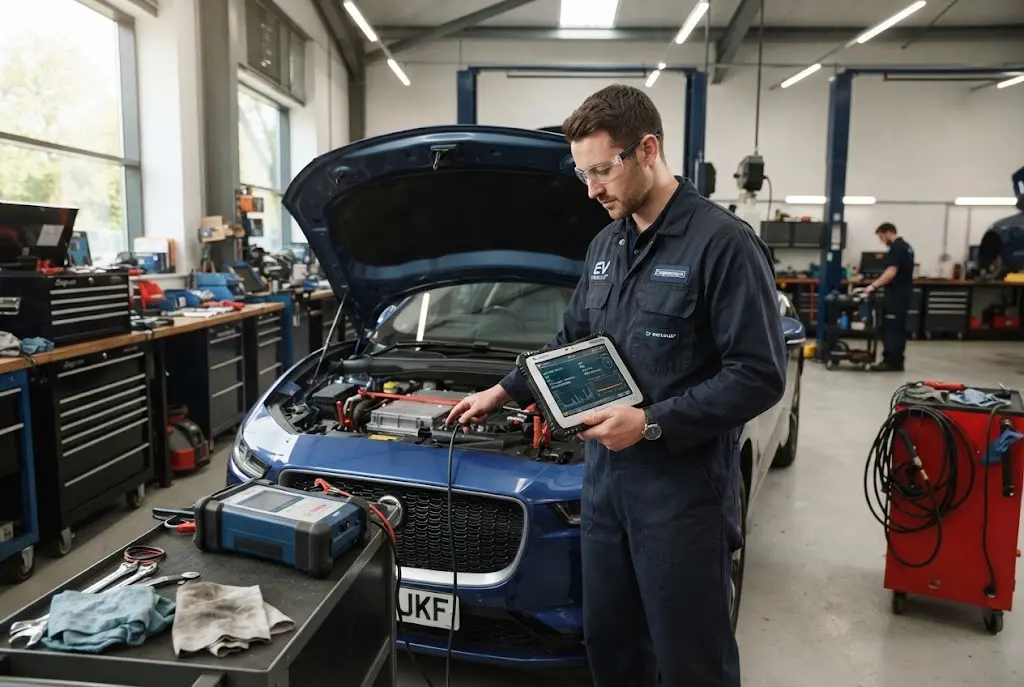
Modern auto battery service is becoming more sophisticated as vehicles rely increasingly on electronic systems, sensors and intelligent energy management. A vehicle battery is no longer simply a component that starts the engine. In many modern vehicles, battery condition can influence charging systems, electrical equipment, stop-start functions and the reliable operation of multiple electronic systems.
As a result, traditional battery testing is being complemented by battery diagnostics, battery monitoring and data-driven analysis. AI battery management and predictive battery health technologies can potentially help identify changes in battery performance earlier and provide technicians with more information when assessing whether a battery requires attention.
This technology is particularly relevant as the automotive industry moves towards increasingly connected and electrified vehicles. However, intelligent battery systems do not replace professional inspection. Instead, they give technicians additional information that can support more informed servicing decisions.
How AI Is Changing Auto Battery Service
Traditional battery checks often focus on measurable characteristics such as voltage, charging performance and starting capability. These remain important indicators, but modern vehicles can provide additional information about how the battery is being used over time.
Intelligent battery systems can potentially combine measurements from the battery, charging system and vehicle electronics to provide a broader picture of battery condition.
This is where AI battery management can become useful. Algorithms can analyse patterns in available data and identify changes that may warrant further investigation. Rather than relying on a single measurement taken during a workshop visit, an intelligent system can potentially consider historical behaviour alongside current readings.
The exact capabilities vary between vehicles and battery-management systems. AI should therefore be viewed as a support technology rather than an automatic guarantee of battery failure prediction.
What Are Battery Diagnostics?
Battery diagnostics involve assessing the condition and performance of a vehicle’s battery and related charging system. A professional diagnostic process may consider factors such as battery voltage, state of charge, starting performance, charging behaviour and the electrical demands placed on the vehicle.
For conventional vehicles, a battery problem may present as slow engine cranking, difficulty starting or electrical irregularities. Modern vehicles can introduce additional complications because batteries may interact with sophisticated charging and energy-management systems.
A diagnostic test can help distinguish between a weak battery and problems elsewhere in the electrical system. For example, a battery that repeatedly loses charge may not necessarily be defective if another component is creating excessive electrical drain or if the charging system is not operating correctly.
This is why professional testing remains important even when intelligent monitoring technology is available.
Battery Analytics and Vehicle Data
Battery analytics uses available battery and vehicle information to understand performance over time. Instead of looking only at one test result, analytics can potentially identify trends in charging, usage and battery behaviour.
This becomes more valuable when a vehicle produces regular data. A system could potentially compare current measurements with historical information and identify changes that would otherwise be difficult to notice during an occasional inspection.
For example, repeated changes in charging behaviour could indicate that further investigation is appropriate. Similarly, unusually frequent low-charge events could provide useful context when a vehicle is brought into a workshop with starting problems.
The quality of the analysis depends heavily on the information available. Different vehicles have different battery-management architectures, and not every system provides the same level of data.
Battery Monitoring Between Service Visits
Battery monitoring extends battery assessment beyond the workshop. Connected vehicle systems can potentially provide selected information about battery condition or electrical behaviour while a vehicle is in normal use.
This can be particularly useful for vehicles that are driven infrequently. Long periods of inactivity can affect battery charge, while repeated short journeys may place different demands on the charging system than longer drives.
For fleets, continuous or periodic monitoring can provide an additional layer of operational information. Fleet managers may be able to identify vehicles displaying unusual battery-related behaviour and arrange appropriate testing before the problem disrupts vehicle availability.
This approach connects naturally with connected vehicle maintenance and remote monitoring. Battery information can become part of a broader vehicle-health picture rather than being treated as an isolated component measurement.
Predictive Battery Health
Predictive battery health technology aims to identify changes in battery condition before the battery reaches a critical point. This can involve analysing historical performance, charging patterns, temperature information, usage behaviour and other available measurements.
The idea is similar to predictive diagnostics used elsewhere in automotive maintenance. Instead of waiting for a complete failure, a system can potentially identify signs that the battery’s performance is changing.
For drivers, this could provide additional time to arrange an inspection or replacement. For fleet operators, predictive information could help maintenance teams plan battery-related work around vehicle schedules.
Predictions should nevertheless be treated as indicators rather than exact expiry dates. Battery performance is affected by factors including temperature, vehicle usage, charging behaviour, battery age and the condition of associated electrical components.
AI Battery Management in Modern Vehicles
AI battery management is especially relevant as vehicles become more dependent on intelligent electrical systems. A vehicle may need to balance battery charging, electrical consumption and the requirements of different electronic systems.
In suitable systems, intelligent algorithms can analyse available information and help optimise how energy is managed. The objective can include maintaining appropriate battery condition while ensuring that vehicle systems receive the energy they require.
Battery management is also increasingly important in electrified vehicles, where battery systems are substantially more complex than conventional starter batteries. Monitoring temperature, charge levels and battery performance becomes a central part of managing the vehicle’s energy system.
However, battery technologies and management systems differ considerably between conventional, hybrid and fully electric vehicles. Servicing procedures should therefore be appropriate to the specific vehicle and battery technology.
Smart Charging and Battery Longevity
Smart charging uses intelligent controls and available information to manage how a battery is charged. In modern vehicles, charging behaviour can be influenced by the vehicle’s energy-management system and operating conditions.
For electrified vehicles, smart charging can also involve coordination between the vehicle, charger and wider energy system. The exact features depend on the vehicle and charging infrastructure.
For conventional vehicles, the underlying principle is still relevant: appropriate charging and electrical-system management can contribute to maintaining battery performance.
Drivers should follow the vehicle manufacturer’s charging and maintenance guidance rather than assuming that every battery benefits from the same charging strategy.
Understanding Battery Lifecycle
Battery lifecycle refers to the progression of a battery from installation and normal use through ageing and eventual replacement. Battery performance naturally changes over time, but the rate of change can vary significantly.
Temperature, usage patterns, charging behaviour, vehicle electrical loads and battery design can all influence how a battery performs throughout its useful life.
Digital monitoring can potentially make this lifecycle easier to understand. Instead of knowing only the battery’s age, a workshop may have additional information about its historical behaviour.
This information can support better maintenance planning, although it should not be interpreted as a precise prediction of the exact date on which a battery will fail.
Why Battery Intelligence Matters for Workshops
Battery intelligence can help workshops make battery testing more systematic. When battery data is available alongside vehicle history and diagnostic information, technicians can have more context when assessing an electrical complaint.
For example, a vehicle experiencing repeated starting difficulties may have a battery issue, charging-system issue or parasitic drain. Historical battery information can help technicians determine whether the battery itself has shown signs of deteriorating performance.
This also connects with AI-powered auto inspection services, where digital inspection systems can record battery test results alongside other vehicle findings.
When inspection, diagnostic and service information are connected, battery issues can become part of a larger vehicle-health record rather than remaining as isolated workshop notes.
Benefits of Smarter Battery Monitoring
Technology-enabled battery servicing can offer several potential benefits.
- Earlier awareness: Changes in battery behaviour may be identified before a complete failure.
- Better diagnostics: Historical information can provide useful context during battery-related investigations.
- Maintenance planning: Fleet operators and workshops can potentially plan battery work around vehicle schedules.
- Improved documentation: Digital battery information can become part of a vehicle’s service record.
- Reduced uncertainty: Monitoring can provide more information than a single battery test performed at one point in time.
- Connected servicing: Battery information can be incorporated into wider vehicle-health and maintenance systems.
These benefits depend on the quality of the monitoring technology and the information available from the vehicle.
Can AI Predict Every Battery Failure?
No diagnostic or predictive system can guarantee that every battery failure will be predicted in advance. Battery behaviour can change because of environmental conditions, unexpected electrical faults, physical damage and other factors that may not be visible to a monitoring system.
AI can identify patterns and potential warning signs, but a professional inspection remains important when symptoms appear.
Drivers should not ignore signs such as repeated starting difficulties, unusual electrical behaviour or persistent battery warnings simply because a monitoring system has not reported a problem. Conversely, a predictive warning should generally prompt appropriate testing rather than automatically mean that a battery must be replaced.
Conventional Batteries vs Electrified Vehicle Batteries
The meaning of auto battery service can vary depending on the vehicle. Conventional petrol and diesel vehicles commonly use low-voltage batteries for starting and electrical systems, while hybrid and electric vehicles can contain much larger high-voltage battery systems.
High-voltage systems require specialised knowledge, equipment and safety procedures. Battery diagnostics for an electric vehicle may therefore involve considerably different processes from testing a conventional 12-volt starter battery.
This distinction is important when choosing a service provider. A garage should have the appropriate equipment, training and procedures for the vehicle and battery system being serviced.
The Future of Auto Battery Service
The future of auto battery service is likely to become increasingly data-driven. Battery diagnostics, monitoring, analytics and predictive technologies can provide information that helps technicians understand battery condition over time.
Connected vehicles could potentially communicate battery-related information to authorised service systems, while AI-based software can help analyse patterns and identify situations that deserve further investigation.
Workshops may also integrate battery information into broader digital service platforms. A technician could review inspection findings, vehicle history, diagnostic information and battery performance through a connected workflow rather than relying on isolated records.
This is consistent with the wider development of AI-enabled auto service garages and digital workshop management. As workshop systems become more connected, battery servicing can become part of an integrated vehicle-health process.
What Drivers Should Look For in Battery Servicing
Drivers should look for a service provider that uses appropriate testing equipment and understands the specific battery technology installed in their vehicle.
A good battery assessment should not necessarily stop at checking whether the vehicle starts. Where appropriate, technicians can consider battery condition, charging performance and other electrical-system factors to determine the likely cause of a problem.
For newer or electrified vehicles, specialised equipment and manufacturer-specific procedures may also be required.
Digital records can provide an additional benefit by making it easier to retain information about previous battery tests, replacements and related electrical work.
Conclusion
AI and connected technology are changing auto battery service by making battery condition easier to monitor and analyse. Battery diagnostics, battery analytics, AI battery management, smart charging and predictive battery health can provide valuable information for drivers, workshops and fleet operators.
The key development is the move from occasional battery testing towards a broader understanding of battery behaviour throughout its lifecycle. When reliable data is combined with professional inspection, technicians can make better-informed decisions about testing, maintenance and replacement.
Technology will not remove the need for skilled automotive professionals. Instead, intelligent battery systems can give those professionals more information to work with. As connected and electrified vehicles become increasingly common, that combination of data, diagnostics and human expertise will become an increasingly important part of modern vehicle servicing.