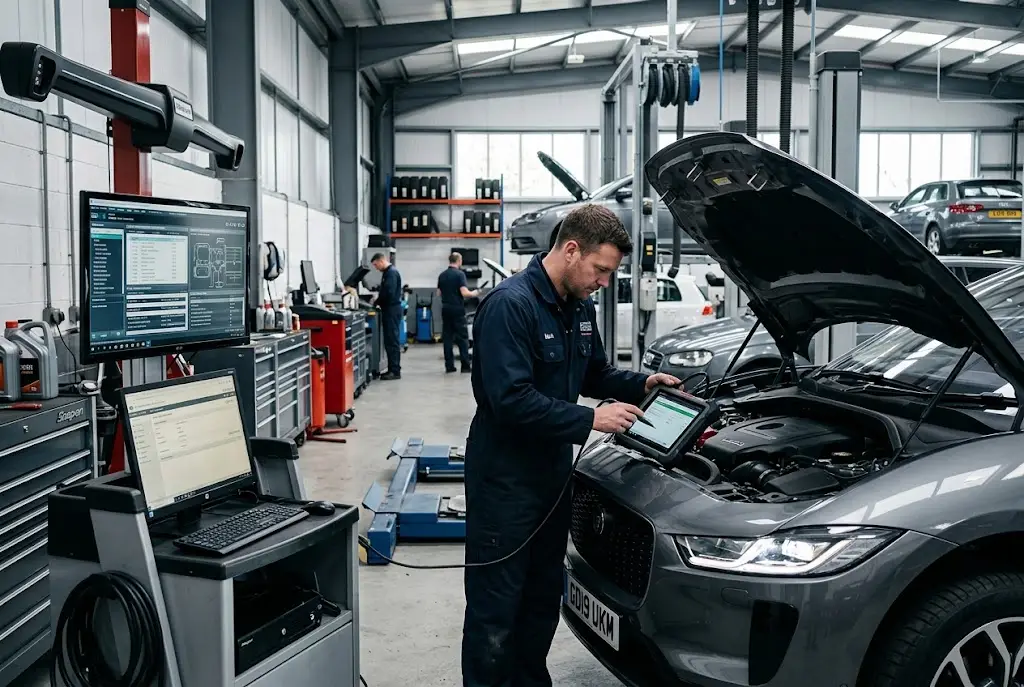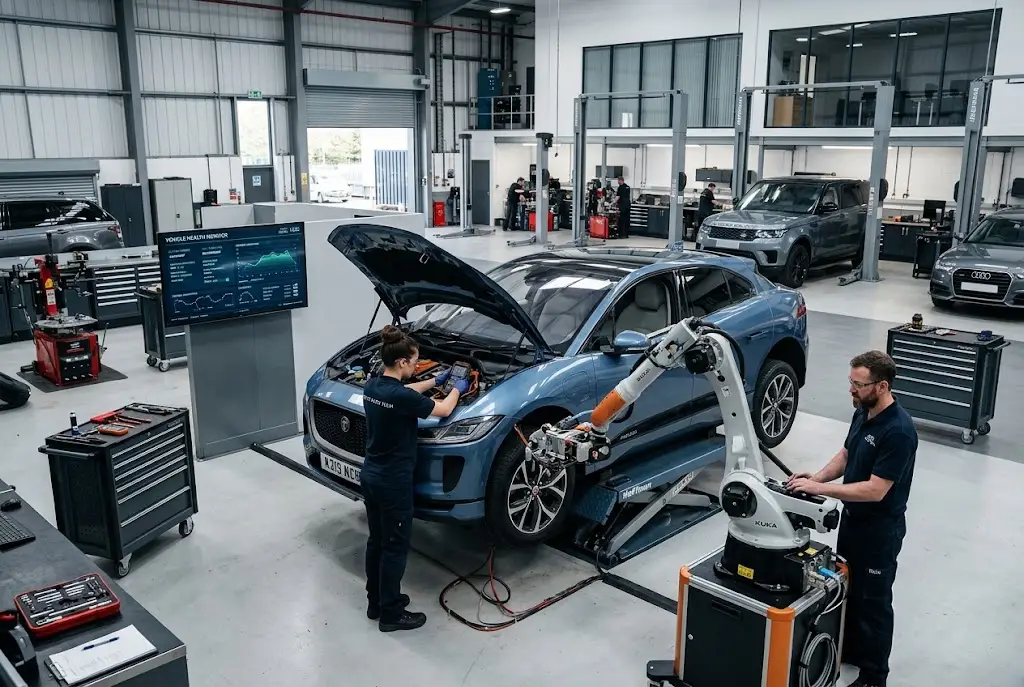
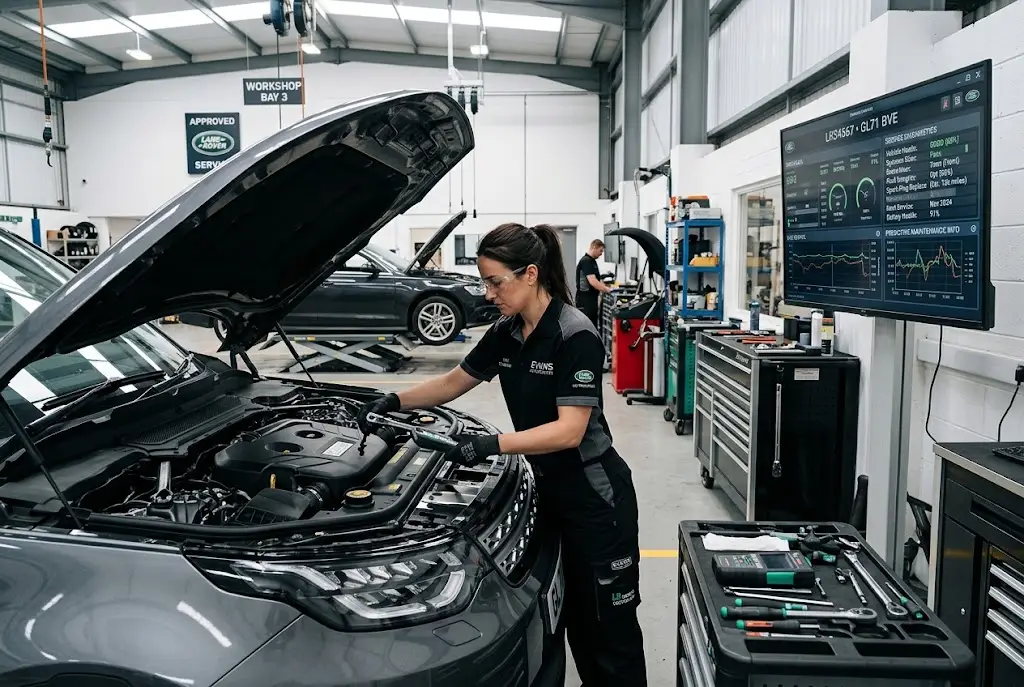
Car servicing is becoming more intelligent as artificial intelligence, connected vehicle technology and digital diagnostic systems change how modern vehicles are maintained. Instead of relying entirely on fixed schedules and reacting to problems after they appear, drivers and garages can increasingly use vehicle data to support more proactive maintenance decisions.
Traditional servicing remains essential, but new technology can make it easier to understand vehicle condition, organise maintenance and identify potential issues earlier. From predictive maintenance to digital service histories, AI is helping create a more connected approach to looking after cars across the UK.
What Is AI-Powered Car Servicing?
AI-powered car servicing combines conventional automotive expertise with software that can analyse vehicle information and identify useful patterns. Depending on the vehicle and technology available, this information may include diagnostic data, mileage, service history, sensor readings and driving-related information.
The purpose is not to replace qualified technicians. Instead, intelligent systems can help technicians and vehicle owners make better-informed maintenance decisions. A garage can use digital information to understand a vehicle before an appointment, while drivers can receive more relevant reminders about potential maintenance requirements.
This approach forms an important part of the wider AI-powered auto services landscape, where digital technology is increasingly integrated into everyday vehicle care.
Why Predictive Maintenance Matters
One of the biggest changes in automotive maintenance is the move from reactive repairs towards predictive maintenance. Reactive maintenance generally happens after a fault becomes noticeable. Predictive maintenance aims to identify signs of potential problems earlier by analysing available vehicle data.
For example, changes in sensor readings or other vehicle information may indicate that a component needs closer attention. An AI system can help identify patterns that might be difficult to spot when information is reviewed manually across multiple records.
However, a prediction is not the same as a confirmed fault. A professional inspection and appropriate diagnostic testing are still necessary before repair decisions are made.
How AI Can Support a Full Car Service
A full car service involves a broad range of checks designed to assess the condition and operation of a vehicle. AI can complement this process by helping technicians access relevant information before and during the service.
Digital systems can potentially bring together previous service information, diagnostic results and vehicle data. This gives technicians a more complete background when assessing the car.
AI can also help identify areas that deserve additional investigation. Rather than replacing physical checks, it can act as an additional layer of information that supports the technician’s assessment.
Digital Records Before the Appointment
When service information is stored digitally, relevant records can be easier to retrieve. A technician may be able to see previous maintenance work, reported problems and diagnostic information without depending entirely on paper records.
For drivers, maintaining a clear digital service history can also make it easier to understand what work has already been completed and what may be due next.
More Informed Workshop Preparation
Connected vehicle information can potentially help a garage prepare for an appointment. If a customer reports a recurring issue and relevant diagnostic information is available beforehand, the workshop may have a clearer starting point when the vehicle arrives.
Interim Service vs Major Service
Drivers may encounter different service levels depending on their vehicle, manufacturer recommendations, mileage and maintenance schedule. An interim service and a major service can involve different checks and maintenance requirements.
The exact work required should always be determined according to the vehicle manufacturer’s guidance and the individual vehicle’s condition. AI does not change the fundamental importance of following appropriate servicing schedules.
Instead, intelligent technology can add useful information around those scheduled services. For instance, a connected vehicle may highlight an issue that deserves attention before the next planned appointment.
AI Maintenance and Vehicle Health Monitoring
Modern cars contain numerous electronic systems and sensors. This creates opportunities for vehicle health monitoring systems to analyse information continuously or at regular intervals.
AI maintenance tools can help identify unusual patterns within available data. A system might flag information for further investigation rather than waiting until the driver experiences a serious symptom.
This is particularly relevant to vehicles equipped with advanced connectivity. The more useful information a vehicle can securely provide, the more opportunities there are for digital servicing systems to support maintenance planning.
How Digital Servicing Improves the Customer Experience
Technology can improve more than the technical side of vehicle maintenance. It can also make the customer experience more convenient.
Smarter Service Reminders
Digital platforms can help drivers keep track of upcoming maintenance. Instead of relying solely on memory, calendar notes or dashboard reminders, a connected service platform may provide additional notifications based on available vehicle information.
Clearer Digital Inspections
Digital inspection systems can make it easier for garages to record findings and communicate them to customers. Photographs, inspection notes and diagnostic information can potentially provide a clearer explanation of why particular work has been recommended.
This also connects naturally with the development of AI diagnostics and auto inspection services, where digital technology is becoming increasingly important to vehicle assessment.
More Convenient Booking
AI-assisted scheduling can help automotive businesses organise appointments around workshop availability and customer requirements. Automated booking systems may also reduce repetitive administrative work for garage staff.
Maintenance Automation in Modern Garages
Maintenance automation does not necessarily mean a workshop operating without people. In most cases, automation refers to software handling repetitive processes while skilled technicians remain responsible for physical vehicle work.
A garage could use digital systems to manage appointment reminders, inspection records, service histories, customer communications and workflow planning. These tools can reduce administrative friction and give technicians better access to relevant information.
As workshop technology develops, this could become an increasingly important part of the modern auto service garage.
Can AI Predict Every Vehicle Problem?
No. AI cannot reliably predict every mechanical or electrical failure.
Vehicle problems can develop for many reasons, and some faults require physical inspection or testing. Data may also be incomplete, inaccurate or unavailable. Therefore, drivers should not treat an AI-generated maintenance prediction as a definitive diagnosis.
The most useful role for AI is supporting professional judgement. It can identify patterns, organise information and highlight areas for investigation, while qualified technicians confirm what is actually happening with the vehicle.
Benefits of Smarter Car Servicing
The integration of AI and digital systems into servicing can offer several potential benefits.
- Earlier awareness: Vehicle data may highlight unusual patterns before a problem becomes obvious.
- Better information: Digital records can give technicians a broader view of previous maintenance and vehicle history.
- More efficient diagnostics: AI-supported analysis can help technicians narrow down areas that require investigation.
- Improved scheduling: Digital systems can help garages manage appointments and workshop capacity.
- Clearer communication: Digital inspection records can make service findings easier for customers to understand.
- More proactive maintenance: Drivers can potentially address developing issues before they become more disruptive.
What Drivers Should Still Do Manually
Even with advanced technology, drivers still have an important role in maintaining their vehicles. Dashboard warning lights should not be ignored, manufacturer servicing recommendations should be followed, and unusual noises, smells, handling changes or performance problems should be reported promptly.
Drivers should also choose reputable garages with appropriately trained technicians and suitable diagnostic equipment. Technology is most effective when it is combined with professional automotive knowledge.
Connected Vehicles and the Future of Car Servicing
Connected vehicles are likely to play a major role in the next generation of automotive maintenance. As vehicles become more capable of sharing relevant information with digital platforms, servicing could become increasingly proactive.
A future service experience could involve a vehicle identifying an unusual pattern, a digital system assessing the available information and a garage receiving a maintenance alert before the customer manually reports a problem.
That model could reduce the gap between vehicle monitoring and workshop intervention. It could also help drivers manage maintenance as an ongoing process rather than something they only think about when a warning light appears.
AI Maintenance Is Complementary, Not a Replacement
The most practical future for AI in automotive maintenance is likely to combine technology with human expertise. AI can process large amounts of information quickly, but technicians understand the physical condition of vehicles and can make decisions based on hands-on inspection.
This balance is particularly important for safety-critical systems. Software can identify a potential concern, but a qualified professional must determine whether a component is safe, repairable or in need of replacement.
The Future of Smarter Vehicle Ownership
AI is gradually changing the way drivers think about maintenance. Instead of treating servicing as an occasional appointment, connected technology can make vehicle health a more continuous part of ownership.
Predictive maintenance, digital servicing, automated scheduling and intelligent diagnostics all contribute to this shift. Together, they can create a more informed approach to vehicle care while keeping professional technicians at the centre of important repair and maintenance decisions.
For UK drivers, the key is not to replace established servicing practices with technology, but to use new tools alongside them. Regular maintenance, professional inspections and manufacturer recommendations remain fundamental. AI simply adds another source of information that can help make those processes smarter and more efficient.
As automotive technology continues to develop, car servicing is likely to become increasingly connected, data-driven and proactive. The result could be a better-informed driver, a more efficient workshop and a vehicle maintenance experience that identifies potential problems before they become major disruptions.