Vehicle maintenance is becoming more intelligent as artificial intelligence, connected vehicles and digital servicing tools change how drivers and garages manage car care. Instead of depending entirely on fixed service intervals or waiting for obvious faults, modern technology can help monitor vehicle condition, organise maintenance and identify potential issues earlier.
AI does not replace qualified technicians or established servicing requirements. Instead, it adds another layer of information that can support better decisions. From predictive maintenance and remote monitoring to digital service history and AI scheduling, intelligent technology is helping create a more proactive approach to keeping vehicles safe, reliable and roadworthy.
What Is Intelligent Vehicle Maintenance?
Intelligent vehicle maintenance combines traditional automotive servicing with digital systems that can collect, organise and analyse relevant vehicle information. Depending on the technology available, this may include diagnostic data, sensor readings, mileage, service records and information from connected vehicle systems.
The objective is simple: understand a vehicle’s condition more effectively and use that information to plan appropriate maintenance.
This approach forms an important part of the wider AI-powered auto services landscape. While traditional maintenance remains essential, intelligent systems can make the process more connected and responsive.
How AI Is Changing Vehicle Maintenance
Artificial intelligence can process large quantities of information and identify patterns within that data. In automotive maintenance, this capability can help highlight unusual readings or changes that may deserve professional attention.
For example, a vehicle may generate information associated with a particular system over time. An intelligent platform can potentially identify a recurring pattern and flag it for investigation before the issue develops into a more serious problem.
However, AI predictions are not guaranteed diagnoses. A qualified technician still needs to confirm faults using appropriate diagnostic equipment and physical inspection.
From Reactive to Proactive Maintenance
Traditional reactive maintenance often begins when a driver notices a problem. The vehicle may make an unusual noise, display a warning light or experience a noticeable change in performance.
Predictive maintenance aims to move some of that attention earlier. By analysing available vehicle information, intelligent systems can potentially identify signs that a component or system may require inspection.
This does not remove scheduled servicing. Instead, predictive technology can work alongside established maintenance routines to provide additional information between appointments.
Predictive Maintenance and Vehicle Health
Predictive maintenance is one of the most promising applications of automotive AI. Rather than focusing only on whether a vehicle is currently functioning, predictive systems look for patterns that could indicate future maintenance needs.
The effectiveness of this approach depends heavily on the quality and quantity of available data. A connected vehicle with appropriate sensors and digital systems may provide more information than an older vehicle without those capabilities.
Even when predictive technology identifies a potential concern, drivers should treat it as a reason for professional assessment rather than proof that a component has failed.
Remote Monitoring for Connected Vehicles
Connected vehicles are helping expand the possibilities for remote vehicle monitoring. Where the necessary technology and permissions are available, relevant vehicle information can potentially be communicated to authorised digital systems.
This can give drivers and automotive businesses a better understanding of vehicle condition between physical workshop visits.
Remote monitoring can be particularly useful when it helps identify information that warrants further investigation. Instead of discovering every issue only after the vehicle develops a noticeable symptom, drivers may receive earlier indications that professional attention could be appropriate.
Digital Service History and Better Maintenance Planning
A clear service history is valuable because it shows what maintenance and repairs have already been completed. Digital service records can make this information easier to store, retrieve and update.
For drivers, a digital service history can help answer practical questions such as when particular maintenance was last completed and which work may be due next. For technicians, historical information can provide useful context when diagnosing a recurring problem.
Digital records can also become increasingly important as vehicles change ownership. A well-maintained record gives future owners and automotive professionals a clearer picture of the vehicle’s maintenance background.
AI Scheduling for Smarter Maintenance
Maintenance is not only about identifying problems. Timing matters too. Drivers need to arrange appointments, while garages need to manage technicians, workshop space and available equipment.
AI scheduling can help organise these activities by analysing appointment requirements and available workshop capacity. A digital system could potentially identify suitable appointment windows based on the expected work involved.
This can reduce repetitive administration and make it easier for garages to coordinate their workload.
For drivers, smarter scheduling can make routine servicing easier to manage. It may also help reduce delays when a vehicle needs additional diagnostic work.
Vehicle Maintenance and Car Servicing
Intelligent maintenance does not replace routine car servicing. Manufacturer recommendations, service intervals and appropriate inspections remain important parts of responsible vehicle ownership.
Instead, AI can provide additional information around those established processes. A vehicle may still require a scheduled service even if no predictive system has identified a problem.
Likewise, an AI system may highlight a potential concern before the next planned service, giving the driver an opportunity to seek professional advice sooner.
UK drivers should also continue to meet their legal MOT obligations. Official government guidance explains the MOT process, requirements and testing arrangements for vehicles that require an MOT. GOV.UK guidance on MOT testing is the appropriate place to check current official information.
AI Diagnostics and Maintenance Decisions
Diagnostics and maintenance are closely connected. When a vehicle produces unusual information, technicians need to determine what is actually causing the issue.
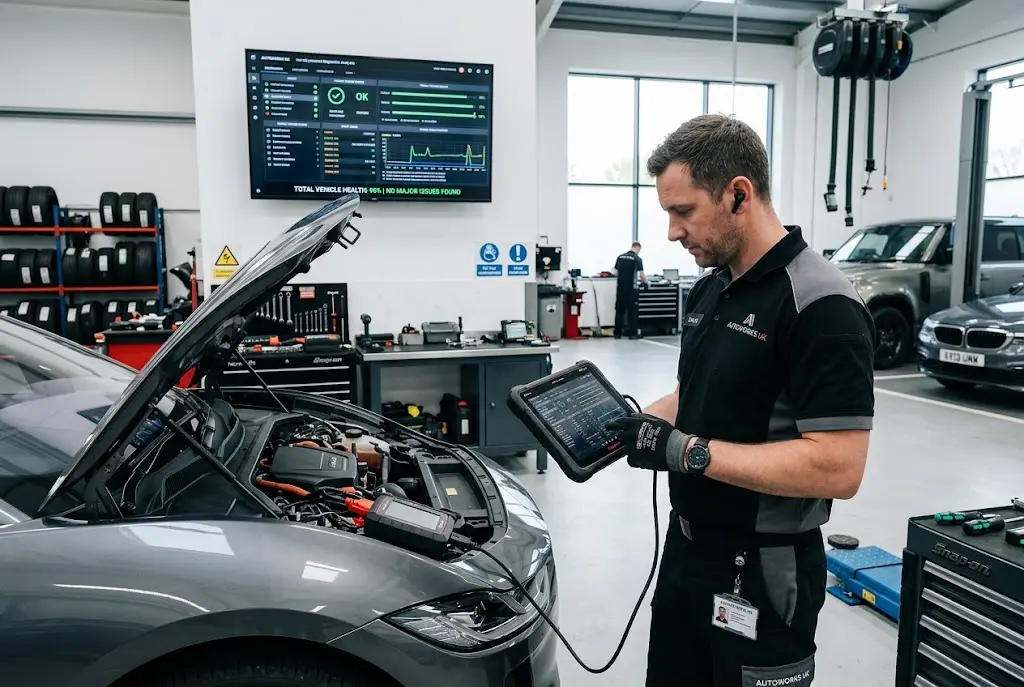
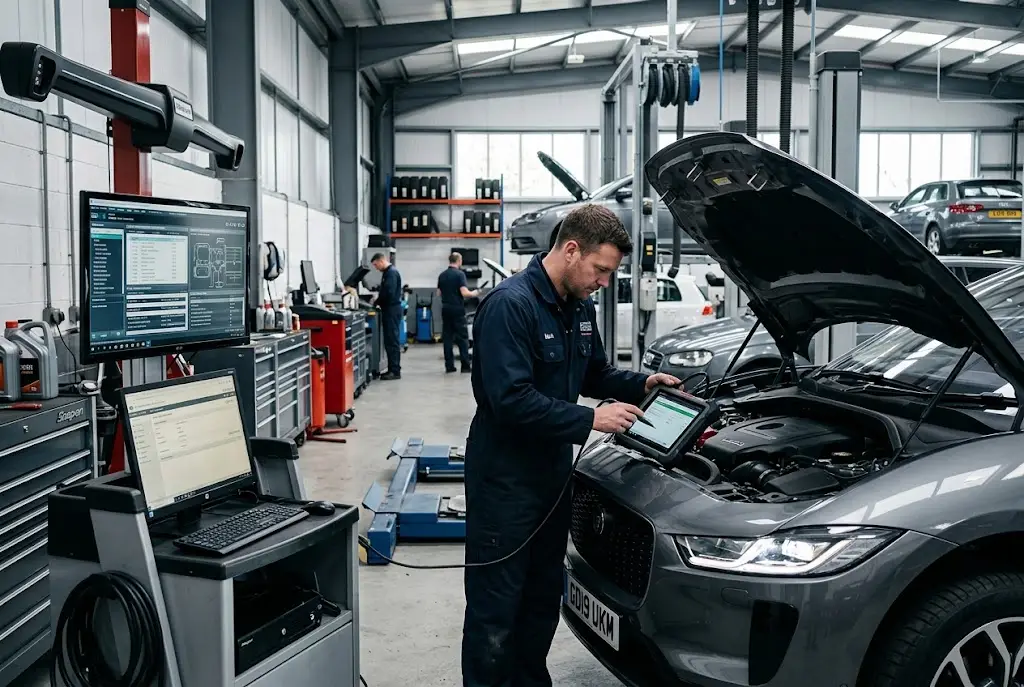
AI-supported diagnostic systems can help organise information and highlight potential causes. However, the final maintenance decision should be based on appropriate testing and professional judgement.
This is why intelligent auto inspection services are becoming an important part of the broader automotive technology ecosystem.
A digital system can point towards a potential problem, while an experienced technician can physically inspect the relevant components and decide what action is appropriate.
Maintenance Automation in Modern Workshops
Maintenance automation can simplify many repetitive tasks that surround vehicle servicing. Garages can use digital systems to manage service reminders, inspection records, appointment scheduling, customer updates and job tracking.
Automation can also help reduce the risk of administrative oversights. When information is stored digitally, staff can more easily track the progress of a vehicle through different stages of the workshop process.
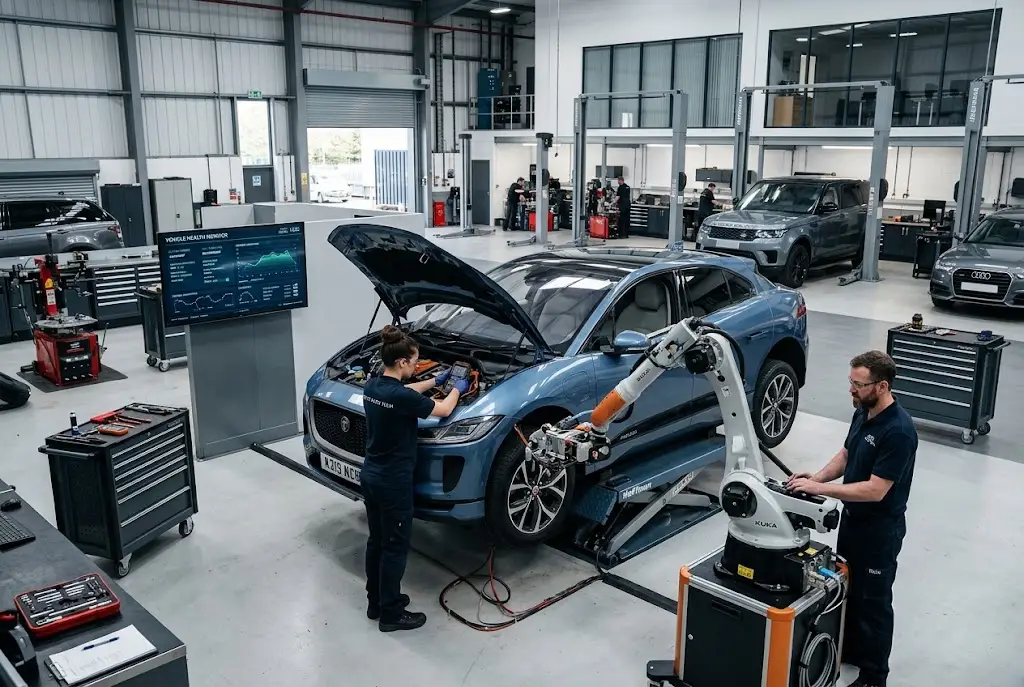
These capabilities are becoming increasingly relevant to the modern auto service garage, where digital workshop systems can work alongside technicians and traditional repair equipment.
Benefits of Intelligent Vehicle Maintenance
When implemented properly, intelligent maintenance technology can offer several potential advantages.
- Earlier awareness of potential issues: Data analysis may identify unusual patterns before a serious symptom develops.
- Better maintenance planning: Digital records and intelligent scheduling can make upcoming work easier to organise.
- Improved diagnostic support: AI can help technicians analyse relevant information and identify areas for further investigation.
- Clearer service records: Digital histories can make previous maintenance easier to review.
- More convenient servicing: Automated reminders and connected systems can reduce the effort involved in managing routine maintenance.
- Better workshop efficiency: Garages can use automation to manage administrative and operational processes.
Can AI Prevent Every Maintenance Problem?
No. AI cannot guarantee that a vehicle will remain free from faults.
Some mechanical problems develop suddenly, while others may not produce enough useful data for an automated system to recognise them. Physical damage, corrosion, wear and certain intermittent faults may require direct inspection.
Data quality is another important limitation. An intelligent system can only analyse information that is available and reliable. If a sensor is faulty or information is incomplete, the resulting analysis may also be limited.
For this reason, AI should support—not replace—professional vehicle maintenance.
The Importance of Human Expertise
Automotive technicians remain essential even as workshops become more digital. A technician can combine diagnostic information with physical observations, manufacturer procedures and practical experience.
That combination is particularly important for safety-critical systems such as braking, steering and suspension.
AI can identify something that appears unusual, but a professional needs to determine what it means in the context of the specific vehicle. The strongest maintenance model therefore combines intelligent technology with skilled human judgement.
Smart Ownership and Driver Responsibility
Technology can make maintenance easier, but drivers still have important responsibilities. Warning lights should be investigated, recommended servicing should not be ignored and noticeable changes in vehicle behaviour should be reported to a qualified automotive professional.
Drivers should also keep useful records of servicing and repairs. Even when digital systems are available, maintaining an accurate history can help technicians understand the vehicle more effectively.
Regular checks also remain important. Tyres, fluid levels, lights and other basic vehicle conditions should not be overlooked simply because a car has advanced electronic monitoring.
What the Future of Vehicle Maintenance Could Look Like
The future of vehicle care is likely to become increasingly connected. A vehicle could potentially monitor relevant systems, communicate useful information to an authorised platform and help identify maintenance concerns before the driver notices a serious symptom.
A garage could then receive relevant information, schedule an appointment and prepare the necessary diagnostic equipment or parts. Once the vehicle arrives, technicians could combine the digital information with a physical inspection.
After the work is completed, the service history could be updated digitally, creating a continuous maintenance record.
This model would connect monitoring, diagnosis, servicing and record keeping into one more integrated process.
Why Intelligent Maintenance Matters for UK Drivers
For UK motorists, smarter maintenance could make vehicle ownership more predictable and convenient. Drivers could gain better visibility into vehicle condition, while garages could use technology to manage information and workshop operations more efficiently.
Nevertheless, intelligent systems should complement established automotive practices rather than replace them. Manufacturer recommendations, professional inspections, appropriate servicing and legal requirements continue to matter.
The Future of Smarter Vehicle Care
Vehicle maintenance is moving towards a model in which data, connectivity and professional expertise work together. Predictive maintenance can help identify potential concerns, remote monitoring can provide information between workshop visits and digital service histories can make vehicle records easier to manage.
At the same time, technicians remain central to the process. AI can analyse information, but qualified professionals are still needed to inspect vehicles, confirm faults and carry out repairs safely.
As connected vehicles and automotive AI continue to develop, intelligent maintenance will likely become a more familiar part of everyday car ownership. The goal is not to make traditional maintenance obsolete, but to make it more informed, proactive and efficient.