AI-powered auto services are changing how drivers, garages and automotive businesses approach vehicle care in the UK. Instead of relying only on fixed service intervals or waiting for a warning light, modern automotive technology can help identify potential problems earlier, organise maintenance more efficiently and give drivers better insight into vehicle condition.
From intelligent diagnostics and connected vehicles to automated service scheduling, artificial intelligence is becoming an important part of the wider automotive service landscape. The technology does not replace skilled technicians. Rather, it gives them better information and tools to make servicing and repairs more informed, efficient and consistent.
What Are AI-Powered Auto Services?
AI-powered auto services use artificial intelligence, vehicle data, connected systems and digital tools to improve different parts of vehicle ownership and maintenance. These systems can analyse information from sensors, diagnostic equipment, service records and connected vehicle platforms to identify patterns and support better decisions.
Traditional car servicing often follows a planned timetable based on mileage, time or manufacturer recommendations. AI-enabled systems can add another layer by considering the vehicle’s actual condition and usage. This can help create a more responsive approach to maintenance.
For example, a smart vehicle system may identify unusual sensor readings or changes in operating behaviour. That information could then be reviewed by a technician before a minor issue develops into a more expensive repair.
How Automotive AI Is Changing Vehicle Care
Artificial intelligence can support several areas of modern vehicle maintenance. Its role is particularly useful where large amounts of vehicle information need to be analysed quickly.
Intelligent Diagnostics
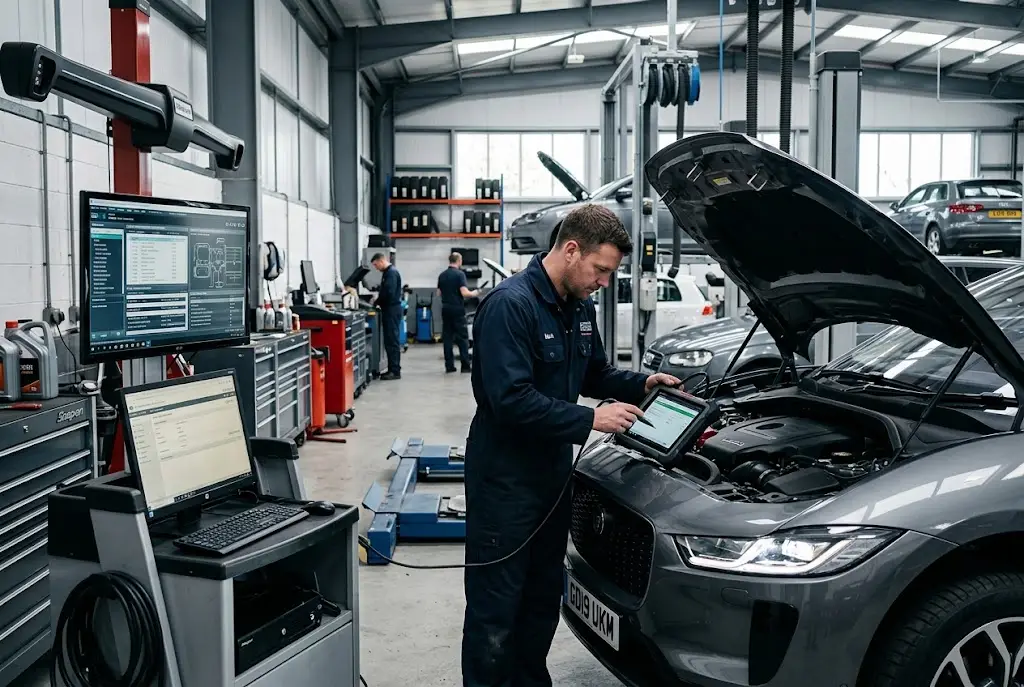
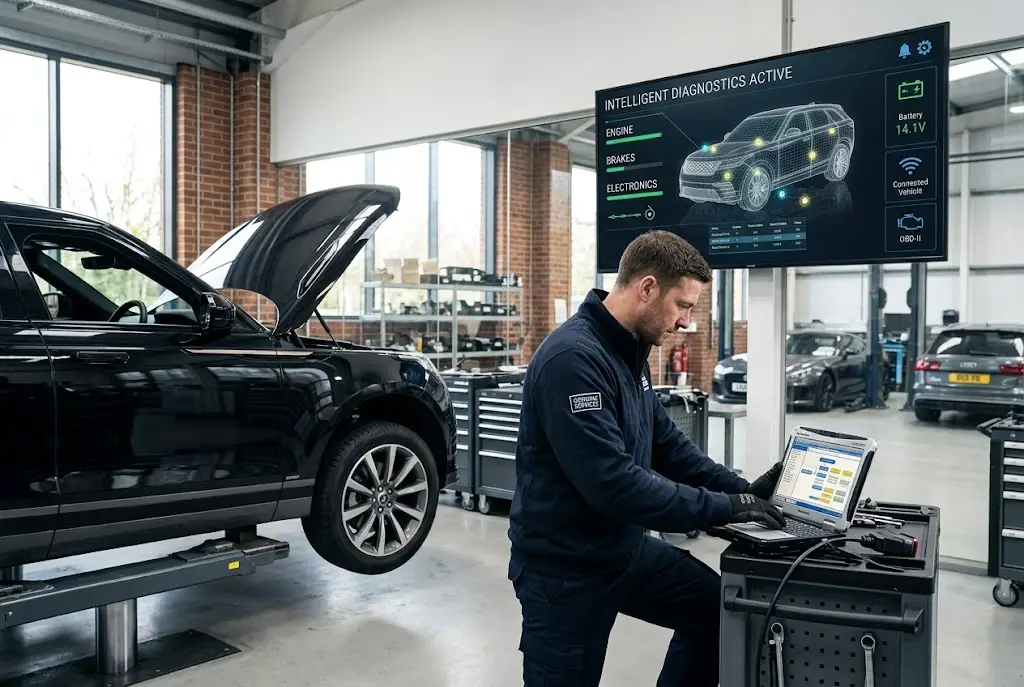
Modern vehicles generate significant amounts of electronic data. AI systems can help technicians interpret diagnostic information and identify relationships between different symptoms, fault codes and vehicle behaviours.
This does not mean every AI prediction is automatically correct. Professional diagnosis still requires appropriate equipment, technical knowledge and physical inspection. However, intelligent systems can help technicians focus their attention on potential problem areas more efficiently.
For drivers, this can make auto inspection services more data-driven, particularly as digital inspection tools become increasingly common.
Predictive Maintenance
One of the most promising applications of automotive AI is predictive maintenance. Instead of simply responding after a component fails, predictive systems can analyse available information to identify patterns that may indicate developing issues.
This approach is closely connected to vehicle maintenance. A connected vehicle could provide useful information about operating conditions, while software can help organise that information into actionable maintenance recommendations.
Predictive maintenance does not eliminate the need for scheduled servicing. Instead, it can complement established maintenance practices by helping identify when additional attention may be appropriate.
Connected Vehicles and Smart Servicing
Connected vehicles are an important foundation for future automotive services. Vehicles with connectivity can transfer information between the vehicle, digital platforms and authorised service environments, subject to the relevant technology, permissions and data arrangements.
The UK government recognises connected and automated vehicles as an important area of automotive development. The Vehicle Certification Agency explains that connected and automated technologies require safe and secure development, testing and deployment. Official guidance on connected and automated vehicles provides further information about this developing area.
For servicing, connectivity could make it easier for authorised systems to receive relevant vehicle information before an appointment. A garage may then have a better understanding of the customer’s reported problem and prepare appropriate diagnostic equipment or replacement parts in advance.
Smarter Auto Repair Services
AI can also influence the repair process itself. When combined with digital diagnostic equipment, workshop management software and connected vehicle information, automotive AI can help technicians organise information around a repair more effectively.
For example, a digital system might bring together a vehicle’s previous service history, current diagnostic information and customer-reported symptoms. This creates a clearer picture than relying on a single fault code or isolated observation.
However, the quality of the result depends on the quality of the information available. AI should therefore be viewed as a decision-support tool rather than a substitute for experienced automotive professionals.
The Rise of Smart Vehicle Services
Smart vehicle services extend beyond repairs. They can include digital service records, online booking, automated reminders, remote vehicle monitoring and maintenance planning.
For drivers, this can create a more convenient ownership experience. Instead of manually remembering every maintenance requirement, digital systems can help organise appointments and vehicle information in one place.
These developments also connect with the broader concept of future automotive services, where physical workshop expertise is supported by increasingly sophisticated digital infrastructure.
AI and the Modern Auto Service Garage
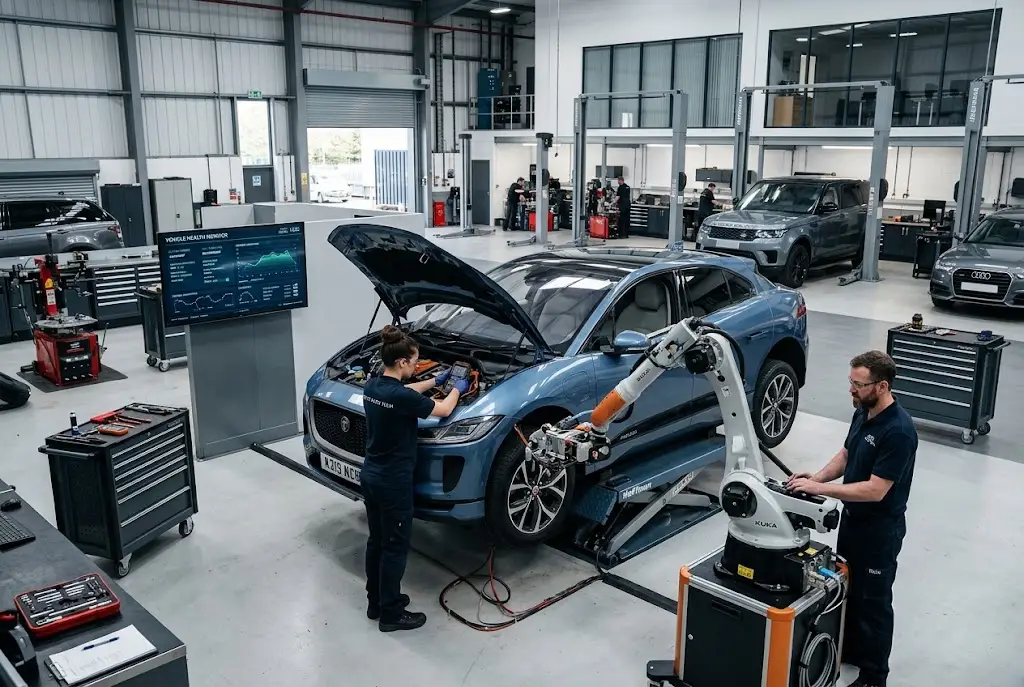
The traditional auto service garage is also evolving. Workshop technology now extends beyond mechanical tools to include digital inspection systems, diagnostic platforms, customer-management software and connected service technologies.
Future garages may use AI to help prioritise appointments, organise workshop capacity, identify recurring vehicle problems and provide technicians with relevant diagnostic information. Automated systems could also reduce repetitive administrative work, allowing staff to spend more time on technical and customer-facing tasks.
This does not necessarily mean that garages will become completely autonomous. Vehicle repairs often require physical judgement, hands-on work and safety-critical decisions. Instead, the more realistic direction is a combination of skilled technicians and increasingly intelligent workshop systems.
Benefits of AI-Powered Auto Care Services
When implemented responsibly, AI can provide several potential benefits for drivers and automotive businesses.
Earlier Awareness of Potential Problems
AI-supported monitoring can help identify unusual patterns before a driver experiences a complete component failure. Earlier awareness may give vehicle owners more time to arrange an inspection or repair.
More Efficient Diagnostics
Technicians can use data analysis to narrow down possible causes of a problem. This may make the diagnostic process more organised, although physical testing remains essential for confirming faults.
Better Maintenance Planning
Digital systems can combine service history, vehicle information and scheduled maintenance requirements to make future servicing easier to manage.
Improved Customer Communication
Automated reminders and digital service records can make it easier for drivers to understand when their vehicle needs attention. Clear digital information can also help customers discuss repairs with technicians.
More Efficient Workshop Operations
Garages can potentially use AI to support scheduling, workflow management, inspection processes and administrative tasks. This can help create a more organised workshop environment.
Are AI Auto Services Replacing Mechanics?
No. AI-powered auto services are more likely to support mechanics than eliminate the need for them.
A vehicle problem can have several possible causes, and software cannot always understand everything happening inside a physical vehicle. Experienced technicians still need to inspect components, test systems, assess safety issues and determine whether a repair is appropriate.
The strongest model is therefore human expertise supported by intelligent technology. AI can process information quickly, while technicians provide practical judgement and hands-on experience.
Data, Security and Trust in Connected Servicing
As more vehicle information becomes digital, data security and responsible access become increasingly important. Connected servicing depends on information moving between vehicles, software platforms, manufacturers, service providers and other systems.
Drivers should understand what information a service platform collects and how it is used. Automotive businesses also need appropriate processes for protecting customer and vehicle information.
The UK is continuing to develop its wider framework for connected and automated vehicle technology. The regulatory environment is particularly important as connected systems become more integrated with everyday transport and automotive services.
What the Future of Auto Services Could Look Like
The future may combine traditional servicing with continuous digital assistance. A vehicle could potentially provide useful maintenance information between workshop visits, while service platforms organise reminders and garages use advanced diagnostics when the vehicle arrives.
Instead of treating maintenance as a series of isolated appointments, intelligent systems could help create a more continuous vehicle-care journey.
This vision connects directly with emerging areas such as predictive car servicing, AI diagnostics, automated workshop operations and intelligent vehicle maintenance. Each development represents a different part of the same broader shift towards data-supported automotive care.
How Drivers Can Prepare for Smarter Vehicle Maintenance
Drivers do not need to wait for fully automated garages to benefit from better technology. Keeping accurate service records, responding to dashboard warnings, choosing reputable automotive professionals and asking for clear diagnostic information are still important.
When selecting an automotive provider, it can also be useful to ask whether the garage offers digital inspection reports, electronic service records or modern diagnostic equipment. These features can make vehicle ownership easier to manage without removing the importance of professional mechanical expertise.
Regular maintenance remains essential. AI can provide additional information, but it should not encourage drivers to ignore manufacturer servicing schedules, MOT requirements or professional advice.
The Bigger Picture for Future Automotive Services
AI is becoming part of a much wider transformation in the automotive industry. Connected vehicles, intelligent diagnostics, digital workshops and predictive maintenance are gradually bringing vehicle care closer to a technology-supported model.
For UK drivers, the biggest benefit may be a simpler and more proactive ownership experience. Instead of waiting until a problem becomes obvious, future systems could help drivers understand vehicle condition earlier and organise maintenance more effectively.
At the same time, garages will continue to play a central role. The technology can improve how information is collected, analysed and communicated, while skilled professionals remain responsible for inspecting, repairing and maintaining vehicles.
AI-powered auto services are therefore not simply about replacing traditional automotive practices. They represent an evolution of them. As intelligent diagnostics, connected servicing and maintenance automation become more capable, the relationship between vehicles, drivers and garages is likely to become increasingly digital, predictive and efficient.