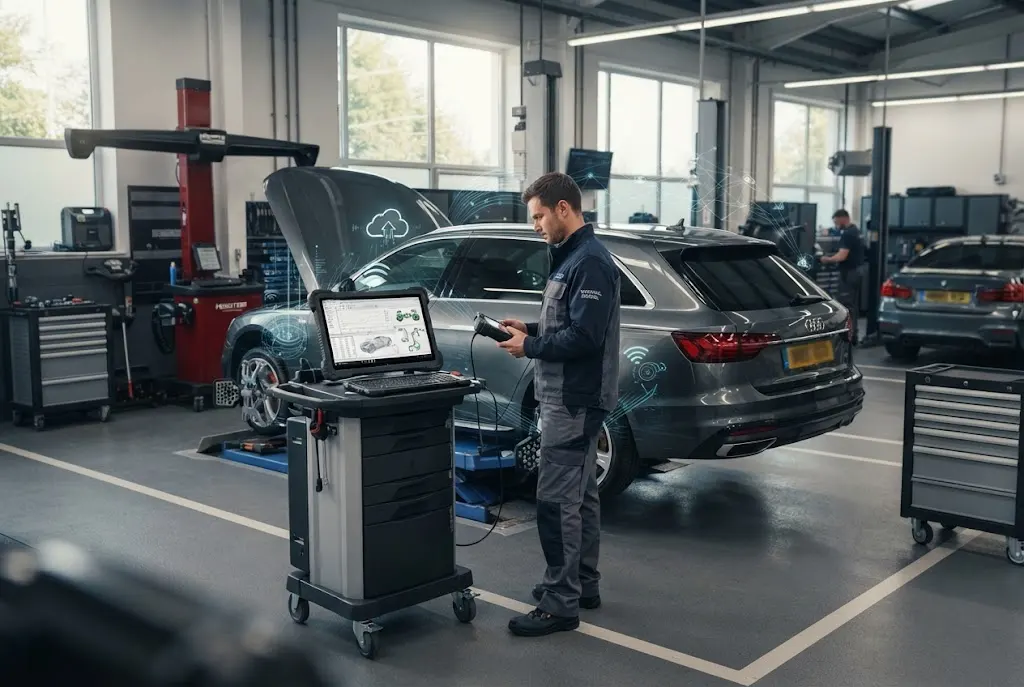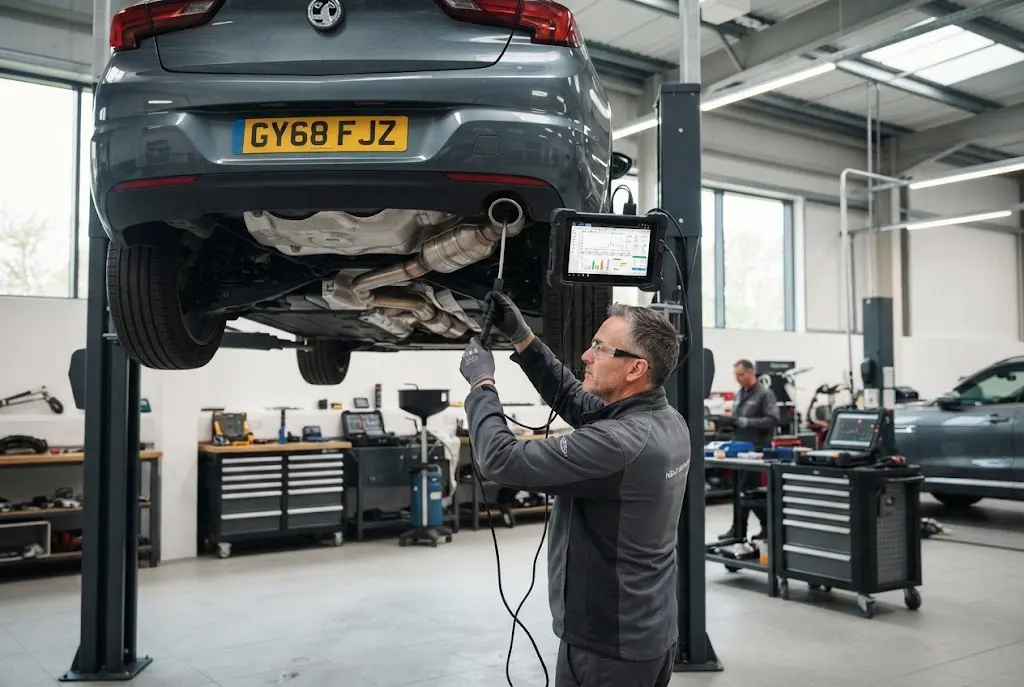
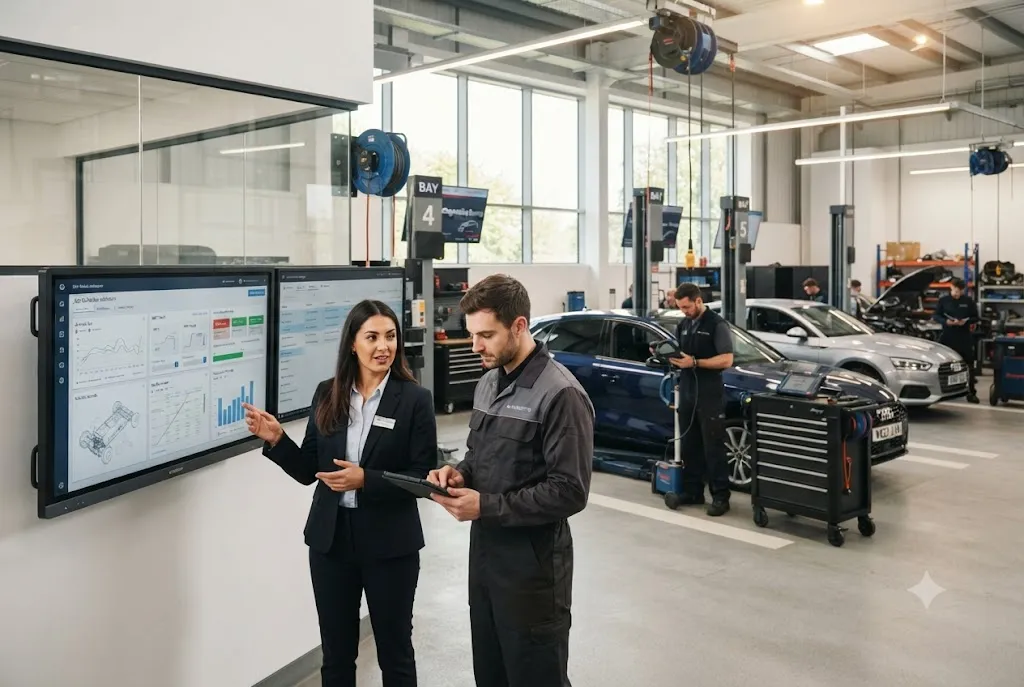
Automotive software is becoming an essential part of modern workshop operations. As vehicles become more connected, diagnostic systems become more sophisticated and customer expectations continue to rise, UK garages need digital tools that can manage far more than basic bookings and invoices.
Modern workshop software can connect customers, vehicles, technicians, job cards, inspections, parts, payments and management information in one environment. More advanced platforms are also introducing automation and artificial intelligence to help workshops reduce repetitive administration, improve visibility and make better use of available capacity.
For independent garages, multi-site operators and digital workshop networks, the opportunity is significant. However, successful adoption depends on choosing technology that improves the actual workshop workflow rather than simply adding another collection of disconnected features.
Why automotive software matters more than ever
The modern vehicle is increasingly software-dependent. Electronic control systems, connected features, advanced diagnostics and electrified powertrains have changed the technical environment in which workshops operate.
That change is happening alongside a separate operational challenge. Workshops need to manage bookings, customer communication, estimates, inspections, parts, technician workloads and payments while maintaining accurate vehicle records.
Automotive software brings these processes together. Instead of relying on paper records, spreadsheets and separate applications, a workshop can create a central digital workflow that follows a vehicle from booking through inspection, repair and final collection.
The result is not simply a more modern interface. A well-designed system can give workshop managers a clearer view of what is happening across the business and help technicians receive the information they need at the right point in a job.
What modern automotive software can manage
The capabilities available vary between platforms, but modern systems increasingly cover the complete workshop journey.
Bookings and scheduling
A digital booking system can record customer details, vehicle information, requested work and appointment times. More advanced systems can connect bookings with technician availability and workshop capacity.
This matters because a workshop diary is more than a calendar. Every appointment affects bays, tools, technicians, parts and expected completion times. Better scheduling information can therefore help managers make more informed decisions about daily capacity.
Digital job management
Once a vehicle arrives, software can create a digital job record containing the customer, vehicle, requested work, inspection findings, estimates and job status.
Technicians can then work from structured information rather than relying on handwritten notes or repeatedly asking the service desk for updates. When the job progresses, the same record can be updated so other authorised team members can see its current status.
Vehicle health checks
Digital vehicle health checks are another important part of modern workshop management. Inspection results can be recorded electronically, supported by photographs and presented to customers before additional work is approved.
This creates a clearer connection between what the technician finds and what the customer is being asked to authorise.
Invoicing and payments
Workshop software can also connect completed work with estimates, invoices and payments. This reduces duplicate data entry and helps create a more consistent administrative process.
For larger businesses, the ability to connect operational information with financial reporting can be particularly valuable because management teams need visibility across multiple locations.
Automotive software and AI workshop software
The next development is the combination of traditional workshop management with artificial intelligence.
AI workshop software can potentially analyse structured workshop information, automate repetitive administrative tasks and help staff identify patterns. The objective is not necessarily to replace technicians or service advisors. Instead, AI can act as an additional layer of intelligence within an existing workflow.
For example, an intelligent platform could help categorise customer enquiries, identify jobs awaiting approval, flag scheduling conflicts or organise information from vehicle inspections.
AI can also become useful when a workshop has accumulated large amounts of historical information. Patterns in job durations, vehicle types, parts requirements or customer activity may provide insights that are difficult to identify manually.
However, AI recommendations should be treated appropriately. Safety-critical technical decisions still require qualified human judgement, physical inspection and adherence to relevant procedures.
How cloud garage platforms are changing workshop management
Cloud garage platforms have changed how workshop teams access operational information. Instead of keeping a system tied to one computer in a reception area, cloud-based software can allow authorised users to access information across connected devices.
This can be particularly useful for businesses operating multiple branches. Managers may need visibility into different workshops while branch teams require access to their own jobs, customers and schedules.
A cloud approach can also make software updates and system maintenance easier to manage. However, businesses should consider data protection, access controls, supplier reliability and cybersecurity before selecting a platform.
The UK automotive environment increasingly recognises the importance of software security. The Vehicle Certification Agency explains that UN Regulations 155 and 156 cover vehicle cybersecurity and software-update management, demonstrating how software is becoming an increasingly important part of the wider automotive ecosystem. :contentReference[oaicite:0]{index=0}
Workshop automation can reduce repetitive administration
Workshop automation is one of the clearest practical benefits of digital systems.
Consider the number of routine tasks involved in a typical repair. A customer books a vehicle, receives confirmation, the vehicle is checked in, an inspection is completed, additional work may require approval, parts are ordered, the job is completed, an invoice is created and the customer is notified.
Many of these steps contain repetitive administrative actions. Software can automate selected tasks while keeping staff involved when decisions or personal communication are required.
Automated reminders, digital approvals, inspection notifications and invoice workflows can all reduce the amount of manual follow-up required from service advisors.
The benefit is not simply saving a few clicks. Reducing repetitive work can give staff more time to deal with customers, technicians and unusual situations that need human attention.
Service management systems create one operational picture
A modern service management system should ideally connect the major stages of a workshop operation.
Imagine a vehicle entering the workshop for a service. The booking system already knows the customer’s details. The vehicle record provides previous information. The technician receives the digital job. The inspection is recorded electronically. Additional work is presented to the customer. Once approved, the job moves forward. Parts information and technician activity remain connected to the same record. Finally, the completed work flows into invoicing and customer communication.
This connected approach creates a single operational picture rather than forcing staff to move between unrelated systems.
That becomes increasingly important as workshops grow. A system that works for one technician and a few daily jobs may need a completely different architecture when the business has multiple teams, branches and service departments.
Automotive SaaS is making advanced tools more accessible
Automotive SaaS has helped change the economics of workshop technology. Instead of purchasing and maintaining a large software installation upfront, businesses can increasingly use subscription-based platforms delivered through the internet.
This model can make it easier for smaller workshops to access tools that previously required significant technical infrastructure.
It can also support gradual expansion. A workshop might begin with digital bookings and job management before adding customer communication, reporting, integrations, automation or AI capabilities.
Current UK platforms illustrate this direction. Motodesk describes its platform as connecting jobs, vehicles, people, stock, finance and customer communication, while AutoChain promotes features including scheduling, vehicle lookups, automated reminders, invoicing and multi-site support. :contentReference[oaicite:1]{index=1}
The important consideration is not whether a platform has the longest feature list. Workshops should assess whether its tools actually fit the way their teams work.
What should garages look for in automotive software?
Choosing automotive software requires more than comparing monthly subscription prices. A workshop should consider the complete operating workflow.
Ease of use
Technicians and service advisors need to use the system during busy working days. Complicated interfaces can slow adoption, even when the underlying technology is powerful.
Vehicle and customer records
The platform should make it straightforward to find relevant customer and vehicle information. Service history, previous work and current job details should be accessible without unnecessary searching.
Integration capabilities
Modern workshops rarely operate in isolation. Software may need to interact with accounting systems, payment providers, diagnostic resources, parts suppliers or other operational tools.
Reporting
Managers need useful information rather than large quantities of raw data. Reports should help answer practical questions about workshop performance, job progress, revenue, productivity and outstanding work.
Security and permissions
Workshop systems can contain customer, financial and vehicle information. Access should therefore be controlled according to the responsibilities of different users.
The UK government’s automotive cybersecurity principles emphasise secure software management, controlled data storage and transmission, and appropriate protection for cloud-based systems. The UK automotive cybersecurity guidance provides useful background for organisations considering connected automotive technology.
The role of data in intelligent workshops
Data is becoming one of the most valuable assets within a digital workshop.
Every booking, inspection, repair, approval and invoice can contribute information about how the business operates. When this information is structured consistently, software can use it to produce useful reports and support automation.
However, poor data quality can undermine even sophisticated systems. Duplicate customer records, incorrect vehicle information and incomplete job statuses can create confusion rather than clarity.
For this reason, digital transformation should begin with good operational processes. Automation should reinforce a clean workflow rather than automate an inefficient one.
Automotive software and multi-site workshop networks
The benefits become even more significant when software is used across multiple locations.
A multi-site operator may want central visibility while allowing each branch to manage its own daily workload. Cloud platforms can provide a shared foundation while role-based permissions control what different users can see and change.
Central teams can potentially compare performance between locations, identify recurring operational issues and develop more consistent processes. Branches, meanwhile, can focus on delivering repairs and servicing without being burdened by excessive administration.
This connects directly with the wider transformation of garage chains, where AI, digital inspections and connected workshop networks are changing how large automotive service organisations operate.
Software will become increasingly important as vehicles evolve
The relationship between vehicles and software is becoming increasingly important. Electric vehicles, hybrid systems, connected features and advanced driver assistance technologies all introduce new information requirements for workshops.
That means workshop management software cannot remain focused only on traditional administration. Future systems will need to work alongside more advanced diagnostic and vehicle information environments.
This is particularly relevant as workshops prepare for electrified vehicles. Systems supporting hybrid servicing and EV servicing will need to complement the specialist skills, equipment and safety procedures required for these vehicles.
The future of automotive software in the UK
The future is likely to involve increasingly connected platforms rather than isolated workshop applications.
Booking, job management, diagnostics, customer communication, inventory, payments, reporting and AI assistance can gradually become parts of one broader digital ecosystem. The strongest platforms will make those connections feel simple to the people using them.
For workshop owners, the goal should not be to adopt technology simply because it is described as intelligent. The real objective is to create a more organised, transparent and responsive business.
Automotive software is therefore becoming much more than garage administration software. It is evolving into the digital operating layer for modern workshops, helping connect people, vehicles and information while creating a foundation for automation and future AI capabilities.
As vehicle technology continues to evolve, workshops that establish strong digital foundations will be better positioned to adopt new diagnostic tools, connected services and intelligent maintenance solutions. The winners will be the systems that combine technological capability with practical workshop usability.