

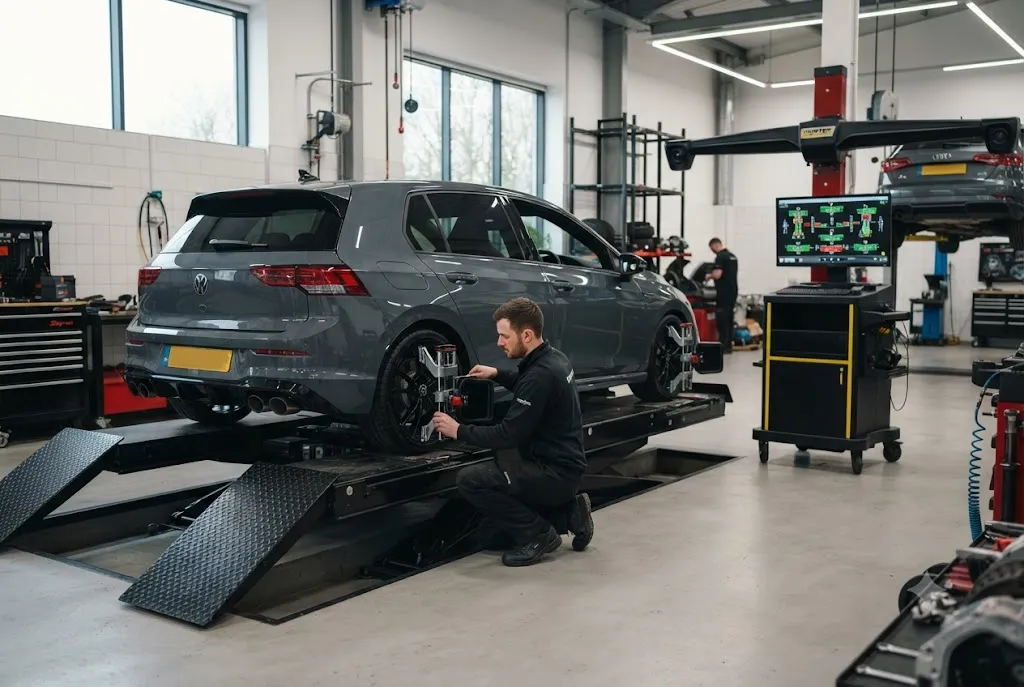
Wheel alignment is becoming increasingly sophisticated as UK workshops adopt digital measurement systems, advanced sensors and intelligent software. What was once largely a manual adjustment process can now involve precise electronic measurements, automated calculations and connected workshop equipment.
Modern alignment technology can help technicians identify incorrect wheel angles, measure vehicle geometry and make adjustments with greater consistency. The emergence of AI-assisted systems adds another layer by helping process measurement data, identify patterns and support technicians during calibration.
For garages and larger workshop networks, this technology is becoming particularly relevant as modern vehicles rely on increasingly precise chassis geometry, electronic steering systems and advanced driver assistance features. Accurate wheel alignment is no longer simply about making a vehicle drive straight. It can also form part of a wider vehicle safety and calibration workflow.
Why wheel alignment matters
Correct wheel alignment helps ensure that the wheels are positioned according to the vehicle manufacturer’s specified geometry. When alignment is incorrect, drivers may notice symptoms such as uneven tyre wear, steering that does not feel centred or a vehicle that pulls towards one side.
Alignment can be affected by impacts, worn components, suspension work and normal vehicle use. A significant pothole or kerb impact, for example, may alter wheel geometry even when there is no obvious external damage.
For workshops, accurate measurement is therefore important before adjustments are made. Modern equipment makes it possible to measure alignment angles and compare them with the appropriate vehicle specifications.
How digital wheel tracking works
Digital wheel tracking systems replace much of the guesswork associated with older manual approaches. Sensors or targets are attached to the wheels, while cameras or measurement equipment collect information about their positions.
The system then calculates relevant geometry and presents the results to the technician.
This can make the process faster and easier to document. Instead of relying only on a technician’s visual assessment, the workshop can produce measurable results showing how the vehicle was positioned before and after adjustment.
Digital records can also improve customer communication. A technician or service advisor can explain that a particular alignment measurement falls outside the recommended range and show the customer the relevant inspection information.
Laser alignment remains useful in modern workshops
Laser alignment is one of the established technologies used to measure wheel positioning. Laser-based systems can provide precise reference points for checking vehicle geometry.
However, modern alignment equipment has developed considerably beyond basic laser measurement. Many systems now combine electronic sensors, cameras, software databases and automated calculations.
The objective remains the same: accurately determine the vehicle’s geometry and help the technician make appropriate adjustments. The difference is that digital technology can make the measurement and reporting process more structured.
How AI can improve wheel alignment
AI can potentially add value to wheel alignment by helping technicians interpret large amounts of measurement information.
An intelligent alignment system could compare measurements against vehicle specifications, identify unusual patterns and guide technicians towards areas that may require further inspection.
For example, if alignment measurements remain outside the expected range after an adjustment, software could help flag the possibility that another component needs investigation. The technician would then perform the appropriate physical checks rather than simply repeating the same adjustment.
This approach is particularly useful because alignment is not always an isolated problem. Suspension components, steering parts, wheels and tyres can all influence the final result.
AI wheel balancing and alignment are not the same
AI wheel balancing and wheel alignment are related workshop services, but they address different issues.
Wheel balancing focuses on distributing the weight of a wheel and tyre assembly correctly. Alignment, by contrast, concerns the geometric relationship between the wheels and the vehicle.
Modern workshops may use intelligent equipment for both processes, but technicians still need to understand the distinction. A vibration caused by an imbalance cannot automatically be solved by adjusting alignment, just as an alignment problem will not necessarily disappear after balancing a wheel.
Accurate diagnosis is therefore more important than simply using advanced equipment.
Alignment sensors are becoming more sophisticated
Alignment sensors are central to many modern systems. Depending on the equipment, sensors can measure wheel positions and angles and communicate the information to a central computer.
The quality and calibration of these sensors directly affect the usefulness of the results. Even highly advanced software cannot produce reliable conclusions from inaccurate measurements.
For this reason, workshops need to maintain alignment equipment properly and follow the manufacturer’s calibration and operating procedures.
Technicians should also understand how the equipment works. A digital result should be interpreted in the context of the vehicle, its condition and the work being performed.
Intelligent calibration is becoming more important
Intelligent calibration extends the role of software beyond simply displaying measurements.
A modern system can potentially identify the correct vehicle specifications, guide technicians through adjustment procedures and record the final results. This can reduce manual data entry and help create a more consistent workflow.
Calibration becomes especially important when alignment work interacts with electronic vehicle systems. Some modern vehicles use cameras, radar and other sensors that support driver assistance features. Changes to vehicle geometry can affect the relationship between these systems and the road.
For that reason, a workshop may need to consider whether additional calibration procedures are required after certain repairs or adjustments.
Wheel alignment and advanced driver assistance systems
Modern vehicles increasingly use advanced driver assistance systems, including technologies designed to support lane positioning, collision avoidance and other driving functions.
These systems rely on sensors and cameras that need to operate in the correct position and orientation. Vehicle geometry can therefore become relevant to wider calibration procedures.
Workshops should follow the manufacturer’s instructions for the specific vehicle rather than assume that every model uses the same calibration process.
The rise of connected workshop technology makes this easier to manage. Digital systems can potentially connect vehicle information, alignment measurements and calibration requirements within a single job record.
Automated alignment can improve workshop efficiency
Automated alignment systems are designed to reduce manual steps within the measurement and adjustment process.
Once the vehicle is positioned correctly, the equipment can collect measurements and calculate results automatically. Some systems can also guide technicians through the adjustment process.
This can help reduce the time required for routine alignment work, particularly in busy workshops.
However, automation does not eliminate the need for technician oversight. The vehicle must be positioned correctly, sensors must be fitted appropriately and measurements must be interpreted in the context of the vehicle’s physical condition.
Why alignment data is valuable to workshops
One of the less obvious benefits of digital alignment equipment is the data it generates.
Traditional alignment work may produce little lasting information beyond the technician’s immediate observations. Digital systems can create before-and-after measurements that can be attached to the vehicle’s service record.
Over time, this information may help workshops identify recurring problems. If certain vehicles repeatedly show particular alignment issues, the workshop can investigate whether suspension wear, road conditions or another factor is contributing to the pattern.
For larger workshop networks, aggregated data could potentially provide even greater insight into common service requirements.
This connects directly with the wider development of automotive software, where digital workshop platforms can connect technical measurements with customer and vehicle records.
Wheel alignment and tyre wear
Incorrect alignment can contribute to uneven or accelerated tyre wear. This makes alignment particularly relevant to workshops that also provide tyre services.
When a technician identifies unusual wear, alignment measurements can help determine whether vehicle geometry may be contributing to the problem.
However, tyre wear should not automatically be attributed to alignment. Tyre pressure, suspension condition, driving behaviour, road surfaces and other factors can also influence wear.
A proper inspection should therefore consider the complete vehicle rather than relying on a single measurement.
Digital alignment reports improve customer communication
One practical advantage of modern wheel alignment systems is the ability to communicate technical findings more clearly.
Vehicle geometry can be difficult for customers to understand when explained verbally. A digital report can show measurements before and after adjustment, making the recommendation easier to understand.
This can help service advisors explain why alignment work has been recommended and demonstrate what the workshop has done.
Clear reporting also supports transparency. Customers can see that the recommendation is based on measurable information rather than an arbitrary sales suggestion.
How garage chains can use intelligent alignment systems
Large workshop networks face a particular challenge: delivering consistent service across many locations.
Different technicians may have different levels of experience, while individual branches can use equipment from different generations. Standardised digital alignment workflows can help reduce some of these differences.
A central network can establish common procedures, equipment standards and reporting requirements. Branch managers can then monitor service activity while technicians use the appropriate tools for individual vehicles.
This is another example of how the digital transformation of garage chains can extend beyond customer booking systems and administrative software into specialist workshop equipment.
Training remains essential despite automation
Advanced alignment equipment does not remove the need for skilled technicians.
A technician needs to understand vehicle geometry, suspension components and steering systems to interpret the results correctly. If measurements fall outside the expected range, the technician must determine whether an adjustment is appropriate or whether a damaged or worn component needs attention first.
Training is also important because equipment manufacturers use different technologies and workflows. Technicians should understand the equipment available in their workshop and follow the relevant operating procedures.
AI should therefore be viewed as an additional support tool rather than a replacement for professional knowledge.
Wheel alignment in electric and hybrid vehicles
Electrified vehicles introduce another reason for workshops to pay attention to precise wheel geometry.
Electric and hybrid vehicles can have different weight distributions, suspension designs and tyre requirements compared with conventional vehicles. The correct alignment specifications remain vehicle-specific.
As the UK workshop industry handles more electrified vehicles, technicians will increasingly need to combine specialist vehicle knowledge with digital diagnostic and measurement systems.
This connects with the wider developments discussed in our guides to hybrid servicing and EV servicing.
What workshops should consider when choosing alignment equipment
Workshops considering new alignment technology should evaluate more than the headline accuracy figure.
Vehicle coverage
The system should provide appropriate specifications for the vehicles the workshop commonly services.
Measurement technology
Workshops should understand whether the equipment uses cameras, electronic sensors, lasers or a combination of technologies.
Calibration requirements
Regular equipment calibration and maintenance are essential for reliable measurements.
Reporting
Digital reports can improve customer communication and create useful service records.
Integration
The ability to connect alignment results with workshop management software can reduce duplicate data entry and create a more complete vehicle history.
The future of AI-powered wheel alignment
The future of wheel alignment is likely to involve increasingly connected measurement systems rather than one standalone machine.
Alignment equipment can connect with workshop management platforms. Vehicle information can be retrieved digitally. Measurement results can be stored against the job. AI can help identify unusual patterns or guide technicians through appropriate workflows.
In larger networks, these systems could potentially provide management teams with broader information about service demand, common vehicle issues and equipment utilisation.
The biggest benefit will not necessarily come from making every step fully automated. It will come from reducing unnecessary manual work while making measurements more accurate, transparent and useful.
Why accurate wheel alignment will remain important
Vehicles may be becoming more intelligent, but accurate physical maintenance remains essential. Software cannot correct a worn suspension component, repair a damaged steering part or compensate for incorrectly fitted equipment.
Instead, digital alignment technology works best when it combines accurate measurement with experienced human judgement.
For UK workshops, the opportunity is to use technology to make that process more efficient. Sensors can collect measurements, software can process them, digital systems can store the results and technicians can make the final informed decision.
The future of wheel alignment in UK workshops
Wheel alignment is moving from a largely equipment-based service towards a connected, data-driven workshop process. Laser alignment, digital tracking, alignment sensors, intelligent calibration and automated systems are all contributing to this change.
AI adds another potential layer by helping technicians interpret measurements and identify patterns. As vehicles become increasingly connected, the information generated during alignment work can also become part of a broader digital service history.
For workshops, the key is to adopt technology with a clear operational purpose. Accurate measurement, appropriate calibration, qualified technicians and reliable procedures remain the foundation.
The most effective systems will combine these fundamentals with intelligent software, giving technicians better information without removing professional judgement. As UK vehicles become more technologically advanced, that balance will become increasingly important.
