AI skin analysis is a way of assessing your skin with software instead of guesswork. You take a clear photo of your face, usually a selfie on your phone. Or you use a scanner in a store. The technology then reads visible skin features. These include hydration, fine lines, pigmentation, pores and breakouts. It turns what it finds into a simple report. In most cases, it also produces product recommendations matched to your skin. For UK shoppers, that promise is easy to understand. Skincare aisles are long, and online catalogues are even longer. A good tool means less trial and error. It also means a routine that feels made for you.
But is it genuinely useful? Or is it simply a clever way to sell more products? The honest answer sits somewhere in between. Used well, AI skin analysis can help you understand your skin better. It can also help you choose products with more confidence. Used uncritically, though, it can flatter, misread or oversell. This guide explains how the technology works. It compares apps with in-store devices. It explains what the results really mean. It also shows how to get the most from a consultation. And it does so without handing over more data than you need to.
What Is AI Skin Analysis?
AI skin analysis is a form of digital skin analysis. It uses artificial intelligence, usually computer vision, to examine images of the face. Computer vision is the branch of AI that recognises patterns in pictures. In skincare, those patterns might be the shadow of a wrinkle. They might be an area of uneven tone. They could also be visible pores. Or they could be the shine that suggests oiliness. The software compares what it sees with patterns from many other images. It then scores or describes your skin. It judges it against a set of common characteristics.
This is part of a wider shift. AI is moving into everyday services that once relied only on human judgement. MetaTalks UK has explored how AI is reshaping vehicle servicing. There, software helps technicians diagnose problems earlier. Beauty is following a similar path. The subject is not a car in a workshop. It is your own face. The advice is about cleansers, serums and moisturisers. It is not about parts and repairs.
How AI Skin Analysis Works
Most AI skin analysis systems follow the same basic steps. This is true on your phone and on the high street. First, the tool captures an image. A phone uses its front camera. An in-store device may use a dedicated camera. It may also use controlled lighting. Some tools ask questions, too. They ask about your age and skin concerns. They also ask about sensitivities and your current routine. A photograph alone cannot tell the whole story. Next, the software maps the face. It identifies key areas, such as the forehead, cheeks and chin. It then analyses each area in turn. It looks for the features it has learned to find. Finally, it produces a report. The report usually includes scores and plain-English explanations. It also includes recommendations.
From Photo to Report: The Role of Skin Analysis Technology
The skin analysis technology behind the report works like other image-based AI tools. Our guide to how AI is transforming digital checks explains this in a different setting. Computer vision turns pictures into data. Software can then compare and classify that data. In skincare, it measures colour variation across the skin. It also measures texture and contrast. The results are estimates based on what the camera can see. They are not measurements taken beneath the surface. That distinction matters. Always read a report as guidance. Never read it as a verdict on your skin.
What Does It Measure?
Depending on the tool, a scan may comment on:
- Hydration and dryness, suggested by dullness or flaking visible in the image
- Fine lines and wrinkles, especially around the eyes and forehead
- Pigmentation and uneven tone, including sun spots and areas of discolouration
- Pores and skin texture, including how smooth or rough the surface appears
- Breakouts, redness and visible blemishes
- Firmness and elasticity, inferred from the contours of the face rather than measured directly
Not every tool measures the same things. Brands also describe the same feature in different ways. That is one reason results from two services rarely match.
Apps at Home or an AI Skin Scanner in Store?
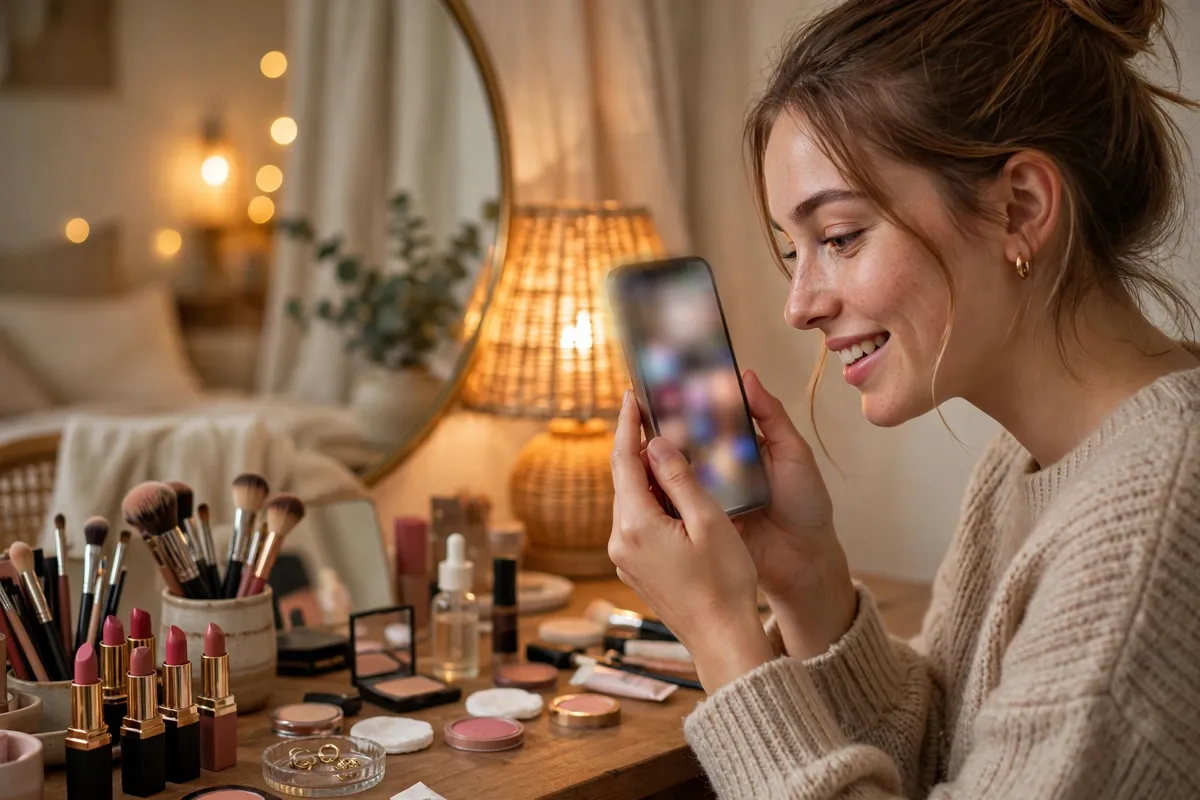
At home, a skin analysis app works through your phone. You download the app or open the tool in a browser. You answer a short questionnaire. You then take a selfie in good light. A few moments later, your report appears. The appeal is convenience. You can repeat the scan whenever you like. You can track how your skin changes across the seasons. You can also shop from home. The weakness is consistency. Bathroom lighting can change the picture. So can camera quality and make-up. Even the angle of your head can change the result.
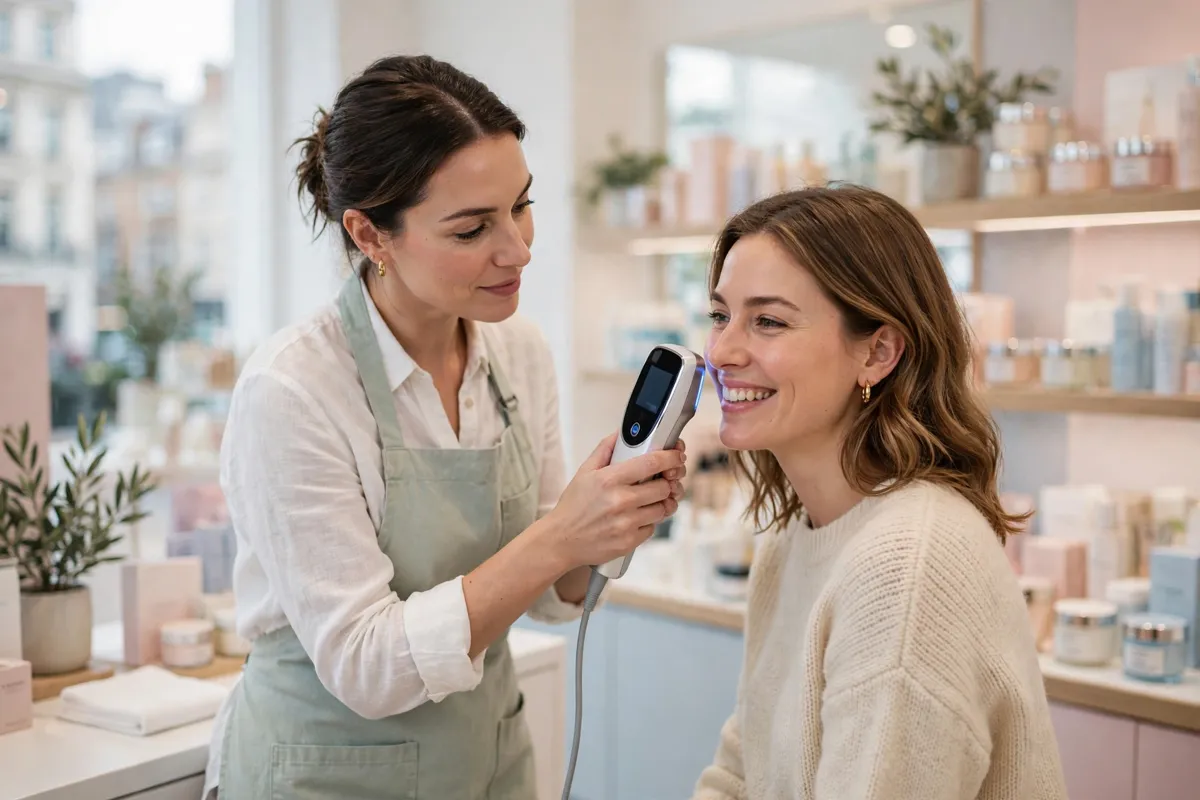
In store, the experience is more controlled. An AI skin scanner in a beauty hall or pharmacy uses fixed lighting. It also follows a guided process. A member of staff is often on hand to explain the findings. UK beauty retail has begun to bring facial analysis into physical stores. Sephora’s UK Beauty Scan technology is one example. It shows AI-powered analysis being used in retail. There, it supports skincare and make-up recommendations. For many shoppers, the human conversation is the real value. The scan starts the discussion. A person can then ask about your budget. They can ask about your preferences. They can also ask about the products you already own.
How Personalised Recommendations Are Generated
The report is only half of the story. Behind it, most AI skincare tools match your results against a product database. Suppose the scan suggests dehydration and visible pores. The system may then prioritise a hydrating serum. It may also suggest a gentle exfoliant. It may steer you away from rich products. It may also avoid heavily fragranced ones. Your questionnaire answers refine the picture further. They add allergies and sensitivities. They can add ethical preferences. They can also add a wish to keep a routine short. This is how software builds personalised skincare. The software does not invent a formula for one person. Instead, it narrows a large catalogue to a shortlist. That shortlist fits the profile the scan has created. This can save time. But the shortlist usually comes from one retailer’s range. So it is a guided choice. It is not a search of the whole market.
The Benefits of AI Skincare Analysis
A well-designed AI skincare analysis can make several things easier. It gives beginners a starting point, not a blank shelf. It can highlight concerns you had not noticed. Early signs of dehydration are a good example. It can also stop you buying duplicate products. These are products that do the same job as ones you own. Repeating a scan over time helps, too. Changes become easier to spot. That helps you judge whether a routine suits your skin. Some people feel embarrassed asking about breakouts in a busy store. They may also feel awkward asking about pigmentation. For them, a private scan at home feels far more comfortable. Finally, a good scan makes AI skincare feel like a service. It feels less like marketing. That is because the recommendation is tied to something real. The tool has actually observed it in your skin.
Limitations and Accuracy: What a Scan Cannot Tell You
Honesty matters here. No scan is a medical assessment. Lighting is the biggest everyday variable. Bright light can wash out pigmentation. Warm indoor light can exaggerate redness. Photo quality matters, too. An older phone camera gives the software less to work with. So does a slightly blurred image. Skin tone can affect results as well. Systems learn from the images they are trained on. Tools do not always perform equally across every tone. A scan cannot feel your skin. It cannot ask how your skin reacts over time. It cannot see beneath the surface.
Treat the scores as a useful indication. Do not treat them as a precise measurement. Be wary of any tool that presents its findings as certain. Above all, AI skin analysis does not replace a dermatologist. It does not replace your GP, either. A changing mole needs a qualified medical professional. So does a persistent rash. So does painful acne, or anything that worries you. An app is not the right place for those concerns.
Privacy: Your Face Is Personal Data
A selfie is not like a search term. It is an image of you. A service may treat it as sensitive personal information. That depends on how the service processes it. Before you upload one, check the privacy notice. Look for clear answers to simple questions. Are images stored? Where are they processed? How long are they kept? Are they used to train the company’s systems? How can you ask for them to be deleted? In the UK, data protection law gives you rights. You can ask what an organisation holds about you. You can also object to some uses of your data. The same questions are appearing across other AI services. Our look at AI-powered auto services shows this in the motor trade. If a beauty tool cannot explain its data practices clearly, walk away. Plain English should not be too much to ask.
Getting the Most From a Digital Skincare Consultation
Whether you book a digital skincare consultation online or walk up to a counter in store, a little preparation improves the result:
- Scan with a clean, make-up-free face, in natural light facing a window if you can
- Tie your hair back and remove glasses so the software can see your whole face
- Be honest in the questionnaire about sensitivities, medication and how your skin actually behaves
- Take the recommendations as a shortlist, then read ingredient lists before you spend
- Introduce one new product at a time, so you can tell what is helping and what is not
- Repeat the scan in similar conditions after a few weeks if you want to compare results
That approach keeps you in control. The technology does the pattern-spotting. You decide what goes on your skin. You also decide what you are willing to pay. That might be a few pounds for a high-street cleanser. Or it might be more for a targeted serum.
Conclusion: Is AI Skin Analysis Worth Trying?
For most curious readers, yes. Just keep your expectations realistic. AI skin analysis is quick to try. It is often free. It can genuinely help you build a routine. It can also sense-check the products you already own. It is not a diagnosis. It is not perfectly consistent. It will usually point you towards one brand’s shelves. Used as guidance, though, it works well. Digital skin analysis is a sensible example of AI skincare. It turns a photograph into practical advice. It then leaves the final decision with you. That is exactly where the decision belongs.