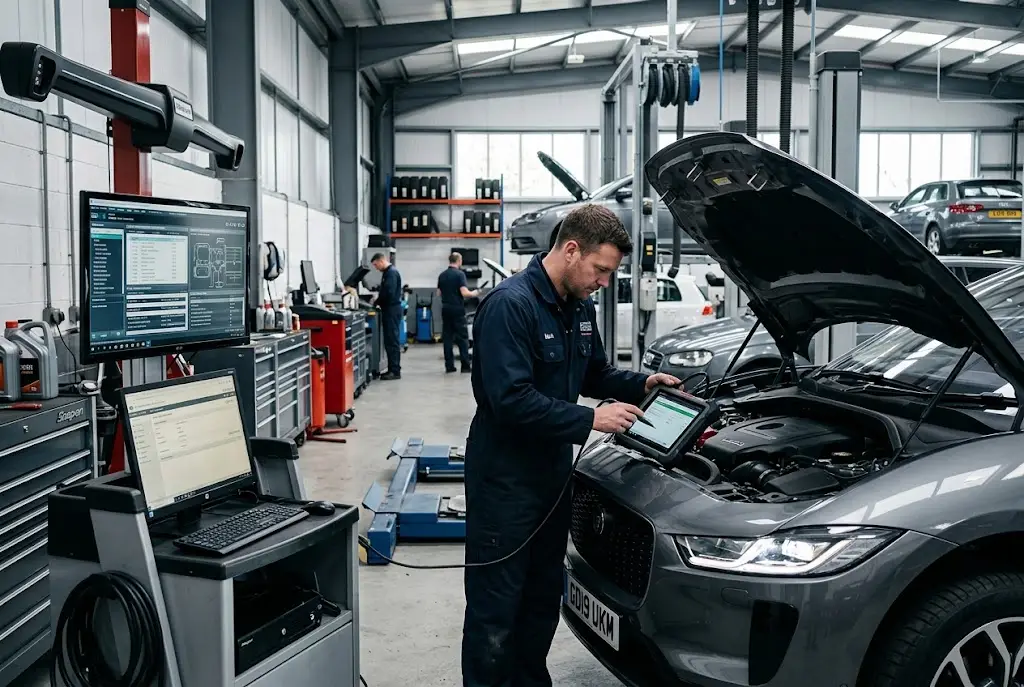
The modern auto service garage is changing as artificial intelligence, connected vehicle technology, robotics and digital workshop systems become more widely integrated into automotive operations. Garages are no longer relying solely on mechanical tools and paper-based processes. Increasingly, technicians can use intelligent diagnostic equipment, digital inspection platforms and automated workflow systems to make vehicle servicing more organised and data-driven.
This transformation does not mean that skilled mechanics are disappearing. Instead, technology is giving automotive professionals better information and more efficient tools. The future workshop is likely to combine hands-on expertise with smart systems that support diagnostics, scheduling, maintenance planning and customer communication.
What Is an AI-Powered Auto Service Garage?
An AI-powered auto service garage uses digital technology and intelligent software alongside traditional automotive equipment. Depending on the garage, these systems may support vehicle diagnostics, digital inspections, appointment management, service records, parts planning and workshop workflows.
AI can process information and identify patterns, while technicians remain responsible for physical inspections, repairs and safety-critical decisions. This combination allows garages to modernise their operations without removing the human expertise that vehicle maintenance requires.
The development of smart garages is also part of the broader AI-powered auto services movement, which is changing how drivers interact with automotive businesses.
How Smart Garages Are Different from Traditional Workshops
A traditional garage can provide excellent service without advanced AI systems. However, smart garages add digital tools that can improve how information moves through the workshop.
For example, a modern workshop might receive a customer’s booking digitally, access previous service information, perform an electronic diagnostic scan and create a digital inspection report. Each stage can be connected through workshop management software.
This creates a more structured process from vehicle arrival to final handover.
Digital Vehicle Information
Digital systems can store information about previous maintenance, diagnostic findings and inspection results. This can help technicians understand the vehicle’s background without searching through physical paperwork.
Connected Workshop Processes
Connected systems can allow different parts of the workshop operation to communicate with one another. Customer records, appointments, inspection results and repair information can potentially be managed through integrated platforms.
AI Workshop Systems and Diagnostics
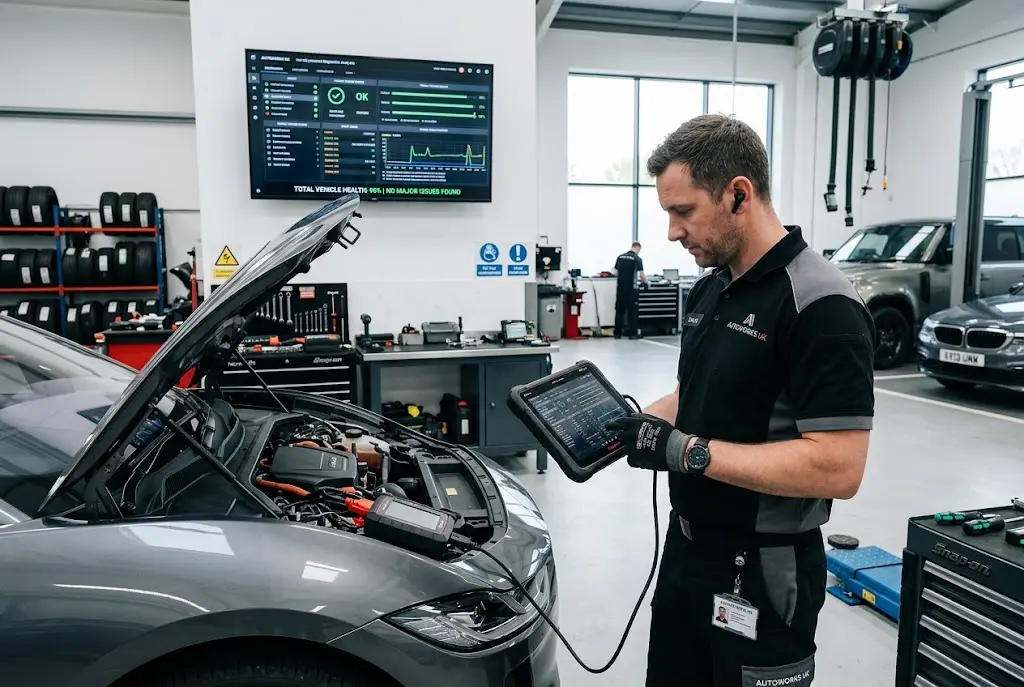
Diagnostics are among the areas where AI can provide particularly useful support. Modern vehicles contain numerous electronic systems, creating large quantities of diagnostic information.
AI-supported workshop systems can analyse available information and highlight patterns that may require additional investigation. This can help technicians narrow down potential problem areas before carrying out more detailed testing.
The approach complements the development of AI-powered auto inspection services. Digital inspection and intelligent diagnostics can work together to give technicians a more complete view of vehicle condition.
However, automated analysis should never be treated as a substitute for professional diagnosis. Technicians still need to verify findings using suitable equipment and physical inspection.
Workshop Automation and Everyday Garage Operations
Workshop automation covers more than robots repairing vehicles. Many of the most practical forms of automation involve repetitive administrative and organisational tasks.
A garage may use software to manage bookings, send service reminders, organise technician workloads, record inspection results and update customers about repair progress.
These processes can reduce manual administration and allow staff to concentrate more heavily on technical work and customer service.
Automated Appointment Scheduling
Digital scheduling systems can help garages organise available workshop capacity. When integrated with customer-management software, they can also reduce the amount of manual communication needed to arrange appointments.
Digital Job Management
Workshop management platforms can help staff track a vehicle as it moves through inspection, diagnosis, repair and final checks. This can make it easier to see which jobs are waiting for parts, technician attention or customer approval.
Automated Customer Updates
Customers increasingly expect clear communication. Automated notifications can provide updates about appointment confirmations, inspection results or completed work while allowing staff to intervene when a more detailed explanation is needed.
The Role of Robotics in Automotive Workshops
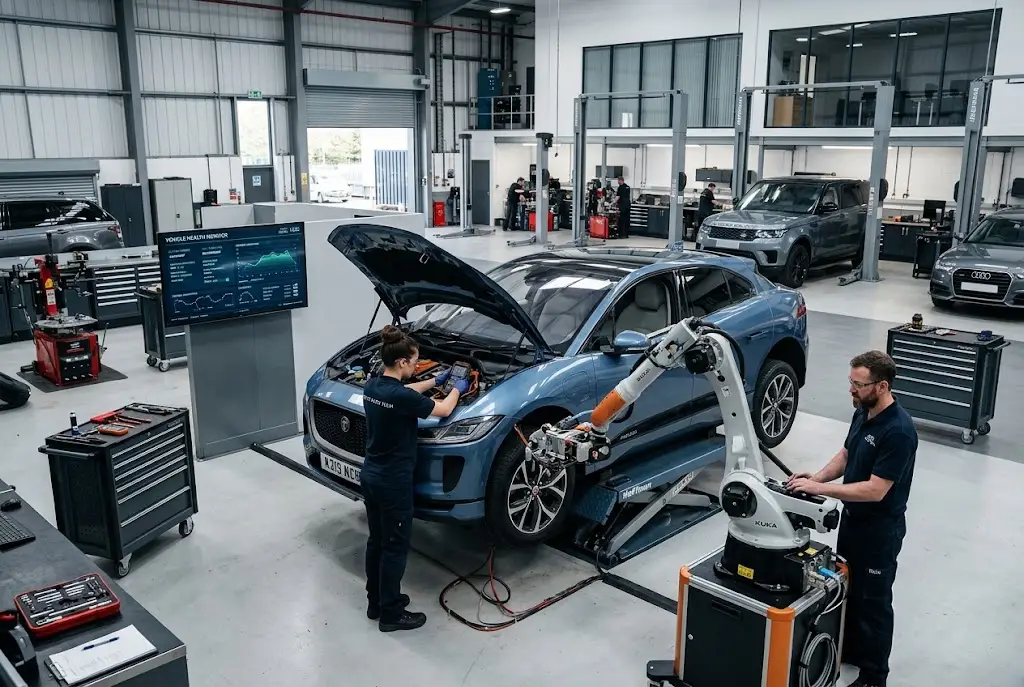
Robotics may become more important in automotive environments as technology develops. Robots are particularly useful for repetitive, controlled tasks where consistency and precision are important.
However, vehicle repair remains a complex physical activity. Different vehicles can present different conditions, and technicians often need to make decisions based on what they observe directly.
For that reason, robotics are more likely to complement human workers in many workshop environments than completely replace them.
A technician could supervise automated equipment while concentrating on tasks that require experience, judgement and problem-solving. This human-machine combination may become an important feature of future digital workshops.
Connected Garages and Connected Vehicles
The development of connected vehicles is creating new opportunities for connected garages. Where appropriate systems and permissions exist, vehicle information can potentially be made available to authorised servicing platforms.
This can help move the workshop relationship from reactive to proactive. Instead of learning about every problem only when the customer arrives, a garage may have access to relevant information before the appointment.
For example, information from a connected vehicle could indicate that a particular system requires investigation. The garage may then prepare diagnostic equipment or allocate appropriate workshop time.
This approach connects closely with AI-powered car servicing, where digital information can support more responsive maintenance planning.
Digital Workshops and Customer Experience
Technology can improve the customer experience as well as workshop efficiency. A digital workshop can provide customers with clearer information about what technicians have found and why particular work has been recommended.
Digital inspection reports can include structured notes, photographs and other relevant information. This can make conversations between customers and technicians more transparent.
For drivers, better information can make it easier to decide whether recommended work is urgent, routine or suitable for future planning.
How AI Can Help Workshop Efficiency
Garage owners need to manage several competing priorities. Technicians, equipment, workshop bays, parts and customer appointments all need to be coordinated.
AI can potentially support this process by analysing operational information and helping identify scheduling conflicts or workflow bottlenecks.
For example, a digital system may help allocate work according to technician availability and expected job requirements. It could also identify appointments that may require additional time or equipment.
These capabilities can become increasingly useful as garages handle more complex vehicles and diagnostic processes.
Smart Parts and Repair Planning
Parts management is another area where digital technology can support garage operations. Delays can occur when a required component is unavailable, incorrectly identified or ordered too late.
Integrated workshop systems can help staff connect repair information with parts requirements. Where sufficient historical and operational data exists, intelligent software may also help identify recurring parts needs or potential scheduling issues.
This does not guarantee that a particular part will always be available. Supply chains, vehicle specifications and supplier availability still need to be considered. Nevertheless, better information can help garages plan more effectively.
Safety and Human Oversight Remain Essential
Automation should not remove professional oversight from safety-critical vehicle work. Braking systems, steering components, tyres, suspension and other important systems require appropriate inspection and repair procedures.
AI can identify information that deserves attention, but qualified technicians must remain responsible for determining whether a vehicle is safe to return to the road.
This is particularly important because software can only analyse the information available to it. Physical damage, wear or unusual conditions may not always be fully represented in digital data.
Challenges Facing Automated Workshops
Moving towards a technology-driven workshop also creates challenges. Garage owners may need to invest in diagnostic equipment, software, staff training and cybersecurity processes.
Technology can also create complexity when different systems do not communicate effectively. A garage may have separate platforms for bookings, customer management, diagnostics and inspections, which can make integration difficult.
Staff training is equally important. Technicians need to understand how new tools work, what their limitations are and when traditional diagnostic methods should take priority.
What Does an Autonomous Repair Centre Really Mean?
The idea of an autonomous repair centre often suggests a workshop where robots perform every stage of vehicle maintenance without human involvement. That scenario is possible in some highly controlled tasks, but widespread fully autonomous vehicle repair presents significant practical challenges.
Vehicles differ in age, condition, design and repair requirements. Many problems also require judgement that goes beyond a straightforward automated procedure.
A more realistic development is a highly automated workshop in which software, robotics and connected equipment handle selected repetitive tasks while skilled technicians supervise operations and perform complex work.
The Future Auto Service Garage
The future auto service garage is likely to be more connected than the traditional workshop. Vehicle information, customer records, diagnostic systems, inspection platforms and scheduling tools could increasingly work together.
A vehicle may arrive with relevant diagnostic information already available. The garage could then perform a digital inspection, confirm potential issues and use an intelligent workflow system to organise the repair.
After the work is completed, the service history could be updated digitally, giving the driver a clearer record for future maintenance.
This model links naturally with intelligent vehicle maintenance, where vehicle care becomes a continuous process supported by digital information.
How Drivers Can Choose a Modern Garage
Drivers do not necessarily need to choose a garage simply because it advertises AI. The quality of automotive service still depends on technician expertise, appropriate equipment, honest communication and proper repair procedures.
However, digital capabilities can be useful. Drivers may want to ask whether a garage offers digital inspection reports, modern diagnostic equipment, electronic service records or convenient online booking.
The most valuable technology is technology that makes the service clearer, safer and more efficient rather than technology used simply as a marketing feature.
Why Workshop Automation Matters
Automotive technology is becoming more complex, and workshops need better ways to manage the information that comes with it. AI and automation can help garages organise this information while allowing technicians to focus on the physical work that vehicles still require.
Smart garages therefore represent more than a collection of new gadgets. They are part of a wider shift towards connected, data-driven vehicle care.
As automotive systems continue to evolve, the successful auto service garage of the future will likely combine advanced digital tools with experienced professionals. AI can improve information processing, robotics can support selected repetitive tasks and connected systems can streamline communication. Human expertise, however, will remain central to safe and effective vehicle repair.
The result could be a workshop experience that is more organised, transparent and proactive while still preserving the practical skills that have always defined quality automotive servicing.