Modern auto repair services are entering a new technological era. Vehicles are becoming more electronically complex, while workshops are gaining access to advanced diagnostic software, connected systems, automation and robotics. Although traditional mechanical expertise remains essential, robotic technology can increasingly support technicians with repetitive, precise and data-driven tasks.
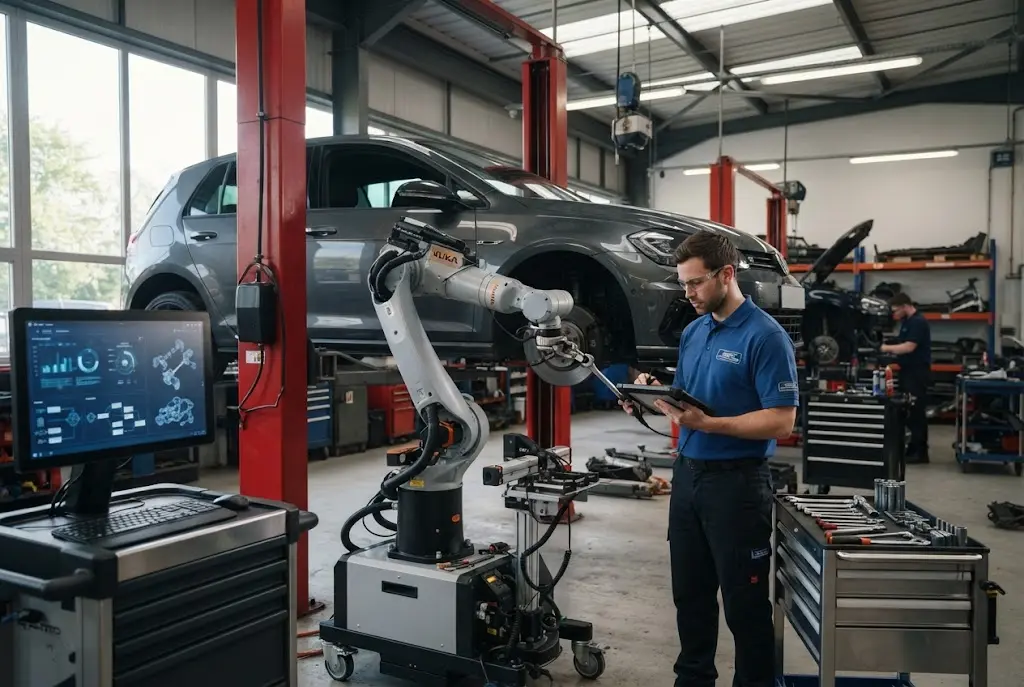
The idea of robotic repairs does not necessarily mean a workshop filled with humanoid machines replacing mechanics. In practice, automotive robotics can include robotic arms, automated equipment, machine-vision systems, intelligent tools and software-controlled processes that assist technicians. These technologies can improve consistency, reduce repetitive work and help workshops manage increasingly complex vehicles.
As the automotive industry moves towards connected and software-intensive vehicles, repair businesses are also exploring how artificial intelligence and automation can become part of the wider repair workflow.
How Robotics Is Changing Auto Repair Services
Traditional workshops depend heavily on technicians physically inspecting, diagnosing, servicing and repairing vehicles. That model is unlikely to disappear, but technology can change how individual tasks are performed.
Robotic systems can be particularly useful where a task requires repetitive movement, consistent positioning or controlled force. Automated equipment can also help technicians carry out certain operations with greater repeatability.
The International Federation of Robotics distinguishes professional service robots from industrial robots and notes that autonomous mobile robots can be used as professional service robots. Its broader robotics data also shows continuing investment in automation across industrial sectors. The International Federation of Robotics provides further information on current robotics developments and industry data.
For automotive repair businesses, the important question is therefore not whether every repair should become automated. Instead, workshops can identify individual processes where automation can add measurable value.
What Are Robotic Repairs?
Robotic repairs refer broadly to repair or servicing tasks in which robotic hardware performs, assists with or controls part of a physical workshop operation. The level of automation can range from a technician operating an intelligent robotic tool to a system carrying out a defined procedure with limited human intervention.
For example, robotics may eventually assist with repetitive component handling, controlled fastening, inspection positioning, cleaning, parts movement or other structured workshop tasks. Machine vision can also help automated systems identify objects, surfaces or components before an operation begins.
However, vehicle repair is considerably more complicated than a controlled factory assembly line. Cars arrive with different levels of wear, previous repairs, modifications, damage and component conditions. This makes complete automation challenging.
As a result, the practical direction for many workshops is likely to involve human technicians working alongside robotic equipment rather than removing people from the process entirely.
AI Repair Systems and Smarter Diagnosis
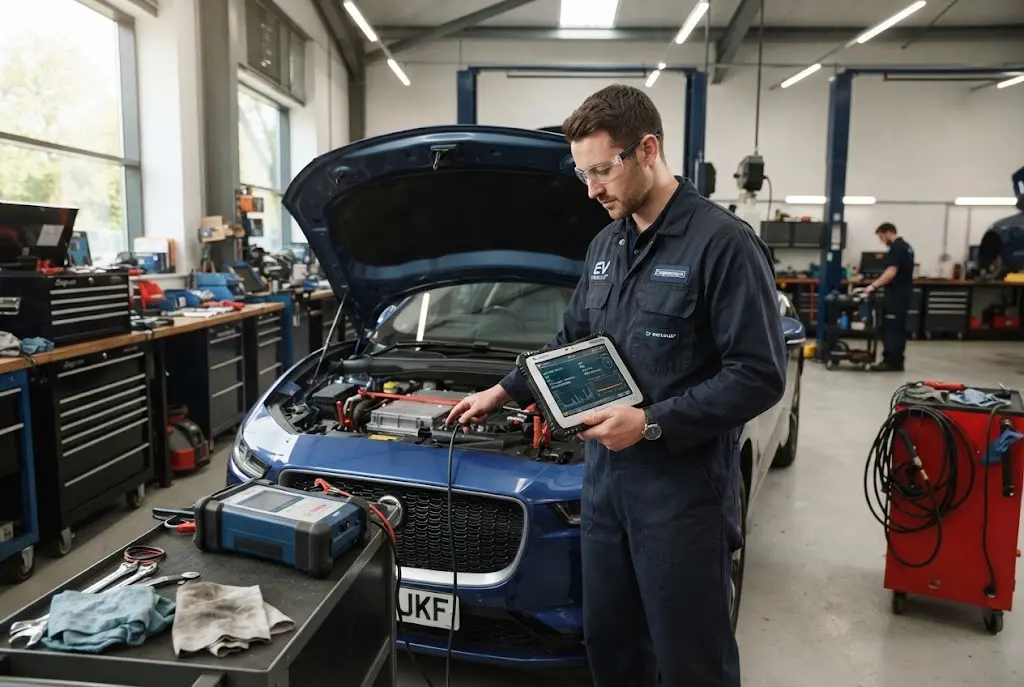
Robotics becomes more useful when physical automation is connected to intelligent software. AI repair systems can potentially combine diagnostic information, repair procedures, vehicle specifications and workshop data to help determine what should happen next.
This connects closely with the development of AI-powered auto inspection services. An inspection system may identify an anomaly or potential fault, while an intelligent repair workflow can then help organise the next diagnostic or repair step.
The distinction between diagnosis and repair remains important. AI may help identify patterns or recommend an action, but technicians still need to validate findings and determine whether the proposed repair is appropriate.
This is particularly important because modern vehicles contain mechanical, electrical, electronic and software-controlled systems that can interact with one another. A fault in one system may produce symptoms elsewhere, meaning automated recommendations need appropriate verification.
Automated Workshops Are More Than Robots
An automated workshop does not have to mean a completely autonomous garage. Workshop automation can include many smaller technologies working together to reduce administrative and operational friction.
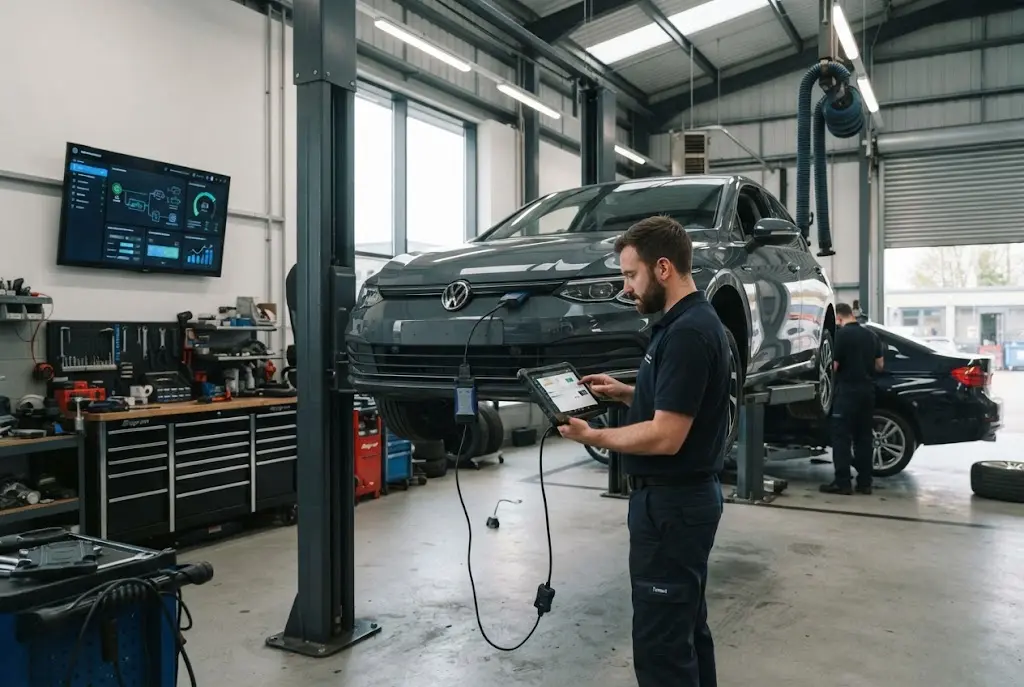
Digital job cards, automated appointment scheduling, electronic parts ordering, diagnostic software, vehicle inspection platforms and connected workshop equipment can all contribute to a more automated environment.
When these systems share information, a workshop can create a more continuous workflow. Customer information can move into a job record, inspection findings can be attached to the vehicle record, diagnostic results can inform repair planning and completed work can be documented digitally.
The result is a workshop where automation supports both physical and administrative processes rather than focusing exclusively on robotic hardware.
Where Robotics Could Assist Technicians
Some workshop tasks are particularly suitable for automation because they are repetitive or highly structured.
- Parts handling: Automated systems could help move components, tools or parts between designated areas.
- Precision operations: Robotic equipment can perform carefully controlled movements where repeatability is important.
- Inspection assistance: Machine-vision systems can help examine components or surfaces for defined conditions.
- Workshop logistics: Autonomous mobile systems can potentially move equipment or parts around larger facilities.
- Routine processes: Structured and repetitive procedures may offer opportunities for partial automation.
- Data capture: Connected equipment can automatically record information associated with a repair operation.
These applications can allow technicians to spend more time on tasks requiring judgement, fault interpretation and hands-on expertise.
Machine Learning Repairs and Predictive Workflows
Machine learning repairs are another area where software intelligence could influence the future of workshops. Rather than treating every repair as an isolated event, machine learning systems can potentially analyse historical repair information to identify recurring patterns.
For example, a workshop with a large volume of historical service records may be able to identify relationships between certain symptoms, diagnostic findings and repair outcomes. Such information could support technicians when deciding where to investigate first.
Machine learning can also become useful when combined with vehicle health information. If connected vehicle systems identify a developing issue before a customer arrives at the workshop, the business may have an opportunity to prepare equipment, parts or diagnostic procedures in advance.
That creates a connection between predictive diagnostics and repair planning. Instead of waiting for a vehicle to arrive with limited information, the workshop can potentially receive relevant information before the repair appointment.
The Rise of the Intelligent Repair Workflow
An intelligent repair workflow combines technology at multiple stages rather than using a single automated machine.
A simplified process might begin with a customer booking. Vehicle information can then be captured digitally, followed by an inspection and diagnostic assessment. Relevant findings can be attached to the job record, while software can help organise recommended work and parts requirements.
A technician can review the information, perform physical checks and approve the appropriate repair procedure. Automated equipment may assist with selected operations, while digital systems record what was completed.
Finally, the completed repair can become part of the vehicle’s digital service history.
This model can create a more connected experience from initial inspection through to final handover. It also provides a useful foundation for future maintenance decisions because previous work is easier to retrieve and review.
Benefits of Repair Automation
Repair automation can offer several potential benefits when implemented appropriately.
Consistency is one of the most obvious. Automated equipment can perform defined movements or processes repeatedly, which may help reduce variation in suitable tasks.
Efficiency is another potential benefit. If a robot or automated system can handle repetitive work, technicians may have more time available for diagnostics, complex repairs and customer-focused activities.
Documentation can also improve when connected equipment automatically records relevant information. This can help create a more complete repair history.
Finally, workplace ergonomics may benefit when automation assists with physically repetitive or demanding activities. The exact benefits depend on the equipment, task and workshop design, so automation should be evaluated on a process-by-process basis.
Why Human Technicians Still Matter
Even highly advanced robotics cannot eliminate the need for skilled automotive technicians across the full range of repair situations. Vehicles are not identical, and real-world faults can involve unusual combinations of mechanical and electronic problems.
Technicians provide physical judgement, troubleshooting ability and practical experience. They can recognise unusual conditions, interpret incomplete information and adapt a repair approach when the expected procedure does not match what they find.
Government-supported UK robotics projects have also demonstrated how robotic technologies can be developed to assist with inspection, maintenance and repair in environments where access or working conditions create particular challenges.
The lesson for automotive workshops is that robotics can be valuable as an additional capability. Human expertise remains important for supervision, validation and complex decision-making.
Challenges of Automated Auto Repair Services
Introducing robotics into a workshop is not simply a matter of purchasing equipment. Businesses need to consider installation costs, technician training, maintenance, software compatibility, safety procedures and the types of vehicles they actually service.
There can also be limitations around vehicle variation. A robotic system designed for a predictable task may struggle when a component is damaged, modified or positioned differently from expected.
Software integration is another important consideration. Diagnostic platforms, workshop management systems and robotic equipment need to exchange information reliably if a business wants a genuinely connected repair environment.
Cybersecurity and data governance also become increasingly relevant as more workshop equipment and vehicle information becomes connected.
What the Future of Auto Repair Services Could Look Like
The future of auto repair services is likely to be less about replacing technicians with robots and more about creating collaborative workshops where people, software and machines perform complementary roles.
A technician could receive an intelligent diagnostic assessment before beginning a job. Digital inspection information could provide photographs and vehicle data. Workshop software could help prepare the job, while robotic equipment assists with selected physical operations. Once the work is complete, the repair record could automatically update the vehicle’s digital history.
In larger facilities, autonomous equipment could potentially handle certain internal logistics tasks, moving tools or parts without requiring technicians to interrupt their work.
However, the degree of automation will vary considerably between workshops. A small independent garage may benefit from digital workflows and intelligent diagnostic systems without requiring sophisticated robotics, while a large repair centre may have stronger reasons to automate physical processes.
Conclusion
Robotics is beginning to influence the future direction of auto repair services, but the most practical model is likely to be collaboration rather than complete replacement. Robotic repairs, AI repair systems, machine learning and automated workshop processes can support technicians with repetitive, data-intensive and structured tasks.
The greatest opportunity comes when robotics is connected to the wider digital repair ecosystem. Inspection data, diagnostics, service records, workshop software and automated equipment can work together to create an intelligent repair workflow.
As vehicles become more connected and technically sophisticated, workshops will need equally sophisticated ways to inspect, diagnose, repair and document them. Robotics can become an important part of that evolution while skilled technicians remain central to safe and effective vehicle repair.