Skincare used to mean a trip to a clinic or a counter. At-home beauty technology is changing that, bringing devices once found only in professional settings — LED masks, microcurrent tools, app-guided skincare devices — into ordinary bathrooms. In this guide to at-home beauty technology, we explain what these devices do, which ones are worth considering, and how to use them safely and realistically.
At-home beauty technology covers a wide range: smart skincare devices that analyse your skin, LED beauty devices that use light for skin concerns, microcurrent devices that claim to tone facial muscles, facial technology for cleansing and treatment, and connected skincare devices that pair with apps to track routines and results. The common thread is technology-led skincare at home, on your own schedule.
What Is At-Home Beauty Technology?
At-home beauty technology means devices designed for safe, regular use at home that perform functions previously associated with professional treatments. Unlike a cream or serum, a device uses energy — light, current, vibration, or heat — to affect the skin, and it often connects to an app that guides use, tracks progress, or personalises settings.
The appeal is clear: convenience, privacy, and long-term cost. A device bought once can replace repeated clinic visits, and it can be used whenever suits you. The risk is equally clear: devices vary greatly in quality, evidence, and safety, and marketing often promises more than a home device can deliver.
For the analysis side of beauty tech, see our guide to AI skin analysis, which explains how photo-based skin assessment works, and our guide to virtual beauty try-on, which covers augmented reality previews for makeup.
LED Beauty Devices and Microcurrent Devices
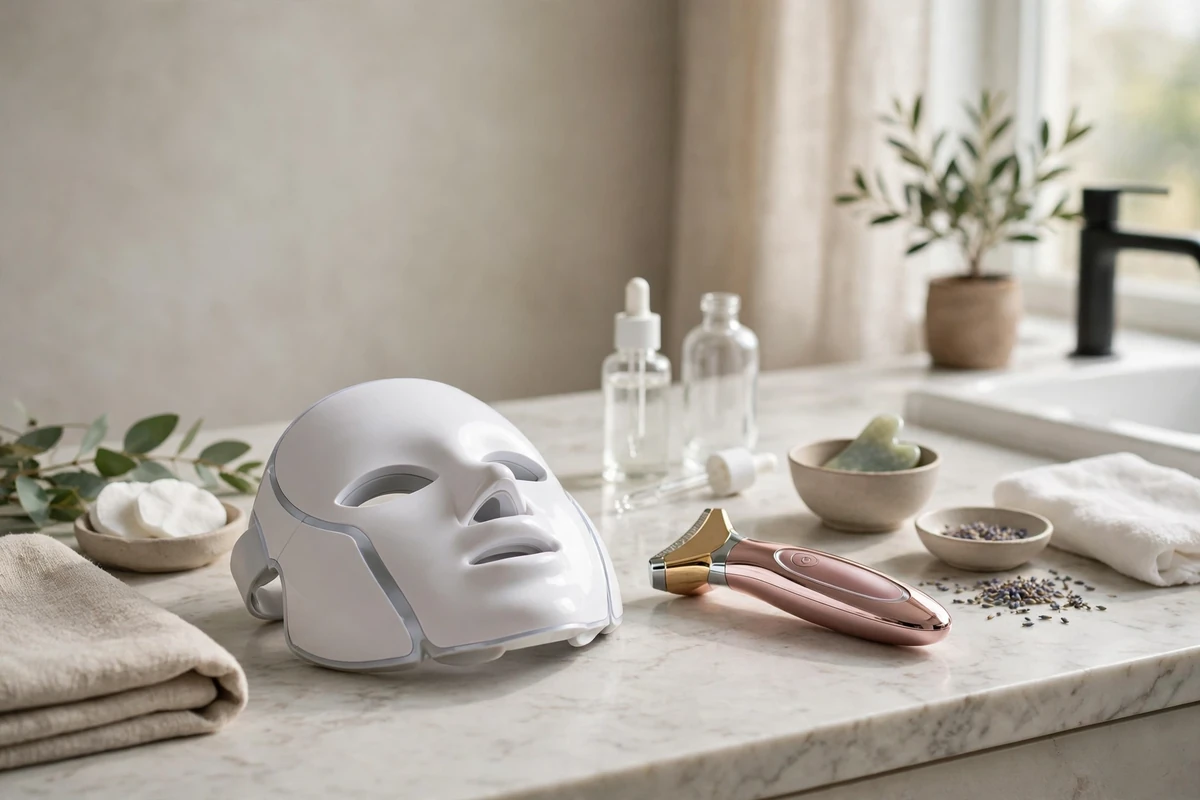
LED beauty devices use specific wavelengths of light for skin concerns: red light is commonly associated with skin rejuvenation and collagen support, while blue light is associated with blemish-prone skin. Home LED masks and panels are less powerful than clinic equipment, so results, if any, take longer and are subtler. Consistency matters more than intensity: regular, correct use over weeks is more useful than occasional intensive sessions.
Microcurrent devices use a low-level electrical current, claimed to stimulate facial muscles and improve tone and contour. Evidence for home microcurrent devices is limited compared with professional treatments, and results are typically temporary and subtle. As with LED devices, realistic expectations matter: a home device can support a routine, but it will not replicate a clinic treatment.
Smart devices increasingly combine technologies such as microcurrent, LED, radiofrequency, and app-guided routines, bringing more technology-led skincare into the home. When comparing devices, focus on what each technology is actually claimed to do, and whether that claim is supported by evidence you can check, rather than by testimonials alone.
Smart Skincare Devices and Connected Beauty
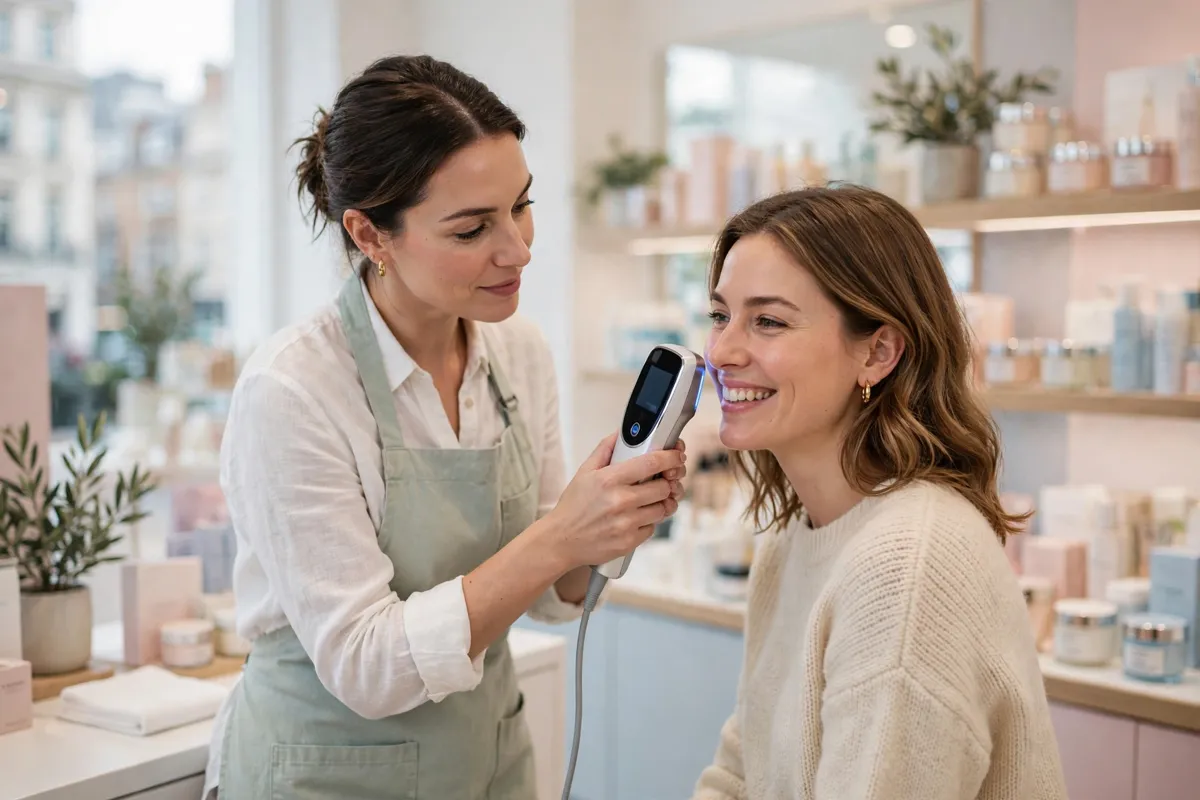
Smart skincare devices add connectivity: sensors that measure skin hydration, apps that track use and results, and routines that adapt to your skin’s changing condition. Connected skincare devices can help you stay consistent, because the app reminds you, tracks progress, and adjusts recommendations. That consistency is genuinely useful, since most skincare — device or not — works only with regular use.
Connectivity also raises the same questions as in other connected products: what data is collected, how it is used, and whether it is shared. Check the privacy information before buying a connected device, just as you would for any product that collects personal data.
The parallel with vehicle technology is instructive. Our guides to how AI is changing vehicle checks, how smart technology improves wheel alignment accuracy, and how AI is transforming EV workshops show how sensors and diagnostics improve maintenance in cars — and the same principle applies at home: measurement helps, but only when it leads to better, consistent action.
How to Choose an At-Home Beauty Device Safely
Start with your skin concern, not with the device. Identify one clear goal — hydration, blemishes, uneven tone, or firmness — and look for devices designed for that goal, with clear instructions and realistic claims. Avoid devices that promise dramatic, immediate results, or that claim to treat medical conditions: those claims are a warning sign, not a selling point.
Check safety information carefully: whether the device is suitable for your skin type and tone, whether it should be avoided with certain conditions, medications, or treatments, and what the recommended frequency and duration are. Follow the manufacturer’s instructions exactly, especially for eye protection with light devices and for use on broken or irritated skin.
Consider cost honestly. A device’s price is only part of the cost: replacement parts, conductive gels, app subscriptions, and your time all add up. Compare the total cost over a year with the cost of the clinic alternative, and decide whether the convenience justifies it for you.
Building a Realistic At-Home Routine
A realistic at-home beauty routine starts with the basics — cleansing, moisturising, and sun protection — and adds one device at a time. Adding several devices at once makes it impossible to tell which one is helping, and it makes the routine too long to sustain. Use a new device consistently for several weeks before judging it, and keep a simple record of how your skin responds.
If you have a skin condition, are pregnant, or use prescription skincare, check with a clinician before using an energy-based device. Home devices are consumer products, not medical treatments, and professional advice matters when your skin needs more than cosmetic care.
Final Thoughts
At-home beauty technology offers real convenience and genuine potential, particularly for people who want to support their skincare routine between professional treatments. The best approach is sceptical but open: choose one device for one clear goal, check its evidence and safety information, use it consistently and correctly, and judge it on your own results over time. Done that way, at-home beauty technology can be a useful part of a modern skincare routine — without the hype.