Fragrance was supposed to be the one corner of beauty that technology could not touch. Perfume is art, intuition and the trained nose — or so the thinking went. Yet AI fragrance development is now a working reality: algorithms help perfumers explore new combinations, recommend scents to shoppers who struggle to describe what they like, and personalise blends for individual customers. It follows the same pattern already seen in skincare and makeup, and it raises the same questions about creativity, trust and what should stay human. Here is how the technology works and what it means for the way perfume is made and bought.
Fragrance joins the AI beauty wave
The beauty industry has spent a decade teaching software to understand individual customers. AI skin analysis reads a selfie and builds a routine; a virtual beauty try-on shows a lipstick on your own lips before you buy it. Fragrance resisted longer for an obvious reason: you cannot smell a screen. But much of perfumery happens before and after the smelling — in formulation, in matching scents to people, and in predicting which combinations will work — and those are exactly the tasks where AI fragrance tools are strong.
How AI helps create new fragrances
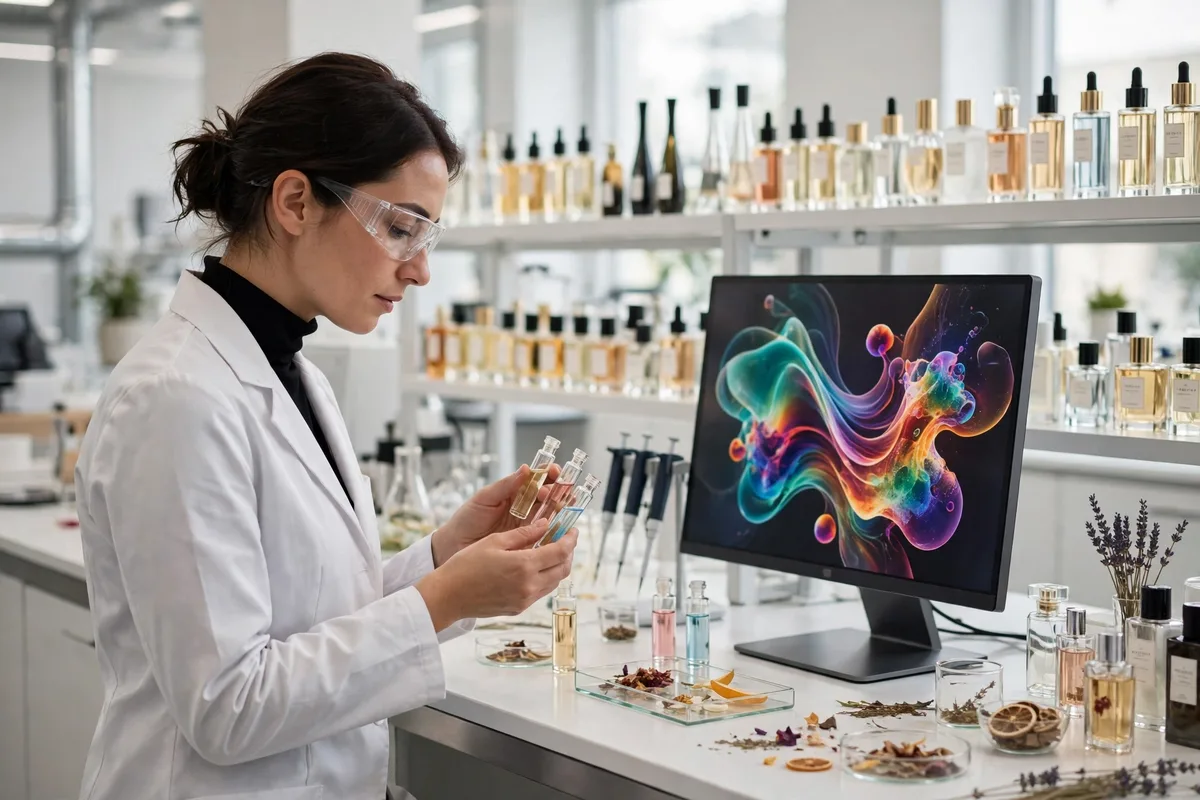
AI fragrance creation starts with data. Perfumery has centuries of recorded formulas and a well-mapped library of ingredients, each with known characteristics and known behaviours in combination. Machine learning systems trained on that material can propose new accords — combinations of notes — that a human perfumer might not have tried, predict how a blend will smell from its chemistry, and flag formulas likely to be unstable or to breach safety rules.
Generative AI fragrance systems extend this by working from a brief: describe the mood, the audience and the reference scents, and the system drafts candidate formulas for the perfumer to refine. The perfumer remains the author — smelling, judging, adjusting — but the blank page problem disappears, and development cycles shorten. Houses can also test far more variations digitally before committing expensive ingredients to physical trials.
Personalised recommendations: finding your scent
For shoppers, the most visible use is the AI perfume recommendation. Choosing fragrance is notoriously hard: descriptions are poetic, tastes are personal, and your skin changes how a scent develops. Recommendation systems ask structured questions — the perfumes you already love, the settings you wear scent in, the notes you dislike — and map your answers against the ingredient profiles of thousands of fragrances to produce a shortlist that is far better than guesswork.
Personalised fragrance goes one step further, adjusting an existing blend’s balance for an individual customer or building a bespoke scent from a consultation. Combined with the kind of at-home beauty technology that already tracks skin and hair, it points towards beauty routines where every product, scent included, is tuned to one person rather than a demographic.
There is a sustainability angle here as well. Fragrance returns and blind-buy disappointments waste packaging, postage and product. Better matching means fewer bottles bought, sniffed once and abandoned in a drawer. Several brands now pair algorithmic shortlists with sample vials posted to the customer, deducting the sample cost from a later full-bottle purchase — a model that only works economically because the software raises the hit rate. When the recommendation is right more often, sampling stops being a loss leader and becomes part of a profitable, lower-waste way of selling scent.
Digital fragrance and the limits of the screen
The obvious frontier is digital fragrance itself: can scent be transmitted or reproduced electronically? Experimental devices exist that release controlled scent combinations alongside films, games or video calls, and researchers continue to work on capturing and recreating smells digitally. For now these remain novelties. The chemistry of smell is complex — a single natural ingredient can contain hundreds of compounds — and no consumer device comes close to reproducing the range of a perfume shelf.
So the realistic near-term role for technology is guidance, not transmission. Algorithms narrow the field; your nose makes the final decision. Discovery sets and sample services pair naturally with AI recommendations, letting the software propose and the customer dispose — an arrangement that reduces the blind-buy failures that put many shoppers off buying perfume online at all.
What AI fragrance means for brands and shoppers
For brands, algorithmic fragrance development lowers the cost of experimentation. Smaller houses can explore ideas that once required large laboratories, seasonal ranges can be developed faster, and data from recommendations reveals which notes real customers respond to — insight that feeds back into product development. The same data-driven approach is reshaping neighbouring categories, from AI hair and hairstyle technology to the connected skincare devices now appearing in bathrooms.
For shoppers, the gains are practical: better shortlists, fewer disappointing purchases, and access to personalisation that used to require a bespoke perfumer. The cautions are familiar ones. Recommendation systems learn from your history, so they can narrow your tastes as easily as widen them — deliberately sample outside your profile sometimes. And as with all beauty data, be thoughtful about what a fragrance quiz learns about you.
The human nose still matters
Nothing in the current wave of AI perfume tools replaces the perfumer. Smell is tied to memory and emotion in ways that resist modelling, and the judgement that a fragrance is beautiful — not merely competent — remains a human call. What AI changes is the workflow around that judgement: faster drafts, broader exploration, smarter matching between scent and wearer. Fragrance is becoming a collaboration between the oldest sense and the newest software, and the results so far suggest both sides are better for it.